• About
  • Blog (Ext.)
  • Books
  • Contact
  • Education Resources
  • News Links

PERRIN LOVETT

~ Deo Vindice

PERRIN LOVETT

Tag Archives: book review

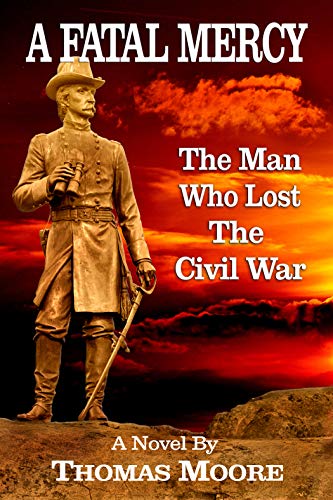
A Review of “A Fatal Mercy, The Man Who Lost The Civil War,” by Thomas Moore

15 Wednesday May 2019

Posted by perrinlovett in Other Columns

≈ 7 Comments

Tags

"Civil" War, A Fatal Mercy, book review, books, fiction, Thomas Moore

A Review of “A Fatal Mercy, The Man Who Lost The Civil War,” by Thomas Moore


The boy had it right in quoting his grandfather: “courage and fortitude are never in vain … no good cause is ever lost because all good causes are lost causes.” Even if he didn’t exactly understand the last part of it, that quote expresses an oft-felt theme, if not a rule, of life and of a higher civilization. It is the theme of his grandfather’s story from 1863 through 1913.


Was Drayton FitzHenry the man who lost the War for Southern Independence? The man himself certainly thought so, perhaps with good reason. Then again, the reader can, likely will, come to understand that there may have been a good reason behind the losing. The story is simple in its complexity, and visa versa.


Moore has really written two books in one. A Fatal Mercy is an in-depth study of the human condition and of Christian morality, Western in origin – Southern by the grace of God. On the one hand, the book is a stirring rendition of The War. In that alone, it is fantastic martial fiction, at once woven by an elegant and commanding imagination and steeped in painstakingly researched history. The story is compelling, riveting.


That is especially high praise from me. Unlike my father, I am not a “Civil” War buff. As a child, the old man dragged me from battlefield to battlefield, constantly uttering information gleaned from his (separate) War library. I certainly gained a respect – and the good manners to at least phrase “Civil” with those all-important quotation marks – but I never developed the … obsession. This book, all through its 727 pages, engendered some of that. This is a work my father would have read – and liked. Those of you who knew him, know that is higher praise.


Perhaps highest of all, is what that aforementioned history and the associated culture, presented alive and burning, generates with regard to what I see as the second grand interpretation, a thoughtful, reasoned, and unapologetic defense of relevant antiquity, classical knowledge, honor, and the grandeur of Western Civilization.


I am a student of classical Greco-Roman tradition. Here, Moore writes as well and true as any: “One reason we study the Classics, apart from the value of the knowledge itself, is for what they may teach us about our times.” With this sentiment, Cicero concurs: “To be ignorant of what occurred before you were born is to remain always a child. For what is the worth of human life, unless it is woven into the life of our ancestors by the records of history?”


Today, most Americans, Southerners included, are ignorant of history, children easily led astray from their ancestral heritage. Moore addresses this issue, with direct examples, slightly dramatized, through the eyes of his protagonist. Drayton’s book-long dilemma revolves around a momentary eye of the storm at Gettysburg. Rather, around the eye of the fish hook, as Shelby Foote put it if we stretch Foote’s geographic definitions to include Little Round Top (and it is, topography-wise, a sub-eye). See: The Civil War, a Narrative, Stars in Their Courses, p. 479, Random House, New York (1963).


Of that terrible battle and its defining outcome, Bruce Catton wrote: “There was no pattern to any of this, except for the undesigned pattern that can always be traced after the event.” Never Call Retreat, Encounter at Gettysburg, p. 186, Doubleday, New York (1965). If this is true – and who doubts Catton – then Drayton’s dilemma is understandable. Drayton lived out the maxim: “Iniuriam facilius facias quam feras – Easier to do a wrong than to endure one.” – Syrus, Maxims. As he refrained from the former, so he endured the latter. Both counts are attributable to – and tribute to – his wisdom and honor.


And, there is an honor, and a wisdom, about Drayton FitzHenry that is rare among literary creations. Odysseus has it, as does Frodo. That wisdom moves beyond the narrative of the War, the horrors of Reconstruction, and into the following age. Along with other, innumerable truths, a lesson and a warning speak directly to us. It finds different ways of expression:


  • The kindly nature of a freed slave towards her former master;


  • The correct realization that the War ended the original American Republic, freeing one class of slaves only to create another;


  • Understanding the force and effect of the demonic legal trilogy of 1913: to this end, three separate quotes, conjoined (by me, for my purposes): “Power transmutes into Empire. Empire begets hubris. Hubris brings ruin. … [O]ur virtues will be needed by America, perhaps even the world, more than ever. … We must do the best we can and leave the consequences to God.”


Moore’s articulate, enrapturing characters witness the end of a Republic. We stand at the very possible end of an Empire. Then, in the fable, and now, in our reality, both intelligent free will and resolve to honor Providence properly combine. Sayeth the poet: “Flectere si nequeo superos, Acheronta movebo – If I can’t move Heaven, I’ll raise Hell.” – Virgil, The Aeneid, VII, 312. The men at Gettysburg, of both sides, did exactly that. A Fatal Mercy does the same, does both in fact, recalling the horror and heroism of combat while instilling pride in the genteel, the cultured, the learned, the respecting, and the respectable. It is all of powerful magnitude.


The Author states: “My principal goal was not just to write the best contemporary novel of the War, but also to place my protagonist in an excruciating moral and emotional dilemma and see how he would resolve his inner conflict.” Moore has done that, and greater still. This book is a timeless Classic.


Also: The letters… The burning of the letters, Chapter Seventeen, moved me. The reader will, I trust, understand soon enough.


(Picture: Amazon/Green Altar Books – Shotwell/Moore)


A Fatal Mercy, The Man Who Lost The Civil War, Thomas Moore, Green Altar Books, Columbia, SC (2019).

A Full Review (and then some) of The Fall of Gondolin

13 Thursday Dec 2018

Posted by perrinlovett in Other Columns

≈ Comments Off on A Full Review (and then some) of The Fall of Gondolin

Tags

book review, books, J.R.R. Tolkien, The Fall of Gondolin, TPC

FROM TPC. Here, in full, via direct syndication:

13 December 2018

[Perrin Lovett] – A Book Review of Tolkien’s “The Fall of Gondolin”


A story a century in the making. A book published 45 years after the author’s death. The latest in a long line of best selling works. Earlier this year came the “completed” master legend of the last days of Turgon’s hidden kingdom. Here follows my account of J.R.R. Tolkien’s The Fall of Gondolin, the good, the great, and the quirky.

But, first, a few notes on how to read Tolkien, especially this tome. A virgin perusal is possible, provided the reader is possessed of what passed for, say, an eighth-grade education, circa 1960. (What that translates to, today, I do not know, though I suspect it leans towards the graduate level). While I’m about to highly recommend the book, I do not recommend it as an initial foray into Arda (the physical World of the Legendarium). Hence,

Start with The Hobbit. Read it at least twice. Then, read The Lord of the Rings (“LOTR”) – cover to cover – to include the important Appendixes. Read LOTR again. Next, read The Hobbit and LOTR, back to back. Then, read The Silmarillion – thrice. The initial criticism of Christopher Tolkien’s editing work will be manifestly obvious and seemingly justified during the initial and subsequent reading. What he painstakingly assembled immediately following his father’s passing at first looks like a neverending cobbling of names, places, dates, and more names. The basis for concern melts with the third reading as a thing of pure majesty presents itself. Somewhere around the twelfth consideration, the work takes on a pleasure all its own as the now academic reader skillfully seeks out well-known favorite passages.

Read The Hobbit, LOTR, and The Silmarillion in succession. Then, and only then, one may (and should) move into The Lost Tales, Unfinished Tales, the various volumes of The History of Middle Earth and other, associated works. Somewhere, during this time, a gander at the various explanatory Letters Tolkien sent is advisable.

Nearing finality in this educational process, one approaches The Children of Hurin, Tolkien’s grand tragedy to rival (I say “to best”) anything by Sophocles. Released in 2007, Hurin fully completes the tale glimpsed in some of the above works, a good novella stretched into a great novel. Hurin also set the stage for the first of two “disappointments” in the saga.

Last year we were treated to the full-length version of that base tale of eternal romance, Beren and Luthien. I say “disappointment” only because, unlike Hurin, Beren is not a completed telling. Rather, it is a “how the story was crafted over many decades” book, literally tracing the development, draft by draft, from WWI until near the time of Tolkien’s death. It’s fascinating, but what you get in the end is essentially the final product recorded in The Silmarillion 40 years earlier. Still, fans, we take what we can get, right?

So it is with The Fall of Gondolin. This is not an end-to-end expose of, perhaps, the most dramatic, action-packed legend in all the annals. But, it does, in primitive and rather disjointed format, link everything together. And, it’s all awesome.

Here, I pause to credit the masterful dedication of Christopher T. in revising, editing, and publishing so much we would otherwise miss. He says, and I believe him, that this is his finale. Then again, he hinted as much when Beren hit the shelves. If this is his end, the end of 70+ year tenure as vice-regent of Middle Earth, so to speak, he’s more than earned the retirement (and all the honor and gratitude we can heap on him). Thank you, Sir!

It occurs to me that more stories lurk in that vast archive housed, in all places, at Marquette University. Something tells me another generation or other appointed editor is already sifting through it. With any luck, a hundred years after people have forgotten the tedious Crowleyisms of Rowling’s inexplicably popular rubbish, they’ll still look forward to something new from the master of the Anglo-Saxon, our Literary Professor Emeritus.

Now – and, thank you for bearing with the preface – on with the book:

I have, here, no real Easter eggs. As I warned, The Fall is not really for the uninitiated, the faint of heart, nor the post-literate. I warped through it, the first time, in about an hour. This is due to: my pre-existing knowledge of the story; my understanding of Christopher’s editing style; the prior reading of Beren; some excellent outside reviews, and; the terrific, easy, and user-friendly layout of the Kindle version.

By the way,

BUY THE FALL OF GONDOLIN

51dL5Yl2qQL._SX329_BO1,204,203,200_

Picture courtesy of Amazon, Tolkien, Tolkien, and Lee!

The first hint the casual reader may discover, of the grandeur of Gondolin, is in The Hobbit. This was the fabled city from whence came the blades of Gandalf and Thorin, originally made for the Goblin Wars. Therein, encircled and protected by near-impenetrable mountains, reigned Turgon, upon a time High King of the Noldorin Elves.

Of Tuor and His Coming Into Gondolin, we know from the Unfinished Tales. Orphaned Tuor, tallest of mortal Men, found the unlikely favor of Ulmo (Poseidon), Lord of Waters. He came to Gondolin following adventures wet and cold. There, he found the favor of the King and the love of his daughter, Idril. Theirs was one of a mere handful of mixed marriages and breedings (of Men and Elves), the progeny thereof being Earendil, future father of Elrond and Elros.

One of the most idiotic of all criticisms limply cast at Tolkien is his alleged forsaking of romance and of strong women. Forgetting, if it’s possible, Eowyn, Arwen, Galadriel, Gilraen, Morwen, Nienor, Luthien, Rose Cotton, “Gimli’s women,” Lobelia, Melian, Varda, Yavanna, and the literally scorching-hot Arien, Idril holds her own against both counts of libel. Her enduring love of Tuor and her unrelenting bravery in the defense of her people and her child suffice. When violently assailed by her wayward and lusting cousin, we learn she fought “like a tigress.” And, her plan was the contingency that saved the remnant, quite possibly preventing the First Age from ending prematurely and with total victory for Morgoth (Lucifer). Tolkien didn’t write weak women. Nor did he write weak fiction.

Not weak, but, as edited by necessity, confusing – hence my approach advice in the delving. The last telling of Tuor’s arrival, essentially that of Unfinished, comes towards the end of this book. A link is provided (in Kindle), instantly redirecting the reader back to near the beginning and the actual Fall of the most beautiful city of Beleriand.

In studying this demise it is helpful to know, in advance, something of how the peoples and the histories converged toward finality, of who made the cut and who didn’t, who became whom, and so forth. The Gnomes, for instance, were working placeholders; the “men” of the Gondolidrim are, in fact, Elves – Tuor being the only actual Man in the Kingdom at the time (though not in history). A healthy peremptory education prevents getting lost in an otherwise incomprehensible tangle of names, races, titles, and descriptions. But, once one has it – whoa!

Now comes the action, more action, and then, some more riveting action. Imagine, those of you of mere LOTR acquaintance, Minas Tirith falling, in spectacular fashion, during Sauron’s assault during The Return of the King. Imagine the peak valor and feats of heroism of that work, augmented and repeated side-by-side over and over again.

In The Fall we learn a bit more about Morgoth’s creation of the dragons, the slithering and winged. We also find out that Balrogs can be slain without the accompanying death of the slayer. Glorfindel (sorry Peter Jackson victims) finds and ends his “buddy” up on the mountainside. Ecthelion takes out three demons in rapid succession, only meeting his end killing the fourth – Gothmog, no less. Tuor slays five and grievously wounds a dragon and does so mostly unscathed.

Towers fall. Wolves run. Eagles fly. Snakes crawl. Evil wins the glorious day (night, rather) only to set up its eventual defeat at the hands of the temporarily vanquished. It’s a wild, violent, noble ride worthy of any acclaim ever aimed at the creation of Eru Iluvatar.

So… Five Stars. Highly recommended. Applause. Buy it today, read it when you’re ready.

And, another hardy thank you to Christopher Tolkien, illustrator Alan Lee, and, especially, to our most prolific Survivor of The Somme, Sir John Ronald Reuel Tolkien. Excellence mirroanwe!

jrr-tolkien1

THE Legend. Picture from Biography Online.

The Last Closet and Jedi: Future Reviews

17 Sunday Dec 2017

Posted by perrinlovett in Other Columns

≈ Comments Off on The Last Closet and Jedi: Future Reviews

Tags

book review, books, Dracula, Star Wars, The Last Closet

As usual I am, now, plugging through several books, some I’ve mentioned before. Some may be reviewed here and at Amazon. One which definitely will (eventually) is The Last Closet by Moria Greyland, Castalia, 12/12/17.

51HbktWZQoL

Castalia/Amazon.

It’s a 5-star book but my recommendation is qualified. For full “enjoyment” one requires, I think: a slightly higher IQ; an interest in the darkness of society (very dark), and; a cast iron stomach. The subject matter is horrendous, as related first-hand by a victim. Not going into details yet but this book covers some of the worst evil imaginable.

A side affect is that, as sometimes happens, this book has prompted me to reread another, older book. In this case: Dracula by Bram Stoker. The Last Closet, non-fiction, is vastly darker, scarier, making Harker’s expedition seem like a run-of-the-mill real estate closing.

Speaking of dark … a new Disney SJW Star Wars movie is in theaters. This is the first one that I am not thrilled about seeing. I will see it because: 1) Star Wars, and 2) 40 years of devotion. I do not like the look and feel of the reviews and spoilers I read. The Last Jedi may be the last Star Wars movie for me. Not sure until I see it. You’ll hear back, then.

And, yes, there are those other reviews I said were coming. Just you wait. BBQ a porg to pass the time.

Fat and Stupid: Can We Rebuild American Education and Culture?

26 Wednesday Jul 2017

Posted by perrinlovett in Other Columns

≈ 3 Comments

Tags

America, Anthony Esolen, book review, books, culture, education, society, Vox Day

Americans aren’t just increasingly fat; they’re increasingly stupid.

Today, Vox Day noted the decline in the average college IQ over the past six decades. We’re collectively down 12.3 points, almost a whole SD. It kind of matters. Smaller brains and larger waistlines so not make for a good or viable trend.

I also read a review of sorts by Chris Sullivan of Anthony Esolen’s Out of the Ashes: Rebuilding American Culture. Esolen may have some answers for the academic decline and more.

Anthony Esolen, a professor at Thomas More College of the Liberal Arts in Merrimack, New Hampshire and recently of Providence College, Rhode Island, has written a stinging critique of modern education and American society in general titled Out Of The Ashes: Rebuilding American Culture published by Regnery Publishers, 2017.

It’s a short book – 203 pages – but contains much wise social commentary and observations on everything wrong with American education, if there’s any such thing. Esolen is not one to beat around the bush. If you don’t agree with him it isn’t because he is opaque. For instance, chapter one is titled, Giving Things Their Proper Names: The Restoration Of Truth Telling. It is divided into several sections with their own headings, one of which is Are We a World of Liars?

“In a word, yes.

…

It was the education angle and the fact of Thomas Moore College that caught my attention. TMC may be the best deal in the country for affordable, quality higher education, Catholic or otherwise. I want my daughter to consider the school.

Anyway, I bought a copy on Kindle this morning. I’m planning to start reading it tonight. If warranted, and time allowing, I’ll post a review here and at Amazon. Chapter Four is: Man by Nature Desires to Know: Rebuilding the College.

That’s important to me and should be to all Americans. Most of our “schools” have become anti-intellectual, places where knowing is the last thing desired.

Looks good from my cursory overview. I’ll let you know.

Order your copy HERE.

51xli7v4HbL._SX331_BO1,204,203,200_

Esolen/Regnery.


A Review of The LawDog Files

16 Sunday Jul 2017

Posted by perrinlovett in Other Columns

≈ Comments Off on A Review of The LawDog Files

Tags

Amazon, book review, books, Castalia House, Humor, LawDog, The LawDog Files, Vox Day

Vox asked for reader reviews of Castalia’s new release, The LawDog Files, by LawDog. I volunteered and My God! I’m glad I did. My Amazon review:

LawDog leads the reader on a fantastic and hilarious journey through human psychology, the realities of rural Texas, and the ups and downs of LEO life.

Going into the book I was uncertain what to expect. I don’t think I’d every heard of the author before (my shame). He’s much more than a Sheriff’s Deputy – a humorist of great eloquence and adroitness. Think of stories by Jerry Clower, Ray Stephens, Andy Griffith, maybe Fred Reed; then, think about small town policing. That’s the nature of The Files.

I’ve been in Texas a few times but never trekked into Bugscuffle. It’s the kind of sleepy little town where the darndest things happen, only to be publicly forgotten and thereafter only retold by old men (in boring fashion). Except that, here, LawDog captures the essence of the area, its people, and the demands of law enforcement, melding them out of keen memory and superb wit.

You’ll love this book if: you have ever worked in or around law enforcement; you’re from Texas, the South, or anywhere rural; you fondly remember the “good old days” from a past America, or; if you just like to laugh. Thrill to: an amorous armadillo, a murderous animatronic Santa Claus, a Dick Cheney-style pheasant (quail??) hunt, and perps appropriately referred to as “critters.”

The layout was easy-going (for an ebook) – a straight flow from one funny tale to the next – as well designed as written. I found one drawback, due entirely to the subject matter and exposition. My reading slowed as I “lived out” the files in my head. And that’s as fun a literary problem as one can have.

I loved it! Do yourself a favor and buy The LawDog Files today. Many thanks to LawDog for serving on the thin blue line and then, again, with the fine lines of his pen.

BUY IT TODAY

519NLyDQXyL

LawDog/Castalia/Amazon.

You’ll love it!

A Review of The Nine Laws by Ivan Throne

20 Thursday Oct 2016

Posted by perrinlovett in Other Columns

≈ 2 Comments

Tags

book review, books, Ivan Throne, The Nine Laws

Alright. I promised this a week or so ago. I have just concluded my first read through of Ivan Throne’s The Nine Laws (Castalia House, October 4, 2016). I also promised Ivan, a.k.a. the Dark Triad Man, a full review. Here goes:

At the outset, here and now, I must qualify this review. First, I don’t normally review books beyond mere recommendation. Thus, in keeping with my usual ways, I HIGHLY recommend you buy The Nine Laws (click here now – $9.99 Kindle from Amazon). However, I must forewarn that the book is not for everyone. In fact, sadly, it’s not for most.

This excellent work is a self-help manual for a select few. Potential readers are:

  • Men;
  • Men of substantial intelligence who can control their passion and physicality; and
  • Men of strength who will act through sheer power, upon thoughtful consideration.

In Ivan’s words his ideal reader must become a “warrior-priest”. He imparts a message which he obviously takes seriously; it is a Shin-den (Japanese for “sacred”) expression. Ivan is a ninja by training, the methodical and relentless nature of which comes through clearly in his words.

Others, say of stronger minds but weaker resolve, might enjoy the book though they will likely find little use for the teachings. The weak and timid need not delve deeper than the cover.

51rdnrxumzl

Ivan Throne / Castalia House.

The Dark World

All of this takes place in what is known as the dark world.

For many there is great fear and anxiety in response to words that are spoken or written to invoke the image of power. Words that declare ferocity. Words that speak of the dread reality of this dark world and the necessity of blood, steel, incandescent flung iron and detonations of dust and thunder as the voice of deciding finality between individuals and armies, ideologies and civilizations.

Your fear and anxiety are real, but nonetheless irrelevant to the impersonal nature of creation. 

Any desire that things be other than they are, is not even perceived by the universe.

Illusions of safety are not rewarded…

– Chapter 13, The Dark World

This world is real. It is not, in and of itself, evil. However, it is plagued with evil both spiritual and incarnate. You didn’t really need my explanation there nor Ivan’s. The nightly news is sufficient proof. So is your daily life. The world is hard. To master one’s place in it requires a man be hard. That is the nature of the nine laws.

These guideposts are presented, defined, and exemplified with great care and precision.

Refreshing Assessment

Most “similar” works fail miserably for two reasons. First they either deny or foolishly explain away the nature of the world. Ivan’s assessment is cold, brutal and honest. Second, so many “ways of living” books attempt to reassure the reader, coddling the those who should instead be fortified. Delusion is potentially fatal. Ivan fortifies with virtual steel. His approach is born of genuine concern and an apparent desire for others to thrive.

The first thing that grabbed my attention and held it was Ivan’s utter lack of equivocation. This is not simply a testament to good and clear style. It is, rather, evidence of strong presence of mind and sound devotion to the craft of living. His observations were honed by humbling experience, tactfully ingrained in the text.

And ideal living is what it is all about. Most people shuffle blindly through life. Theirs may not necessarily be a waste of opportunity. It is certainly not fulfillment.

God created the world, even the dark world. We are reminded that His Spirit, though in us, does not rule the world. Someone else does. Hence the observable evil. Stephen Hawking once noted that God set the world and its laws in motion and then stepped back – a hands off approach. We, the living, are tasked with daily adherence to the law or with existing otherwise. This accords with the fallen nature of man and his endless pursuit of Natural Law among other ideals. Ivan understands these concepts.

His expert lessons serve as a chart for purposeful navigation through the world. I find this beats the shuffling manner of the masses and the weak illusions of the gurus. Life should be lived with purpose, with reverence to loftier ideals and for a higher Power.

Getting there, by Ivan’s plan, requires serious self-assessment and the permanent adoption of personality and thinking popularly misconstrued by the shufflers. Would you consider psychopathy a positive trait? Necessary? Buy the book. Read the book.

I have one contention with whole of The Nine Laws. Ivan admonishes to never self-deprecate. This issue of mine is likely semantic in nature. My readers know I frequently lace my commentary with self-deprecating remarks. Almost as sure as my shooting at the political trash.

Considered in pari materia my joking is a form of concealment (the Second Law). And concealment may not mean what one thinks. Read the book.

In Conclusion

My favorite of the laws is number nine: no laws. My life has become a study of this phenomenon. Again, the definition and explanation may challenge one’s preconceived notions.

There are multiple parts that I look forward to rereading. Once is probably not enough. This book offers not only opportunity of understanding but a blueprint for action. The program is designed to be used.

The Nine Laws may not change the world but it could change you. A change for the better. So it is that I recommend without hesitation (beyond my initial qualification) this fine literary contribution to the world of men.

Congratulations and thank you to Ivan Throne.

*One will also note that The Beggar is spared the presence of Death, the two already being partially acquainted by circumstance.

Newer posts →

Perrin Lovett

From Green Altar Books, an imprint of Shotwell Publishing

From Green Altar Books, an imprint of Shotwell Publishing

Perrin Lovett at:

Perrin on Geopolitical Affairs:

Archives

  • May 2026
  • April 2026
  • March 2026
  • February 2026
  • January 2026
  • December 2025
  • November 2025
  • October 2025
  • September 2025
  • August 2025
  • July 2025
  • June 2025
  • May 2025
  • April 2025
  • March 2025
  • February 2025
  • January 2025
  • December 2024
  • November 2024
  • October 2024
  • September 2024
  • August 2024
  • July 2024
  • June 2024
  • May 2024
  • April 2024
  • March 2024
  • February 2024
  • January 2024
  • December 2023
  • November 2023
  • October 2023
  • September 2023
  • August 2023
  • July 2023
  • June 2023
  • May 2023
  • April 2023
  • March 2023
  • February 2023
  • January 2023
  • December 2022
  • November 2022
  • October 2022
  • September 2022
  • August 2022
  • July 2022
  • June 2022
  • May 2022
  • April 2022
  • March 2022
  • February 2022
  • January 2022
  • December 2021
  • November 2021
  • October 2021
  • September 2021
  • August 2021
  • July 2021
  • June 2021
  • May 2021
  • April 2021
  • March 2021
  • February 2021
  • January 2021
  • December 2020
  • November 2020
  • October 2020
  • September 2020
  • August 2020
  • July 2020
  • June 2020
  • May 2020
  • April 2020
  • March 2020
  • February 2020
  • January 2020
  • December 2019
  • November 2019
  • October 2019
  • September 2019
  • August 2019
  • July 2019
  • June 2019
  • May 2019
  • April 2019
  • March 2019
  • February 2019
  • January 2019
  • December 2018
  • November 2018
  • October 2018
  • September 2018
  • August 2018
  • July 2018
  • June 2018
  • May 2018
  • April 2018
  • March 2018
  • February 2018
  • January 2018
  • December 2017
  • November 2017
  • October 2017
  • September 2017
  • August 2017
  • July 2017
  • June 2017
  • May 2017
  • April 2017
  • March 2017
  • February 2017
  • January 2017
  • December 2016
  • November 2016
  • October 2016
  • September 2016
  • August 2016
  • July 2016
  • June 2016
  • May 2016
  • April 2016
  • March 2016
  • February 2016
  • January 2016
  • December 2015
  • November 2015
  • October 2015
  • September 2015
  • August 2015
  • July 2015
  • June 2015
  • May 2015
  • April 2015
  • March 2015
  • February 2015
  • January 2015
  • July 2014
  • June 2014
  • September 2013
  • August 2013
  • July 2013
  • June 2013
  • May 2013
  • April 2013
  • March 2013
  • February 2013
  • June 2012

Prepper Post News Podcast by Freedom Prepper (sadly concluded, but still archived!)

Create a free website or blog at WordPress.com.

  • Subscribe Subscribed
    • PERRIN LOVETT
    • Join 41 other subscribers
    • Already have a WordPress.com account? Log in now.
    • PERRIN LOVETT
    • Subscribe Subscribed
    • Sign up
    • Log in
    • Report this content
    • View site in Reader
    • Manage subscriptions
    • Collapse this bar

Loading Comments...

You must be logged in to post a comment.