Bodaciously True & Totally Awesome, Episode III: Danger Zone by Chris Orcutt
Review by Perrin Lovett
On Monday, April 21, 1986, millions of Americans tuned in to watch Geraldo Rivera open Al Capone’s vault. After weeks of hype and two hours of slow torture, we found out that the vault contained nothing. Remember that? Well, ready or not, it’s time to go back to 1986. And no one can take us there like Chris Orcutt. Bodaciously True & Totally Awesome, Orcutt’s nine-part epic novel about teenage life in the penultimate decade of the twentieth century, continues. Here follows a brief look at Episode III: Danger Zone. Unlike Capone’s, Orcutt’s ink-and-paper vault contains everything.
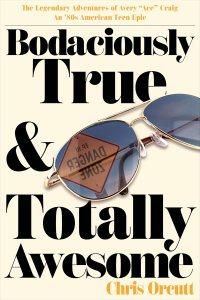
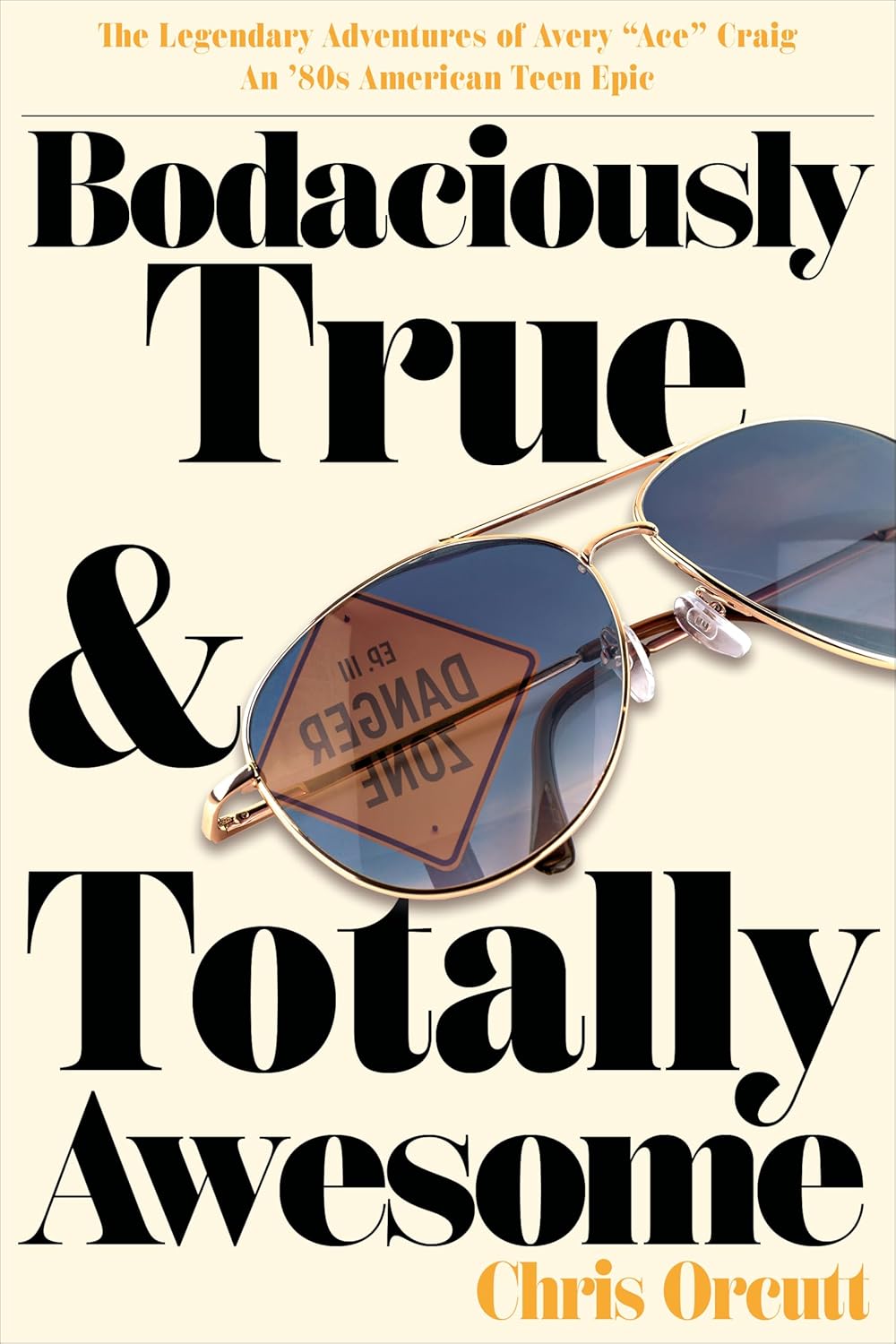
(Cover design by Victoria Heath Silk.)
*Orcutt, Chris, Bodaciously True & Totally Awesome, Episode III: Danger Zone, New York: Have Pen, Will Travel, 2026.
Chris Orcutt is the author whom many correctly regard as the American Tolstoy and whom I’ve previously called “the best American novelist alive today.” I’ve also proclaimed that Orcutt has joined the ranks of the greats—Homer, Ovid, Chaucer, Shakespeare, Pushkin, Gogol, Murakami, et al. Once again, with Danger Zone, he does not disappoint. With three decades of experience, Orcutt approaches his literature with a keen ear and voice, an impressive attention to detail, and an unswervingly creative imagination. Before this review commences in full, please consider the following bookkeeping items:
I hereby incorporate all points of my previous reviews of Bad Boy and True Blue as if each point were restated in full. Summarily updating a few of them for Danger Zone, I advise that the reader is still on a thrilling literary roller coaster ride. Avery “Ace” Craig continues to endear himself to readers. He is still the archetypal ladies’ man. Orcutt’s writing is once again perfect. And once again, the physical book is a monument to literary art. The philosophy, rhythm, and tone of the whole work play out seamlessly, a condition that will have the reader, regardless of his age, right there, participating in the excitement. Avery is still trying on spiritual or philosophical hats, as Orcutt puts it, some of them self-serving, see on or about page 252, but that is to be expected from a young man confronting adulthood in the decade when Generation X rose into full self-awareness. Finally, the reader had better be ready, because the endless parade of 1980s music rocks on!
As with True Blue, Danger Zone contains a subtle shift. Orcutt keeps developing Avery’s world, but he slows down just a little, allowing his protagonist (and readers) to look around with a bit more concentrated focus. And right off the bat, your reviewer focused on something that is semi-palpable in the first two episodes, and which is now brought to light. Avery is a master of language. And he is overly gifted with hand-eye coordination. Therefore, I had previously found it curious that he struggles with two particular subjects in school. If one has read Bad Boy and True Blue, one might have caught it as well. I wasn’t going to mention it, but “Pa” did it for me. Just like I once did, Avery calls one of his grandfathers “Pa.” That’s cool enough as-is. But Pa, while entertaining one of Avery’s three hundred love interests, remarks about his grandson’s schooling. Sweet Penny goes right along: from around page 22:
[Pa]: “Your boyfriend here’s a pretty bright fella, but he can’t do Latin—”
[Penny]: “Or geometry—”
[Pa]: “To save his life…”
That’s the “what” of it; I’ll leave the “why” to the reader’s discovery and/or imagination, one of many, many things to think about.
While addressing unusual academic issues, Danger Zone does not shy away from examining various family dynamics. All of it is presented non-polemically as a series of scenes and dialogues. Some of it is charming, while other parts are a little disturbing. The reader will be reminded that we are as we are, sometimes with the caveat of “alas.” The reader will find great interest in Avery’s heated discussion with Penny’s father, among other items. A lot of the drama comes from Penny and Avery’s other girlfriends. Early in the saga, I had my hopes up for one particular romance, but… Let’s say that Orcutt delivers a script in which one cannot be exactly certain of what is about to happen, only knowing that whatever it is, it’s going to be good. And if one analogizes Avery’s love interests to baseball, then this episode might just be the inning when he hits that elusive first home run. Thrills abound, both new ones and carryovers from the previous episode.
As I noted, the music we all remember rolls on. Here, I select two tunes for reference. At just the right time, Orcutt treats us to “Private Idaho” by the B-52s and, a little later, “Your Love” by The Outfield. I was going to mention that there’s a great video of Tony Lewis performing the latter song live in 2018. Ahem. But Orcutt has all that covered and more: each episode comes with a FREAKING AWESOME 80s playlist on Spotify. Groove along with Ep. III if one will. And one should.
Danger Zone ends with another cliffhanger. The setup is very interesting, and we are left with our hero and two friends (yes, it’s Avery, so their women) literally hanging off a cliff. (Down a hill is like off a cliff.) The preceding scene is short and simple enough, and contains a modicum of foreshadowing. But the reader ends his reading on the edge of his seat—kind of like the characters. With six more episodes to go, it stands to reason that they escape. But as for how, we will have to trust the author.
He’s earned our trust. And we will have to wait to find out. I mentioned it once before, but the pause between these titles is mildly vexing. But that’s an homage in and of itself; reading every episode is a great pleasure. Episode IV, Secret Lovers, will be released in October of 2026. And one day! One day, the whole book will sit on the shelf awaiting a full, non-stop reread. I trust you, gentle reader, have cleared a foot or so on the bookcase.
Spoiler alert! Danger Zone is a hair shorter than the previous installments. But that is more than okay, as, in my estimation, this episode slows down and focuses. It’s a win-win because, as the whirlwind abates just a little, and Ace and Company hone in on a few things, so too will the reader. I caught myself dwelling on details of all kinds. And I’m sure the reader’s experience will be similar. Remember Wall Street with Charlie Sheen? That movie flew by, but when it slowed a little, like when Gordon Gekko spoke to Bud Fox on the phone from the beach that morning, the scene packed an extra punch. If “money never sleeps,” then Avery Craig never loses. Cheer on his latest exploits in Bodaciously True & Totally Awesome, Episode III: Danger Zone. Once again, it’s a mandatory read.
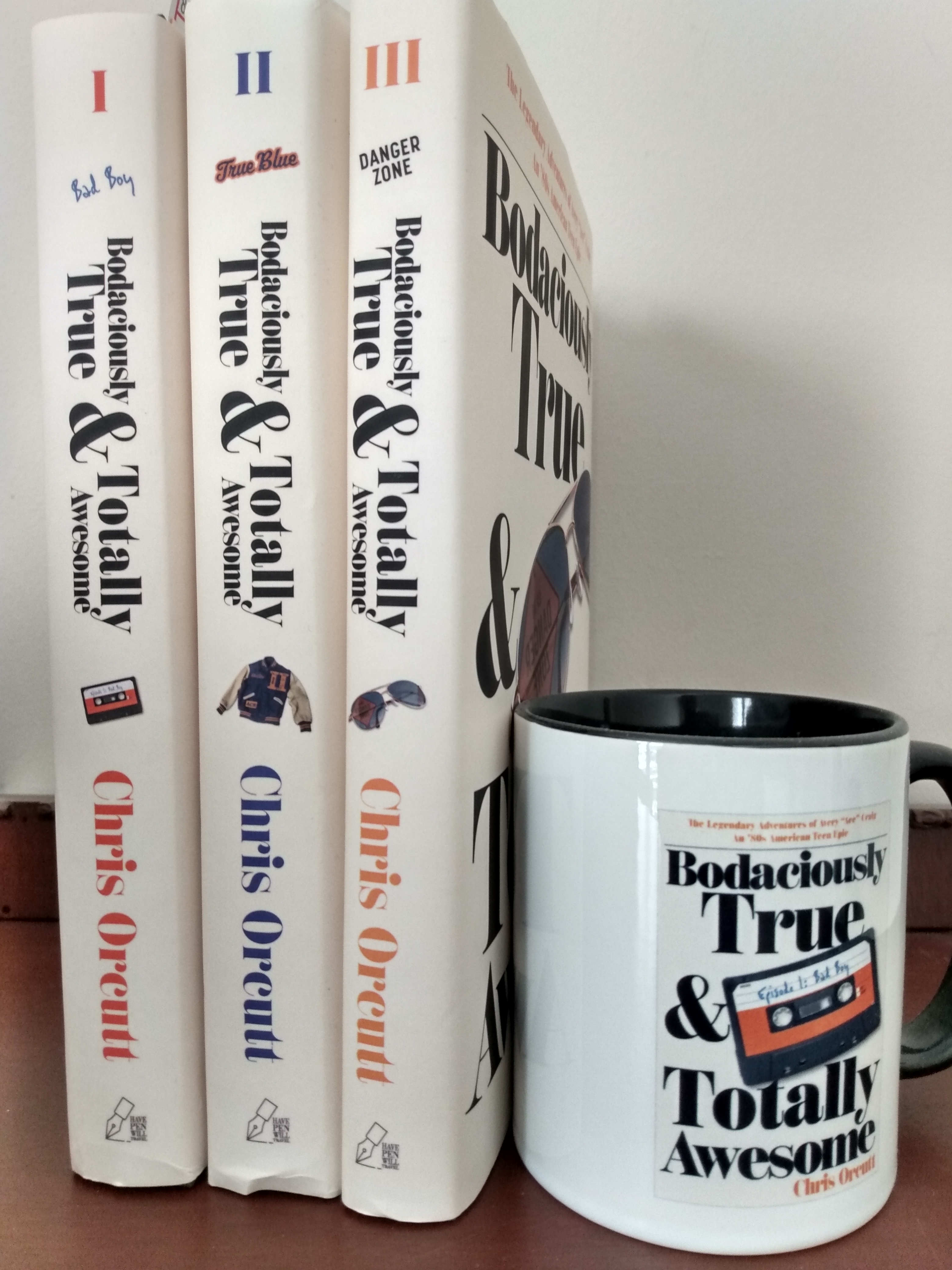
Bonus! Here’s what BTTA looks like, as-is, and this is only a third of the whole book!
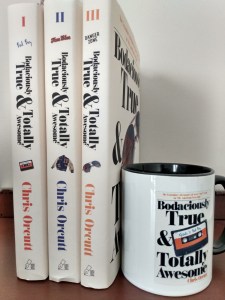
And good luck finding the coffee cup! 😉





 PERRIN LOVETT
You must be logged in to post a comment.