My review of Bodaciously True and Totally Awesome, Bad Bad, ran today at Geopolitika.
Also, Chris gave a great interview to Positive Talk Radio:

31 Wednesday Dec 2025
Posted in News and Notes
≈ Comments Off on Talking BODACIOUSLY
My review of Bodaciously True and Totally Awesome, Bad Bad, ran today at Geopolitika.
Also, Chris gave a great interview to Positive Talk Radio:
12 Friday Dec 2025
Posted in fiction, Other Columns
≈ Comments Off on The Bodacious Interview of American Novelist Chris Orcutt
Tags
1980s, America, Bodaciously True and Totally Awesome, Chris Orcutt, Generation X, interview, literature, novels, writing
A conversation with the “Lord of the ’80s” and author of
Bodaciously True & Totally Awesome

(Picture from the author’s website.)
Conducted in 2025 by Perrin Lovett
A full decade ago, New York novelist Chris Orcutt set out to do what some writers might have, probably would have considered impossible. In an attempt to forge a new epic genre and craft a legacy work for the ages, Orcutt laid aside ordinary life, hunkered down, and toiled until he at last printed out a book, literally twice the length of War and Peace, that may well change American literature and that will certainly alter the perception and memory of the penultimate decade of the twentieth century.
Orcutt describes his books as “meticulously crafted novels.” Having read several of them, and having taken a privileged look behind the scenes at their development, your reviewer can now say the author’s self-styled appellation is a humble understatement. And yet, even readers who have previously enjoyed titles like One Hundred Miles from Manhattan (2014) and A Real Piece of Work (of the Dakota Stevens mystery series, 2011) are in for an astounding surprise.
Bodaciously True & Totally Awesome, a novel in excess of one million words, is scheduled for release over the next two years in nine episodes. The book, an examination of the life and times of a young man named Avery “Ace” Craig, is billed as “a time machine back to the 1980s.” It is that, one-hundred percent and more. In addition to a “you’re there” experience, it is also an exceptionally deep saga in keeping with many of the great volumes of literature of the past. It was my high honor to go back in time by reading Episode One: Bad Boy in advance of publication. My review of that initial segment will follow this interview, landing sometime between now and January 2026. And now, it is my honor to present a brief interview with author Chris Orcutt.
1.
Lovett: What first prompted you to consider embarking on this grand journey?
Orcutt: I can’t point to one thought or event and say, “That was it. That was the thing that kicked off Bodaciously.” And I think that any writer who says that a novel is born from one moment is profoundly self-deceived. Those moments of sudden enlightenment are rare.
I believe most novels come out of a process that Vladimir Nabokov described in a Playboy interview in which he said, “All I know is that at a very early stage of the novel’s development I get this urge to garner bits of straw and fluff, and eat pebbles. Nobody will ever discover how clearly a bird visualizes, or if it visualizes at all, the future nest and the eggs in it.”
What I’m saying is, the book came from a lot of these twigs, straw, and fluff, and it just grew and grew. Here are a few that I remember:
When I first started writing the novel, quite a bit of it was autobiographical, and I realize now that that was because I was trying to process my past. By the second draft, however, almost all of the autobiographical stuff got cut, and the characters became their own people. I originally thought that Bodaciously True & Totally Awesome (which was first titled When All the World was New) would be one novel of average length, but just like John Steinbeck said of East of Eden when he was writing it, the book just kept having pups. One terrific scene whelped five more—some great, some meh.
When the first draft’s word count passed that of Anna Karenina (about 350,000 words), I had a sense that I had found my vein of gold, that I might be on the way to creating something great. I started asking myself, “Why not turn this into an epic? Why not an epic-length novel about teens in the eighties? Why not an American War & Peace—a long, detailed and compelling story about a group of teens during the decade that this country was undeniably on top?” I began to see myself as an explorer, not of geographic icons like Mt. Everest or the South Pole, but of literature. I wanted to write something monumental like Tolstoy and to create something totally original: the teen epic.
You asked what first prompted me, and it wasn’t one thing; it was all of these small things that snowballed into one big thing. But here’s the deal: I allowed it to snowball. I didn’t shut it down by saying, “Chris, that’s ridiculous—you can’t write an epic-length novel about teenagers, for Pete’s sake. Nobody will want to read that crap.” Mind you, I heard those voices every day for ten years, but I worked through them. The voices would rear up every morning when I sat down to work, and I would tell them, “I don’t care. I’m writing it anyway.”
The final thing that prompted me was my age. I was 45 years old when I started this novel, and shortly before that I had read somewhere that most writers’ periods of peak productivity, when they produce their best work, was between the ages of 45 and 65. Then Carrie Fisher, an icon from my childhood, died suddenly at age 60, and I realized that 20+ more years is hardly guaranteed for anybody. I started thinking that the most time I could reasonably expect to get was an additional ten years, so I knew that I couldn’t waste any more time writing genre or formula novels. I had to use my peak productivity years to create my magnum opus. I was going for the summit of Everest, and if I got there, great; if I didn’t, at least I’d die knowing I gave it everything I have.
2.
Lovett: Many writers edit out some of the little background touches, scenes, and flourishes in their novels, even those that might otherwise add extra depth and life. How do you decide what stays and what goes?
Orcutt: The Tommy Gun sidebar in Episode 1 (or “Chicago Typewriter”; I love that moniker by the way) was pulled 100% from my own experience during my own D.C. high school class trip. It’s a vestigial moment from a very early draft of the book, and it comes off as a bit irrelevant to the main story now, but I’m one of those novelists who believes that if you’re only going to include relevancies in your writing and not allow for sidelines and anecdotes that veer from the main story, you shouldn’t be writing novels; you should be writing legal briefs.
A novel is NOT an argument, although it should have an internal logic that the writer is faithful to. Faulkner probably would have considered it a “darling” and said that I have to cut it, but screw him; if he was so set on the idea of killing your darlings, why did he have single sentences that stretched for pages? You’re telling me there weren’t a few darlings in there, Bill? Anyway, I kept it because I liked it and because I believe it’s those “irrelevancies”(which are sometimes “darlings”) that create the verisimilitude. After all, randomness is a major part of life, right?
In fact, I would go so far to say that fiction that lacks those irrelevancies, those frills and flourishes, is ultimately dead. There’s no life in it because it lacks that real-life quality of randomness. Elmore Leonard once wrote (I’m recalling this from memory, so I might be a bit off), “A story or novel isn’t everything that happens; it’s every important thing that happens.” I disagree. That thinking is fine for formulaic fiction, where the compact between the writer and reader is, “This thing is made-up and will only include things that are moving the story toward the climax, but we both know it’s make-believe, so we’re going to leave out anything that doesn’t contribute to that end”; but for fiction that is trying to give readers immersion in reality, you have to include those “irrelevancies.” Chekhov was a master of this.
I believe very strongly that it’s those random details that make a story memorable, and as I continue to polish Eps. 2-9, I find myself putting back in some of the “irrelevancies” that I cut 3-4 drafts ago.
Sorry to go on and on about this, but you touched on something that I’ve wrestled with for ten years: how many of these “darlings” do I keep, which ones do I keep, and am I being self-indulgent in keeping them? I’ll never forget that moment when that FBI agent fired that gun at the paper-man target as I and my classmates watched him through the fishbowl window. I wanted to capture that moment for all time.
3.
Lovett: The pop and rock music of the 1980s helped define the decade. I noticed you not only referenced numerous songs, but, if I’m not mistaken, you adroitly use song titles as punctuation or scene settings. Do I have that right?
Orcutt: It makes me so happy that you noticed what I was trying to do with the song titles. You said something like, “song titles as punctuation.” Dude, THAT’S EXACTLY WHAT I WAS DOING. Ever since I was a young, young writer, all of the books on fiction writing have said that you shouldn’t mention songs, TV shows, movies, etc. because you run the risk of alienating readers who don’t know or like those songs, TV shows or movies. This has been an unquestioned meme in fiction writing.
When I first started writing Bodaciously ten years ago, back when its original title was When All the World was New (borrowed from part of a sentence by Peggy Toney Horton: “Remember sixteen – when all the world was new and a lifetime stretched before you like fresh snow just waiting for your footprints?”), when I wanted to mention a song, etc. that old meme rang out in my head: “But Chris, you can’t do that! The rules say….” And that’s when I said to myself, “You know what, Chris … to hell with the rules. Those rules were created when friggin’ radio was a brand-new invention, maybe even as far back as the telegraph. This is the 21st century!” Google Glasses had recently come out and quickly disappeared, but I saw the future: reading-assistive devices that can augment a reader’s experience: look at a song title, TV show, etc. and get a window that plays the song, shows the show, displays the geographic location or obscure cultural detail.
4.
Lovett: You say, “You have to be willing to turn your back on your heroes and do things your way.” Why?
Orcutt: For me, that moment came about eight years ago, when the novel became longer than War and Peace. I have a considerable home library and was always able, when writing fiction, to pull down a novel by a “master” writer to see how s/he did something. But when I passed the 650K-word mark, I realized I had done something that Hemingway talks about in his Nobel Prize acceptance speech (this one I had to look up; bold is my emphasis):
“How simple the writing of literature would be if it were only necessary to write in another way what has been well written. It is because we have had such great writers in the past that a writer is driven far out past where he can go, out to where no one can help him.”
I had gone out beyond where any of the masters could help me. I knew I was doing something that had never been done before, so I knew that none of their or the establishment’s rules applied. Now I—not a revered hero writer and certainly not anybody in the publishing “industry”—was the authority.
As I was writing, I had to battle my internal editor who was reminding me daily of these “rules.” Eventually I had to tell that guy, “You know what, dude? You’re FIRED. You’ve never done what I’m doing, so you don’t know what the hell you’re talking about. Get lost, go home.””At the time, I was reading the Bible (1 Kings, if I remember correctly), and came upon the line when Adonijah has declared himself king (and David was still alive), and Solomon says, “Adonijah … go home.”(I LOVE THAT.) I like to imagine Solomon smirking at him and saying that with his voice dripping with contempt: “Adonijah … go home.” Shoo, fly, shoo. I think of that line often, and now when the internal editor or critic rears up inside me, I say under my breath, “Adonijah … go home.” 🙂
5.
Lovett: With your internal editor gone, what does your process of creative production and control look like?
Orcutt: It used to bother me that my work wasn’t published by a “major” or legacy publisher, but now I’m proud of the fact that I’ve done it all myself. With the exception of the covers (which I art-directed for my designers), I have done EVERY aspect of all of my books myself: writing, editing, layout, proofreading, etc. Now there’s a “rule” you’re not supposed to break—ever.
Back in 2012, I got a few offers from publishers for A Real Piece of Work, but the offers were paltry and gave them total control over my work. Screw them. I turned them all down. Now I realize that not only did I never need their acceptance or approval, but that I was never meant to get it. My entire life has been about being an outsider, a maverick, a guy who does things his way. Somewhere along the way, I had a moment of satori: None of the greats in any line of endeavor became great by following another great’s path; they all made their own path.
I remember inscribing a copy of A Real Piece of Work to a podcaster who wanted to write a mystery novel (and discovered years later that he had taken an idea I gave him and based his first novel on it; I didn’t mind; I’ve always said that ideas are a dime a dozen—it’s the execution, the actual creation of something from the idea, that’s hard). I wrote something like this on the flyleaf: “Write what you want to write, say what you have to say, and fuck all.”
6.
Lovett: How much of Avery Craig’s personality or experience is really an avatar for Chris Orcutt and is there an example from your life that illustrates the connection?
Orcutt: Exactly 13 percent. 🙂 No, seriously, although a few of the situations Avery finds himself in were inspired by personal experiences, those experiences were then fictionalized heavily—distilled or heightened for effect. Avery has a few of my character traits, but he also has some inspired by people I knew back then, and some that are entirely his own. But while the details changed, the core emotional reactions had to come from somewhere, and those came from what I call “memory mining.” One example of that was a very uncomfortable car ride and argument I had with my first girlfriend’s father; that scene, which appears in Episode III: Danger Zone, because of the deep memory mining I did, is basically verbatim to what really happened.
7.
Lovett: If you had to, then how did you change your thinking as an adult to convincingly write young adult characters?
Orcutt: I didn’t have to change my thinking at all; I just needed to remind myself of how it felt to be that age. I spent a lot of time reading letters from girlfriends during that period, and my journals, and I combed through yearbooks and leafed through period magazines. But the most valuable thing I did was deep memory work to recall not just the incidents from the mid-1980s, but the emotions. I call this “memory mining.” One of the things I discovered was, the key to remembering the details of incidents is to first recall the precise emotion you felt. It’s like the sounds, smells, sights and other details are all encoded in the emotion. Anyway, I started with the memory mining and wrote sketches about things that I experienced. Gradually, characters emerged from the primordial ooze that would eventually become the novel.
8.
Lovett: In socio-sexual hierarchy terminology, Avery is identified in word-stumbling speech by a popular female character as an “alpha,” a status identity he accepts and has apparently earned. Can you briefly summarize his internal conflicts regarding his new position?
Orcutt: He’s a reluctant teenage heartthrob, and later on, a reluctant hero. He likes the attention he gets from girls, and they all thrill him in one way or another, but he doesn’t want to hurt any of them, and he also doesn’t want to be manipulative. He starts to become aware of his attractiveness to women, and so his major internal conflict is the teenage hormones driving him to copulate with all of them while his conscience is telling him that’s wrong. Remember, too, that his and Caitlyn’s idea that they’re “alphas” is based on what they understood that to mean at the time. They could just as well have said they were “leaders” or “trendsetters” or just “cool.”
9.
Lovett: Complex, even convoluted teenage relationships are integral to the book. How did you create and manage those complexities without coming off as clinical?
Orcutt: I have no idea, but one thing I will say is that I’ve always been a keen observer of people—going all the way back to my first memories as a child. In high school, I often purposely put myself in the position of outsider or observer, and I paid attention to things like how girls talked to (and about) each other, the scheming that some of them engaged in, their plights with dumb guys, etc. Hopefully, some of all of that observation made its way into Bodaciously.
10.
Lovett: You’ve previously described—accurately, in my estimation—the 1980s as the last great American decade. Bodaciously exhibits, here and there, a certain level of period-appropriate American jingoism. In your opinion, was any of that spirit illusory?
Orcutt: I think it was a reaction to the meek, sweater-wearing, keep-the-heat-down-in-the-White-House President Carter years of the late 1970s. When Reagan was put in office in 1981, the mood of the whole country changed, and by 1984 or so, the United States had its swagger back. I tried to show some of this swagger through the teenagers like Avery, and one of the ways young people manifest that swagger is through jingoistic comments. For example, Avery has an ongoing feud with a West German exchange student, going so far as to insult her publicly in German.
11.
Lovett: What did you give up in order to concentrate on researching and writing Bodaciously?
Orcutt: I used to think that I gave up or sacrificed a lot to write this book, but now I realize that I didn’t give up anything—it’s not as though I had a choice; I was driven to write this thing. I suppose I could say that I “gave up” or sacrificed consistent income, consistent (and ample) sleep, vacations, cross-country ski trips, etc., but all of those things are a question of priorities. My number one priority was, and has always been, my writing—something that I love to do—and everything else has been second. Sure, I wish I could have taken a vacation every year (or even every other year) over the last decade, and I wish I had the time to ski for hours every day in the winter, but if you want to get the words written, you have to make the time. You have to make writing your top priority.
12.
Lovett: What do you think Generation X most missed or lacked during the 1980s?
Orcutt: Parenting and guidance. Overall, we were scandalously under-parented or outright unparented. Our parents’ generation (which was known back then as the ME generation) was so wrapped up in themselves that they gave us very little attention. A common phrase by our parents was, “Go play in traffic.” Another one was, “Look it up.” So, we lacked parenting, but I think that made our generation more self-reliant. We basically parented each other, made mistakes and learned from them, and helped each other out.
13.
Lovett: After they read the book, what will younger generations of Americans appreciate about teenage life in the ’80s? What will they make of all the (very clever!) footnotes?
Orcutt: Younger readers who have read advance copies remarked about how much they appreciated the footnotes and the music references, because having these things explained made the story richer. Most of them said they didn’t realize how much great music came out of the period. A couple readers have been put off by the footnotes, saying that they felt intrusive. But I didn’t put them in there for readers of my generation or the younger generations; I put them in there to give readers of the future, like in 2086 and 2186 (if we’re not extinct), a sense of the 1980s zeitgeist.
14.
Lovett: A few people have already read the book in advance. Have you been surprised by any of their reactions?
Orcutt: I’ve been really surprised by the reaction of older readers to the book. My parents read it, for example, and they commented that even though the story takes place in 1980s American suburbia, they both were taken back to their own high school days: my mother as a dancer at the High School of Performing Arts in Manhattan, and my father as a kid on an island off the coast of Maine. I guess what’s surprised me is this: I wrote Bodaciously to be a time machine back to the 1980s, but it turns out that what I’ve created is a time machine back to when anyone, whatever age, was a teen in high school.
15.
Lovett: You weaved period references into various scenes, both as descriptors and as effortless background—like in the description of Dina Tempestilli and the reference to Princess Leia’s “snow outfit” in The Empire Strikes Back. How did you balance that process?
Orcutt: You’re referring to moments in the novel in which I weave together a character description and a period reference. I don’t know how I do this. The fact is, I don’t do it; the Muse does. Besides, I try not to analyze things like this because it’s like Hemingway said of Fitzgerald—that he started to analyze the dust on his butterfly’s wings, the dust that had enabled him to fly effortlessly—and that once he started to analyze those magical moments in his writing and became conscious of them, he then tried to reproduce them elsewhere. I honestly don’t know. All I try to do is present the story honestly and clearly from the character’s POV, and in this case, it made sense that Avery would visualize his fantasy girl, Dina, in the outfit of another fantasy girl, Princess Leia.
16.
Lovett: What’s something you completely forgot about the ’80s that you rediscovered while writing the book?
Orcutt: One item I was reminded about while researching the ’80s for the novel was the story of the MOBRO 4000, a garbage barge from New York City. For nearly all of 1987, the barge traveled down the US Atlantic Coast, the Caribbean, the Gulf of Mexico, and the Coast of Central America (all the way to Belize) trying to get rid of its garbage. Eventually, the barge had to return to New York to be incinerated on Long Island.
Another interesting item was discovering that the USSR had checkpoint zones with varying levels of security measures to prevent its citizens from escaping. Any citizen who was 15–30 km from the USSR border would be subjected to KGB surveillance and document checks; and the closer you got to the border, the more elaborate and deadly the security measures became. I’m talking about sand traps, sound and vibration sensors, cameras, lookout posts, minefields, underground bunkers, machine gun pillboxes, guard dogs (constantly on patrol), and fences curved inwards—to prevent citizens from escaping, not to prevent foreigners from sneaking into the USSR.
A final bit of trivia I learned about the period while writing Bodaciously was this: in a March 1986 New York Times article, fashion designer Tommy Hilfiger made a now-famous declaration about himself: “I think I am the next great American designer. The next Ralph Lauren or Calvin Klein.” Saying that took serious cojones. The guy didn’t wait around for someone to crown him or pass him the torch; he knew he was good and that the rest of the world just needed to catch up.
17.
Lovett: Without giving away too much, what’s your favorite part of Episode One: Bad Boy?
Orcutt: That’s a tough one. It’s like asking me what my favorite quality is of my child. I guess it’s two scenes: the pool fight during the D.C. trip and Caitlyn Cray’s entrance at the end to Joan Jett’s “I Love Rock and Roll.” Those two scenes have the perfect balance of action, description, emotion, and good writing that I strive for in everything I write. But my favorite line of dialogue is something Avery says. I won’t give you or other readers context because I want everyone to be surprised and laugh when they read it. Avery says, “Stringbean here never brushes his teeth, sir!”
18.
Lovett: Avery is presented very well as a young man all at once sure of himself, plagued by doubts, and with little recourse but to his own solutions. Yet, at the very end of the “parapet” scene, he silently performs a small act that I found exceedingly refreshing. Is there a spiritual temperament or moral philosophy at work in the saga?
Orcutt: I suppose there is, but I didn’t deliberately put it in. Avery, like a lot of teens that age, is groping for meaning spiritually, kind of trying on different spiritual or philosophical hats. He prays from time to time, but readers will notice that they’re basically “foxhole prayers”—him turning to God or his Higher Power when he’s in trouble or needs an answer. Again, remember: teens of my generation were largely unparented, so some of us turned to a Higher Power from time to time for guidance.
19.
Lovett: What’s the most important thing you learned from writing Bodaciously?
Orcutt: Well, one realization involves a line of narration from a documentary, Beyond the Edge, when Sir Edmund Hillary and Tensing Norgay summited Mount Everest for the first time: “There are just certain human beings able to put one foot in front of the other—relentlessly, psychologically able to do it—whereas other people would fail.” Over the past decade, I’ve learned first and foremost that I am one of those “certain human beings”—a realization that fills me with pride.
The second one came when I lined up all of Bodaciously’s book covers on my library bookshelves, and I realized that I had done something that none of my idols had. Although I might never write a perfect 47-thousand-word diamond like The Great Gatsby, or a novel with a genius sentence on every page like Lolita, or an oeuvre that completely redefines the style of American literature like Hemingway’s, or the two greatest novels in the history of all literature (Anna Karenina and War and Peace) like Count Tolstoy, I did produce, single-handedly, an ennead (9) of novels in a decade—something none of them did.
And the last and possibly most important thing I’ve learned about myself is that I’m now an authority. (Note that I said “authority” and not “master”; I agree with Hemingway, who said of writers and writing, “We are all apprentices in a craft where no one ever becomes a master.”) When I was a young writer, I hadn’t produced enough work yet or produced anything great to give myself that bedrock of self-confidence. However, writing and publishing the 1.25 million words and nine books of Bodaciously—creating a new genre—has given me the confidence to say something as bold as Tommy Hilfiger’s 1986 declaration, and here it is: I believe that I am the next great self-taught American novelist in the tradition of Mark Twain and Ernest Hemingway.
There are sure to be a lot of writers, editors, publishers, critics, literary agents and others from the traditional publishing establishment that disagree with this statement because they erroneously believe that only they possess the legitimacy to confer honorifics on writers, but I don’t accept that. I’ve read widely since I was three years old, I know what’s good and what isn’t, and I have enough of a grasp of the history of American literature to know that I’ve done something monumental and original.
Now, like Mr. Hilfiger, I just have to wait for the naysayers to catch up.
20.
Lovett: What’s next, Chris?
Orcutt: More of the same. Polish the next episode of Bodaciously, typeset it, proof it, publish it, promote it, and repeat until January of 2028—when I plan on taking a three-month vacation in the Caribbean. Pray for me.
Your interviewer gives great thanks to and for the author. Bodaciously True & Totally Awesome, Episode One: Bad Boy debuts in January 2026.

(Episode One: Bad Boy. Pre-order NOW.)
12 Tuesday Aug 2025
Posted in Books For Sale, fiction
≈ Comments Off on My JUDGING ATHENA Interview with ACFW’s Fiction Finder
Tags
This is a really, really good one! Many thanks to Jessica, Kathy, and everyone at ACFW.
Yes, in fact, there are several, all of them related to various facets of Christian salvation. The first is general salvation: Deference and surrender to God, and the redemption of the soul through the supreme sacrifice of Jesus. My extremely unusual plot device involves the speculative use of a second, very different kind of salvation, the understanding of which requires a high degree of trust, faith, and imagination. In her gracious review, Emma Cazabonne of Words & Peace called it, “…a neat use of Genesis 6 and 1 Corinthians 6—a Pauline statement mysterious enough to offer a lot of leeway to novelists!” Walt Garlington, reviewing Judging Athena at Confiteri, said, “Mr. Lovett’s use of this device elevates it to new heights at the end of his story: The tragic beauty of those scenes sears the heart with descriptions that the reader will not soon forget.”
Within the story, and in large part dependent on the Pauline mystery and a few assorted metaphors, the primary focus is on a third concept, that of joint marital salvation, the quest of a man and his wife to mirror the marriage of Christ and His Church and to thereby assist each other in reaching Heaven. In so many ways, the book is a celebration of marriage, love, and family. It is a portrayal of the glorified Christian replication of the original marriage in Eden. The coupling of Adam and Eve speaks to the supremely important nature of matrimony: man and woman are literal parts of Divine Creation, and they were literally made for each other by God. As we know too well, since those first days, things have gone awry due to continuing human temptation, error, hubris, and sin. The commitment of marriage, as exemplified by and through its three primary tenets, is one of mankind’s great, wholly unearned paths towards ameliorating original sin.
In the postmodern West, even under the guise of Christianity, we have faltered anew. I, unfortunately, know this from experience, as I suspect many who read this interview do as well. Here and there, marriage and families have sadly descended into the unserious throw-away status that afflicts our age. But we are not lost so long as we continue to maintain faith, discipleship, contrition, and humility. I hope all readers enjoy Judging Athena. Yet my primary hope is that young Christian men and women are inspired by my gentle little story and assured that they are, indeed, worthy. In defiance of the world, they can join together as one, be fruitful, be happy, and be righteous. I hope and pray that there will be many, many more Josh and Athena couples joined at so many altars.
Reflecting back, what do you see as most significant to your publication journey?
The neat, short answer is…….
Read the WHOLE THING at Fiction Finder.
*I am a happy member of ACFW. If you’re a Christian novelist, please consider joining.
28 Saturday Jun 2025
Posted in Books For Sale, fiction
≈ Comments Off on JUDGING ATHENA Interview
Tags
Literary Titan asked, and I answered: behind the romance.
Judging Athena follows a humble and kindhearted research assistant who meets a curator at an art gallery, and what begins as a chance encounter over a necklace for a young girl’s birthday unfurls into a deep and poetic romance. What was the inspiration for the setup of your story?
The idea came to me while I was walking one evening last October. There is a real art gallery gift shop in a charming New England town. Many years ago, I purchased some custom nickel jewelry from the shop manager, a lovely woman with an accent (the nationality of which I cannot recall). On my walk, I suddenly suspected a story was lurking in the memory. As I strolled along, it all began to coalesce in my mind, blending with a few other ideas. I decided to go home, start typing, and see how far it went. Three and a half weeks later, I had a rough draft.
I enjoyed the romantic relationship between Josh and Athena. How did their relationship develop while you were writing it? Did you have an idea of where you wanted to take it or was it organic?
I’m glad you enjoyed it! I had a notion about both characters and their interaction. While they eventually presented themselves well in the first draft, initially, both were somewhat difficult for me to conceptualize. Josh was a challenge because of his humility and piety, and because I wasn’t sure how he would relate to Athena. She was very challenging due to her rarified nature and utterly unique circumstances. And her essence changed quickly in my mind, from a mere legend into something higher and in keeping with her arc of redemption. Fortunately, all my quandaries were resolved as I wrote. Once I was used to the sincerity and kindness in both characters, writing them became a nearly effortless pleasure.
Because of my marital deliverance theme, and partly in defiance of postmodern trends, I knew I wanted the relationship to progress from meeting to matrimony as quickly as possible. Yet in getting there, I decided to dwell on the details of dates, thoughts, emotions, and so forth. And many, many roses! That is why the betrothal period, less than two months long, essentially occupies half the book. I felt the emphasis on clean and honest dating and development, along with genuine understanding behind the marriage, was that important. As an aside, part of me almost wishes I could have dedicated the same level of attention to the rest of the story. However, that would have resulted in a book of 95,000 pages, not words, and I was pleased with the second half anyway.
I did have an idea of where I wanted Athena and Josh to go, though the idea evolved a bit. Most unusual for me, the ideas pretty much landed in the word processor in an organic fashion. Ordinarily, I erratically plot, fill in via scattershot, overthink, and stall manuscript development for months or even years. I practically wrote Judging Athena straight through from page one to “The End.”
What were some themes that were important for you to explore in this book?
Perhaps the most important element is the Christian concept of joint salvation, manifested through the three primary reasons for marriage, as explained by Father Josias in Chapter Four. This is a core tenant of the Church, however, too much of its veracity has been lost or diluted in our era. The tale I tell is, sadly, not my own. Rather, it is an idealistic expression of the ideal romance. My plot device or hook regarding Athena’s true nature is an admittedly extreme use of speculative theology. However, given the extreme state of the real world around us, I thought it was important to provide a strong counterbalance.
Another important concept, for me and, hopefully, for readers, is the complete deference to God offered by two imperfect people who, by dispensing with solipsism, offer anathema to the postmodern concept of the individual über alles. Fiction provides a forum for letting be what should be, even if the imagined vehicle approaches the fantastical.
Many of the themes and subthemes in Judging Athena stem from First Corinthians. I really enjoyed working various metaphors into the characters’ perceptions, their relationship, and their interaction with God, others, and the world. In addition to all else, the titular matter of judgment requires a real apophatic leap of faith. While hinting all around, I do not expressly explain how it happens. I don’t know technically how these matters unfold. No one does. Hence, a degree of trust is warranted. Had I delivered a detailed verdict, I doubt anyone would have liked it—least of all the author.
Also, I really like writing “innocent” fiction. All too often, my work veers into the polemical and the expositive. I may have finally discovered it is better to suggest than to force certain matters. Beyond telling what I hope is a sweet and entertaining story, I ultimately hope to encourage young men and women to defy the world, unite, be fruitful, and help each other redeem themselves through and into the glory of the Almighty.
What is the next book that you’re working on, and when can your fans expect it out?
Next up, Tom Ironsides returns in AURELIUS, a hard-charging action novella wherein the CIA’s former best blasts through the ranks of assorted international criminals. It’s another book that’s been simmering for a while, since around 2020. With any luck, it should be out late this year or in the winter of 2026. As with Judging Athena and The Substitute, it will come to market via Green Altar Books, the growing and outstanding literary imprint of Shotwell Publishing.
I generally have four or five manuscripts in development at any given time, and now is no exception. My “save the world” inclinations are slowly giving way to something more genteel and with more genuine literary quality. I have a few more romances in the works, including an outline for something of the levels of apologetics in Judging Athena. And there’s always more coming along—in due time.
01 Wednesday Mar 2023
Posted in fiction, Other Columns
≈ Comments Off on COLUMN: An Interview With Dr. Thomas H. Ironsides, II, Ph.D.
*Author-Interviewer’s Note: For an exciting change this week, I drove up to North Carolina for a sit down with America’s foremost authority on geostrategic issues and Roman comparative analysis. In scenic Cherokee, over a late breakfast at Peter’s Pancakes and Waffles, I piqued the mind of the man who has seen and done it all.
Thomas Ironsides, “Tom” as he’s known to friends, is a classics professor at Saint Thomas of Aquino College in Blowing Rock, NC. There, he is also Head of the American Classical Education Center (aka, the “Ironsides Center”), a trivium homeschool supportive research initiative. Fluent in five languages, and moderately proficient in several others, he holds a Ph.D. in classics from Harvard and three Master’s degrees in classics, philosophy, and international affairs (the University of Virginia and Georgetown University). Over the past decade, he has held teaching or lecturing positions at Harvard, the American University of Paris, Matej Bel University in Slovakia, and one low-end, suburban US public “school” system. Before his academic career, he retired from a joint career, “sheep-dipped”, as he calls it, in the USMC, where he rose to the rank of Colonel, and the CIA, where he served as a Paramilitary Operations Officer and, ultimately, Acting Deputy Director of the National Clandestine Service, Special Activities Division, primarily in charge of the Special Operations Group. He resides in Blowing Rock with his wife, semi-retired television actress Carmyn Larke. He reminds one and all he scored that game-winning touchdown for UVA, nigh on forty years ago.
~~~
Perrin Lovett: Tom, it’s good to see you again. How have you been?
Tom Ironsides: Great. Exactly how I wanted to spend a work morning. And aren’t you forgetting to plug the book?
PL: Um— I’ll get to that at the end.
Tom Ironsides: Fair enough. What are we discussing today?
PL: In honor of your career, or careers, I thought we might begin with world affairs, and then work our way towards education. Some analysts, myself included, consider the third world war already in progress. Is that your characterization? And, if so, please give my audience your brief thoughts on the current front or fronts, along with any fronts you expect to open in the reasonably near future.
Tom Ironsides: Yes, absolutely, this is World War Three. Even the intelligent players and close observers, intelligent meaning those outside the United States, openly admit the global nature of the ongoing conflict. And it has been in progress for some time. This did not start last year in Ukraine. As for the exact nature of the overall hostility and its starting point in time, that is something for future historians to call. But, overall, it’s a fight between the ruling, foreign elites of the West, as represented by Washington, NATO, and little Zelensky, and the rest of the people of the planet, as popularly championed at this moment, by Russia and China. The preconditions for war have been in place for decades, and it’s very difficult to say, pointless almost when things started to get hot. The real war in Ukraine started no later than 2014 with a US-orchestrated coup. That was the continuation or exacerbation of conditions in effect several years earlier.
Russian counter-preparations earnestly began in, say, 2007 or 2008, though the Kremlin understood the scope and parameters of the challenges even earlier. The Chinese adopted a strategy they call Unrestricted Warfare possibly as early as 1999. That strategy was largely a growth-allowing, defensive blueprint. Today, as exemplified by the recent Chinese peace proposal for Ukraine, and their evolving dealings with the US and Japan in the Pacific, their artifice is shifting towards, if not an offensive posture, then, at least, towards a more aggressive form of defense. And – this is very important – almost all of the Sino-Russian measures were and are in response to the deception, lies, and murder unleashed by the faux Western neo-Trotskyites in the early 1990s. To say it’s all complicated is an understatement. I caution against paying too much attention to anyone, from any side, who offers a simple or simplistic explanation of these matters. Rather, one might as well view it as a contest between the darkest evil – which, unfortunately, the people of the West are trapped under and suffering because of – and a coalition of Christians, noble pagans or good non-Christians, and others who may as well be defined as anything except evil.
The big, bright theater is, of course, in Ukraine, though it has already widened beyond those, let’s be honest, artificial borders. NATO, to the best of my knowledge, is scheming to engulf Transnistria and possibly Moldova, if they can do so with relative ease and a measure of plausible deniability. They just, a few days ago, openly attacked Belarus. NATO has even attacked its own members – and this is the height of insanity – in Germany and Turkey. The ripples are spreading and intensifying. All of the Western moves, which are as much economic as military, are backfiring in real-time. It’s like whatever forces control Biden and company are playing drunken checkers to Vladimir Putin’s stone-sober chess. Things were bad, and dysfunctional when I was in. Now they keep spiraling further and faster than anything I could have imagined.
At some point, China will formally enter the fray, with, I think, military action, and certainly, by ramping up existing policies, without it. The checker players are watching Taiwan – which will remain or rejoin as part of China, regardless of what the neocons want – though I think there’s a much greater possibility out there. Probably several greater or, at least, concurrent possibilities. North Korea, I believe, has a harder part to play. As does Iran and a few other nations. The crazy thing and the determinative thing is that the nations of the Global South are quietly already realigned with the Russians and Chinese. Sixty-seven percent of the world’s population now lives in territory opposed to the West. That territory produces the bulk of food, fuel, munitions, technology, and, critically, real economic activity. That’s the formula for winning a modern war.
That was a ramble, off-the-cuff, but I hope it helps.
PL: It does indeed. Thank you. Germany, Turkey, and Belarus. You’re referring to the Nord Stream bombing, the CIA terror attack in Turkey and/or the earthquake, and the new drone attack on the Russian AWACs facility. Is that right? And do you know any names?
Tom Ironsides: Right, all counts, except maybe the earthquake. Yes, I still know several people who literally have fingers on triggers. And, no, the names stay with me. But, the officials, the known-to-the-world actors – they’re all but bragging about Nord Stream. That was a calculated move against Berlin and, really, against the whole Western block of the EU. They get to immediately start shipping in costly LNG while siphoning Continental industrial capacity to North America. I think and I even hope that this will fan the existing flames in Germany, France, etc., and that it hastens the end of NATO and the EU. It’s cold madness and a sign of utter desperation. The big rat caught in the trap is snapping angrily at the mice around her.
It’s the same thing in Turkey, but quieter. They need to coerce Ankara into staying on the plantation as long as possible for a number of reasons. Trust me that all intel agencies and the goons they report to understand who was behind the terror cell. The earthquake, I’m not so sure about. You’ve probably seen Mr. Weatherman’s video, which I can say is real. It’s real but not 100% proof positive for me. The HAARPers and DARPA nuts have been working on directed radar weapons for decades. They have them. They are operational. I’m just not sure – because I just don’t know – if they’re that capable. If they are, then nothing would surprise me. Neither would weather balloons, fake aliens, weaponized railroads in Ohio, wastewater in Texas, chemtrails, artificially-induced polar fronts, and the rest of it.
PL: All this from the people who brought us the one-two of Covid and the not-vaccine.
Tom Ironsides: Exactly. That was another example, possibly the worst in recorded history, of the wicked degenerates carefully targeting certain populations while simultaneously attacking the entire human race. Any rumor one ever hears about the depths of depravity in DC or London is probably true and probably only half the picture. I spent twenty-eight years helping them with one underhanded scheme after another. For that, I’ll be in Purgatory until the Sun burns out. Nothing is beyond these people. Nothing. Unspeakably evil.
You mentioned the A-50 outside of Minsk. They keep stupidly throwing out the two words “game changer,” but that incident might be the real deal. They can’t keep their plots and nexus straight. I saw one blurb on a Greek military site, and then nothing substantial as of this morning. They may have some concocted nonsense cover about Belarusian dissents or some other lie. It’s like the bridge bombing, the drone strikes, blowing up that sweet girl – it’s all terrorism. That’s the fake West’s main weapon now, and they’re wildly thrashing about, slinging terror tactics without even aiming. It boils down to tactical minutiae that don’t even matter. Minsk? Aside from the angles, whatever they really are, between Kiev, Poland, and Belarus, that attack offers two new possibilities for conflict growth. One, third-party bases, say in Poland, Germany, or even in the US, are now fair targets. Two, NATO is running constant AWAC and drone flights for Zelensky. All of those planes are now possible targets. As is the entire US-NATO satellite ISR complex. Every bit of it is within the range and capability of about six different Russian platforms. In addition to being evil, these are some of the dumbest people alive. To top it off, they live and breathe in a perpetual state of arrogance. Damn them!
PL: Is this all evidence of a failure at NATO’s strategic planning level?
Tom Ironsides: No. Far from it. It’s proof of its success. We – and I hate to lump you and me into we – don’t have any national or global strategic plans. We haven’t since 1945. And, really, outside of naval operations, the US has never had the best comprehensive continental abilities or understanding. Russia and China have centuries of experience with combined arms, full Clausewitzian warfare. China, for the last seventy years, hasn’t had the operational experience in modern conflict, but Russia has. It’s their specialty, and they usually win. Both countries have been planning their moves all century. We’re just now starting to see the beginnings of implementation. Chess, as played by grandmasters.
Our side plays, again, drunken checkers. My former employers loosely devised a permanent tactical or expeditionary approach to war which was primarily designed to suppress insurgencies among essentially unarmed populations. And generate chaos among them. Kill people, stir up hatred, generate refugees, and make money for bankers. We have never, in living memory, at least, faced a peer or peer-plus adversary in a real war. That’s why NATO is getting its ass kicked over Ukraine even without officially participating. And our non-strategy didn’t even work against the poor and the helpless. Go ask the Taliban! Hide and wait and the big idiots will tire out and leave. It is my theory that winning was never the objective. I think the rulers wanted to use America and NATO as a hammer to strike as much chaos into as many places as possible, all while burning out America and Western countries. As the dumbass chimp once said, “Mission accomplished.”
PL: Well, they are interesting times. We can move along a bit. Who wins this thing before we shift gears?
Tom Ironsides: The other side. The free world. It’s a mathematical certainty. Western countries would have a world of self-inflicted problems even if Russia and China didn’t exist. As-is, in America, the new global war is coinciding with the ongoing and permanent collapse of the economy and a civil conflict that should finish off whatever’s left of the old USA.
PL: Speaking of ‘Murica! Do you have any ideas about the 2024 presidential election? And, at this point, is there anything or anyone that could save some vestige of the good, old United States?
Tom Ironsides: No, and no. I’m not even sure there’s going to be an election. And if there is, who cares? We know it will be rigged. And regardless of how it turns out, or even if it does or doesn’t, nothing will or can change. The deep state, the elites, don’t need a president anymore. They don’t need any of the politicians or any open facade of government. All we have is the deep, dark state now. It itself is crumbling. Instead of caring one wit about any D or R, Americans should just get on with their lives. And try to position themselves so they can emerge from the fires and rebuild.
As for a savior, we simply don’t have one. If we did, then his time would have already come and gone. For whatever reason, lately, I’ve been thinking about Majorian. I’ve been trying to play-pretend him into life as a would-be final-stage US leader.
PL: Emperor Majorian? Of the Roman Empire?
Tom Ironsides: Right. Iulius Valerius Maiorianus, the last real chance the Western Empire had, around 460 AD. The last real emperor. In my estimation, the US, or even a rump state part of it, cries out for just such a leader. Like most plausibly effective reformers or rebels, he was of the aristocracy – though certainly not necessarily synchronized with their self-centered thinking. As you or your readers may know, he and his friend, Ricimer, forced Majorian’s way into power. Then, he did the almost unthinkable. Despite all odds, he started reuniting the previously lost territories. He quickly returned the competing ethnic groups, tribes, and kingdoms to their previous orders and places. At the point of spatha first, with magnanimity thereafter. He gave the people of Italy, Gaul, et cetera, pride in Rome again. Ricimer and the like aside, Majorian started to revive the ancient practice of enforcing Roman policies with actual Roman soldiers. At the same time, he started to positively stamp out corruption and rebuild the economy. He freed up literal tons of gold and silver. And – one can guess his fatal mistake – he started abolishing debt and usury.
Those later points were a step too far, too fast for the trash inhabiting the Senate and the lending houses. In their short-sighted, self-serving idiocy, they had Ricimer murder the only man capable of extending their prosperity. Barely a generation later, the fools lost it all. Shit. We are Rome! We just didn’t get the Majorian. The best we could do was a braggadocious real estate street barker who didn’t even try to cross the Rubicon when required. I know of no man willing or able to do what would have to be done. My hope is that we have a few of them in the making and that they’ll step in after the Balkanization starts.
We had a few candidates over the years. My former employer killed JFK for a couple of reasons, including monetary reform. History has seen more than a few good leaders whacked by bad bankers. Lord.
PL: You’re not excited about voting for Nikki Haley, some other foreign woman, or maybe just Ron DeSantis? Come on!
Tom Ironsides: Nimarata needs to be deported. Little Ronny is a war criminal. And both of them solidly if stupidly serve foreign masters. The dupes can believe whatever they want. Me? The last time I voted, I think I had to write in Pat Buchanan. Half a lifetime ago. Pointless.
PL: Any chance you’d ever step in, big guy? … Let the record reflect Dr. Ironsides is pointing at me with his middle fingers. Well. Anyway, let’s see. We’ll try to rapidly advance through a few more topics. You stepped into Parris Island a long time ago. Have you heard about the FBI down at your old stomping grounds?
Tom Ironsides: Forty years ago this summer. I wonder if the mosquitos would still remember me. Ha! But, yes, sadly I have read some reports and I’ve talked to a few people. What a disgrace!
PL: The rumors are true, then?
Tom Ironsides: True and then some. It’s all part of the insane desperation and the desire to set everything on fire. They’re at war with legitimate Catholics, and they’re looking for informants and agitators to serve, what did they call it? To serve “Team America”. Exact same thing with the Corps. Brandon’s blathering aside, they can’t find any real White terrorists, so they’re out to make a few. The hilarious thing is that once the genuine pushback starts, they’ll have no idea what to do about it. Pitiful. I am proud of that kid for telling them to shove it. He’s better out now anyway, regardless of whatever lies they typed on his 214. Part of me, formerly, would have counseled him to sue and demand they explain exactly what fraud he committed when enlisting. They can’t, of course, unless they describe all the crimes they commit, and that they won’t. It doesn’t matter. We should have stripped down all federal LEO and purged everyone above O6 back in the early 1990s. The whole bureaucracy should have been axed. But it’s too late now. Now, it will just fall apart. C’est la vie.
PL: You’ve had a few regrets about the time you spent helping the empire, no?
Tom Ironsides: More than a few. Without becoming a full-time vigilante, I have tried to make some private amends. I had a good multi-hour Confession. And I’ve rededicated my life to help young Americans and young families avoid our past mistakes and rekindle some sense of Christian civilization.
PL: That would get us to education and culture. I had wanted to conclude with education, maybe with that video from the Florida high school. But we’ve run a little long. I had the CDC report. Did you read about the Shigellosis outbreak?
Tom Ironsides: Monkeypox 2.0, yes. Never-ending degeneracy. I am impressed they operate so openly, trusting the blind, stupid people will never catch on. Queers are raping children, and the damned government is concerned about the well-being of the rapists. Let’s move along, please.
PL: Okay. Due to time and word constraints, wanna skip education for now?
Tom Ironsides: Sure. In a word, homeschool.
PL: That’s the word. Okay, how about we just wrap this up with a final question about something you mentioned today? About deception. Is there any reason for any American to trust anything the mainstream media says about the war, or about pretty much anything else?
Tom Ironsides: No. It’s as simple as that. If it’s corporate media or it’s on television, then it’s almost certainly a lie. There are far better sources out there, but most people refuse to utilize them. CNN or Fox is all they know. And I’d say Fox is the absolute worst. Right now they, and everyone else, are repeating this stupid nonsense about the so-called C-19 lab leak. The bug came from several labs – that’s true – but it did not leak. It was intentionally released by the US government. The retarded spin serves two purposes. First, it serves as a non-apology for the whole hoax, charade, and crime of aggression. Just move along, sheep. Second, the liars at Fox, and the other liars, are using it to pivot the gullible public into supporting a war with China. The people, who simply cannot think properly, and who can’t be bothered to ask real questions or do real research, would be much better off simply avoiding the news entirely.
PL: As Jack said, “They can’t handle the truth?”
Tom Ironsides: That, and many of them hate the truth.
PL: One last semi-related thing? You mentioned rebuilding and rump states. You now live in Dixie. Do you see any signs that Southerners, specifically, are ready to embrace the future?
Tom Ironsides: Yes and no. I’ve always been impressed with the sense of tradition and history found in the OCSA. My dear father-in-law embodies it. Right now, and for an age, they’ve been under attack. They know it. But many don’t appear to understand that the greater world or the condition of the American nation has changed around them. When the O of occupation is finally removed – soon, I think – I’m not sure people are ready to move on. The younger ones, some of them, perhaps. All of them will have to find a way to fit in or separate from the herd. That’s the challenge everyone in North America will be facing in a decade or so. Maybe sooner. There will be a tremendous amount of labor involved in the re-ordering, and people should start planning, loosely, for that right now. While retaining the grand sense of honor and tradition, it’s time to get practical. When the time comes, I have high hopes that all of us will act accordingly. We will have a rare chance to build a new civilization.
PL: That’s as inspiring as it is challenging. Thanks so much for answering my questions today, Tom. As always, it’s been a pleasure.
Tom Ironsides: You’re welcome, and thank you for asking. Now, please get back to work finishing AURELIUS. Make me look good.
~~~
Tom Ironsides is the hero of THE SUBSTITUTE, a novel soon to be re-published by Shotwell. Later this year, he’ll be back in the all-action novella, AURELIUS.
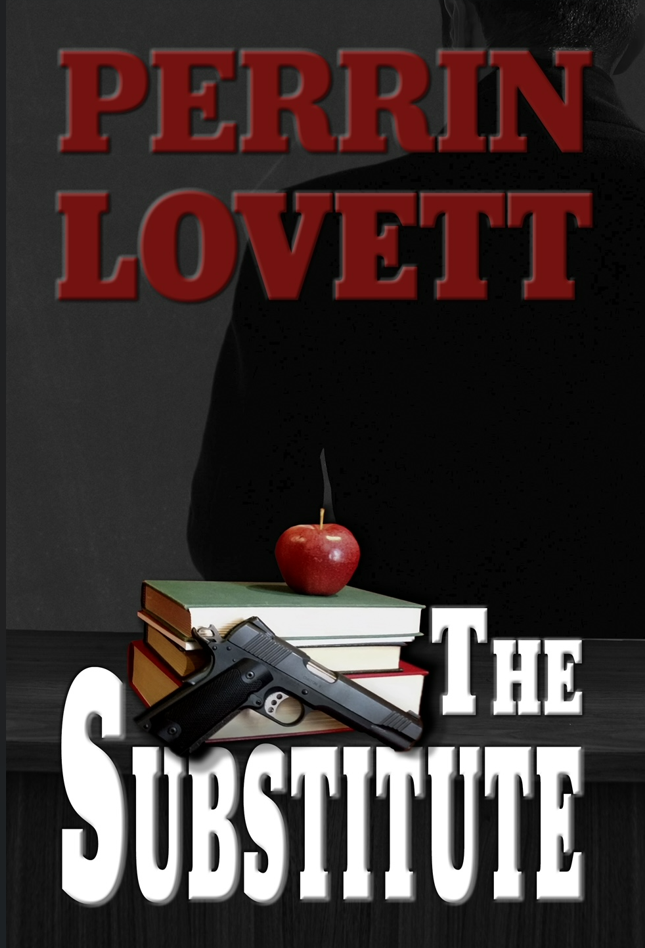
© Shotwell / Perrin Lovett.
UPDATE: Dr. Ironsides emailed and advised there is a suggestion of fake news regarding the A-50 AWACs plane. https://ria.ru/20230301/vzryvy-1855237809.html. At this point, who knows?
02 Wednesday Oct 2019
Posted in Other Columns
≈ Comments Off on A “Real” Interview with Tom Ironsides – from TPC
Tags
Here, in full; originally, at TPC.
TPC Exclusive! An Interview With Dr. Thomas H. Ironsides, Ph.D.
I’m more excited about the following article than I have been since my recounting of the hot little Mossad girls from the malls of yore. This being the National Affairs desk, I thought it a great idea to run some current and pressing issues by the man with the training and insight beyond belief. I caught up with Professor Ironsides – not the easiest endeavor – for a dinner conversation one evening at The Peddler Steak House in Boone, NC. Please enjoy; transcription follows:

Ladies and Gentlemen! Tom Ironsides! Had just stepped off camera, left…
[The back “western” nook, past the soup and salad bar].
Perrin: “Recording… Tom, again, it’s so great to see you. How’ve you been?”
Tom: “Again, it’s Doctor Ironsides if you please.”
Perrin: “So, Tom, great! MB and the whole TPC audience are really excited to hear all about your opinions on national and world affairs. Where should we start?”
Tom: “TPC? Who the hell is MB?”
Perrin: “Newton County? Georgia? The pizza with Ariana last Spring? It may be confusing coming into the real world for a column. Sorry.”
Tom: “Okay. Sure. It is a little odd. Colors seem slightly different. You look different, this side of the keyboard. Duller and wimpier. Anyway, what do you and your friends want to know?”
Perrin: “Thanks. You must be excited with The Substitute and all!”
Tom: “Oh. I knew it! Here comes the plug for that sad excuse of a novel. The one even I struggled to make interesting…”
Perrin: “Right. The one you hijacked. Was supposed to be a nonfictional expose on the…”
Tom: “Hijacked! I like that. Yeah, the one that otherwise would have never been completed. Another COMING SOON, meaning NEVER, book by Perrin Lovett. Ingrate.”
Perrin: “The one where you were created, you…”
[Young co-ed waitress approaches the table].
Waitress: “Hi, boys! Need more drinks?”
Perrin: “Thanks, darling. I’ll have another Newcastle.”
Tom: “Same here, sweetie. Thanks.”
[Waitress skips back to the bar].
Tom: “Damn. Create some more of those in the next book!”
Perrin: “I know, right?! So…”
Tom: “The book is pretty good. Once one gets by the awkwardness of the writing. Wandering plot. Lack of discipline. An important subject. The protagonist is great.”
Perrin: “Thanks. I guess. Tell me, which was worse, the wars, or the government schools?”
Tom: “I came to see them as one and the same. Or, at least as two parts of the same terrible degradation of our culture. Personally, and this may be hard to believe, but the schools hurt worse. Getting shot was just me. Anything I saw or did out there was just on me. The schools? So many affected. In the classrooms, it is manifestly obvious what damage is done to countless innocent lives.”
Perrin: “Do you see or think you…”
Tom: “All of it perpetrated by the same class of moronic evil-doers. It’s no surprise the way they prey on the children. Their contempt for mankind knows no limit.”
Perrin: “What I was asking. Exactly. Moving on… How are the new center and the classical school development progressing?”
Tom: “Baby steps. It’s refreshing to be back in a genuinely academic setting. You know – you really know – we’re right around the corner here, uh, in the … book world? The school is likely … it’s still on the drawing board, honestly. But, getting attention. We see tremendous opportunity, nationwide, through an online program for intelligent homeschoolers. The center is just Maddie, Ari, and myself, for the moment. That too is garnering interest all over. And, as of just recently, we have a real office. A website. We’re getting there. The college couldn’t be more helpful.”
Perrin: “Those not familiar with Part Three may not follow what we’re discussing.”
Tom: “Read faster! Hang on. Is it even out yet?”
Perrin: “Ha! Oh, speaking of crazy… Now, I’d like to take a brief moment and announce something else of extreme interest and tantalizing possibility. We here at TPC and the C.F. Floyd Column for National Affairs proudly welcome our newest sponsor and advertising partner, The Aurelius Foundation. Aurelius, headquartered in Washington, D.C., and Paris, has been providing strategic insight and actionable intelligence for over thirty years. If your bank, government, NGO, or other deep-pocketed concern has a need for global information geared towards decisively terminating and/or profiting from conflict, then please contact them. We’re so glad they’re along for the ride! As they put it: ‘There is knowledge, or there is failure.’ Thank you, dear new friends, and welcome!”

Tom: “What the holy hell was THAT!?! AURELIUS?! Really? Do you even know what…”
Perrin: “Relax, big guy. I’m sure they’re something else entirely in the real world. Besides, we haven’t even written that animosity just yet beyond the sketches. Just an ad.”
Tom: “Why is the logo exactly the same if??”
Perrin: “Because money.”
Tom: “Ah. God. Okay….”
Perrin: “Anyway. Oh, here she comes!”
[Hot waitress returns with two beers and a smile. She immediately bypasses Perrin, settling beside Tom, rubbing his head].
Waitress: “Here you are, fellas! Can I get you anything else?”
Tom: “That feels good! Thanks, doll. Just keep these coming? You in school at ASU?”
Waitress: “Yep. Junior, marketing major. I love these bottle labels! Different facts in every star, you know? I could advertise the fire out of these.”
Tom: “I’m an ad man myself! I bet we could advertise you right out of those pants.”
Waitress [whispering]: “Oooo. See me before you leave, big boy! Oops. Gotta run. More beers in like … fifteen, twenty?”
[Hottie kisses Tom and leaves].
Tom: “Don’t run. Walk slowly. And! Don’t ever work for The Aurelius Foundation!!!”
Perrin: “How do you?”
Tom: “I’m not bad. I’m just written this way. Geez. These lines…”
Perrin: “And, didn’t I give you like the hottest girlfriend on the planet?”
Tom: “You did. But, relax, big guy. I’m sure she’s something else entirely in the real world. Just a flirt.”
Perrin: “Okay. Now some issues… The Ukraine-impeachment. What’s your take on the whole thing? Where do you see it going?
Tom: “Ah, yes. President … Trump? Is it? I checked the news as soon as I figured I was in the real world, here in the parking lot. Exactly the same, just totally different. I hate to make these predictions, but I think it’s going nowhere. In fact, this may be the push that gets Trump reelected.”
Perrin: “How do you figure?”
Tom: “Well, legally… You’re the Constitutional expert, now… What’s that like? Is that like being a dinosaur veterinarian?
Perrin: “Ha, ha! Yeah. Just about. A jurisprudential archeologist!”
Tom: “Sad. It really is. Anyway, impeachment… From the start: the underlying Ukrainian deal, with energy, the aid money, all of it, is just steeped in corruption. Biden and family stepped into that big time. I see that as going nowhere, too. So, could Trump legally inquire into what very likely was a criminal matter? With, or to, a foreign leader? Yes, and yes. State and DOJ aside, he’s still the nation’s top diplomat and lawman. Parts of his job. Can they argue this was a campaign violation? Sure. It’s just a matter of relevance. It’s entirely possible – probably, in fact – that Trump did break some laws. With this and many other things. But, so did, does every member of Congress, all judges, and all other American adults.”
Perrin: “Three felonies a day…”
Tom: “Exactly! Plurimae leges, minus aequitate! One question I have is whether merely being a candidate shields one from criminal investigation. Does it? If so, just as Biden’s status would protect him from Trump, wouldn’t the same argument protect Trump from the Dems? And, there’s the fact that for any evidence they might really have – this time, that this looks like nothing more than a rehash of the same Russian collusion nonsense they ran with for three years. Foreign election meddling! Impeach Trump! Wow, original. Why didn’t they think of that before?”
Perrin: “A thought. Is the intel community or the CIA out to get Trump?”
Tom: “Certainly! He’s rocked their boat, so to speak. They, the CIA especially, they serve the deep state. I would know. Any attempt to revise, reduce, or reign in will be met with hostility. Power for power’s sake. If people even knew just five percent…”
Perrin: “Your call on the election?”
Tom: “Ordinary, if that’s the word, case – Trump beats Warren, reelected. Outside insane scenario, worst case for Trump in other words – impeachment, removal, pardon, and then Trump still beats Warren, reelected. Either way, any way, the pollsters, just like in 2016, will be off guard and out of touch.”
Perrin: “Does he deserve reelection?”
Tom: “By modern standards? Sure, why not? Sane, pre-1860 republic standards? No way in hell. All relative … and irrelevant.”
Perrin: “How long do you think we have?”
Tom: “Depends on a few factors. Probably ten to twenty years, give or take ten to fifty.”
Perrin: “Done by mid-century?”
Tom: “I’d say so. If this is Rome, then it’s about 450 AD, maybe 470.”
Perrin: “Willing to name some of the factors?”
Tom: “Yeah… The economy, of course. The demographic collapse. War – here and abroad. Just one could do it. I think we’re in for a combination.”
Perrin: “What’s the worst factor?”
Tom: “The change. The demographic shift and decline. But, you know, you kind of do that angle to death on a regular basis. Not much to add, and not that it makes any real difference. You, we have it pretty well covered in the book too. I’ll just say, at the end of the day, it was too many men like you and me accepting too much. And, doing so while we had … so many damned guns!”
Perrin: “Let’s see… I also covered economics lately. We’ll leave the war, here, alone…”
Tom: “We’d be so lucky it left us alone.”
Perrin: “Ha! Yeah. Okay, where’s the most likely strike abroad coming? And, by whom?”
Tom: “Iran. The Middle East. There, or in, near China. The US cannot win any war, now, without going nuclear – and that would have its own drawbacks and perplexities. The Joint… the models confirm what the commanders know: the US Empire cannot defeat either Russia or China in an outright conventional conflict. Definitely not both combined. They can’t beat nine guys with goats and an AK. Russia?! I don’t think they can win against us, either; they just cannot be beaten. Of course, they are not out looking for a war. Washington is. In spite of all the games and simulations, computer and material. I used to run those, for the Corps in the ‘90s and the Company up until about nine, ten years ago. Nothing has changed except the odds fade ever year.”
Perrin: “What do you say to the people – you know who I’m talking about – who say, ‘just nuke ‘em?’”
Tom: “I don’t talk to retards. And, since it’s not polite to tell even idiots to fuck off and die, then I don’t say anything.”
Perrin: “That almost says it all. Beyond the ‘duck and cover’ horror show, what’s perplexing about a, uh, a non-conventional war? From the US side?”
Tom: “Mutually assured destruction. And today, the US may not even be able to guarantee its end of the mutual part. It’s not just who else has nukes, it’s who else has deterrent systems. More importantly, it’s also who can sustain the warheads. One of the biggest hidden problems in the US is the lack of tritium production. All those triggers have to be refreshed every seven to ten years. Otherwise, the yield is largely outside control or predictability. For us, the good people, I think that’s actually a good thing. It will keep even the craziest neocon nuts from getting too far ahead of reality.”
Perrin: “You think there’s a decent chance of catching Russia through one of these small to medium country meddlings?”
Tom: “Yes. They drew a hard line both in Syria and in Venezuela. We backed off. One day, that might not go so well for either party. Right now, it looks like Iran is the catalyst. Could change tomorrow. Something about avoiding the entanglements.”
Perrin: “Well, that covers the big tickets. I have a note from a reader, lemme see… Anything out at Area 51?”
Tom: “Lord… No, nothing from outer space, nothing alien. That’s more of a dumping ground for failed or obsolete experiments. Storage. Now, our Omega group had a…”
Perrin: “WOAH!!! No, no, no! We don’t use the ‘O-word’ yet. Not enough written.”
Tom: “Oh, yeah. Sorry, sorry…”
Perrin: “And, I understand you have a little reunion planned soon up in DC.”
Tom: “It’s going to be great. Can’t wait to see some of the…”
Perrin: “I’m confident you’ll have an interesting time.”
Tom: “Thanks. The boys and… Wait. What was the emphasis on ‘confident’ there??”
Perrin: “Wow. Word counts fly when you’re having fun. And, we still have the parking lot scene. Shall we? You pay…”
Tom: “Parking lot?”
[Outside the front door].
Perrin: “Yeah. I was thinking maybe $19.99 per physical copy.”
Tom: “I’d charge $25 or $30. It’s a big book and, the more I think about it, damned good. Let’s…”
Co-ed: “Hey! Wait up! My pants, remember?”
[Perrin intercepts the hottie, mid-flight].
Perrin: “Oh, wow. No. He forgot. Forgot all about his other date!”
Tom: “What other date?!”
Carmyn: “Darling!”
Tom: “Carmyn!? How are you here? In this world?”
Carmyn: “I don’t know. But however it happened, I owe it all to sweet Perrin. Good evening, My Lord.”
Perrin: “Evening, Adrestia. Yes, I still have some power here.”
Co-ed: “Are you a wizard?”
Perrin: “…Sure! That’ll do. Now, I think we were on our way to my hotel room … uh, my penthouse luxury suite. You were going to show me those gymnastics moves, right?”
Co-ed: “Oh, baby, you have no idea!”
Perrin: “Yes. I do.”
[Perrin and the (suddenly) 9.9+ super-hottie instantly teleport away, leaving behind a joyful Carmyn and a bewildered Tom].
Carmyn: “Let’s go shopping, darling! For hours!” [Begins dragging Tom…].
Tom: “Oh, no…”
Carmyn: “Have you seen how pretty Hudson Leick is in the real world?!”
Tom: “Who?”
**As evidence of the veracity of the foregoing, I offer this photograph:

MB must appropriate funds for a professional photographer…
04 Thursday Oct 2018
Posted in News and Notes
≈ Comments Off on Darned Good Journalism: ANOTHER Kavanaugh Accuser Tells Her Tale – from TPC
Tags

 PERRIN LOVETT
You must be logged in to post a comment.