• About
  • Blog (Ext.)
  • Books
  • Contact
  • Education Resources
  • News Links

PERRIN LOVETT

~ Deo Vindice

PERRIN LOVETT

Category Archives: fiction

Book n Blog News

19 Sunday Jan 2025

Posted by perrinlovett in fiction, News and Notes

≈ Comments Off on Book n Blog News

Tags

blog, novel

I made a few changes to the web version sidebar of this fine site. And I tried to clean up the “Books” page. At both places one will now notice a new Christian Romance Novel coming soon ad box. It’s gonna be something else, entirely unlike me and, I think, unlike anything most readers have read before. More on that very soon.

Additionally, I may have extra cool blog-related news soon. And part of it will probably involve the addition of a new Author Page – something clean and professional and whatnot. (Not to worry, the jumbled mess here shall continue!)

PS: Behind the new Romance Novel, expect two long-delayed but totally worth it new short action novels – one with Dr. Tom and one set in a wholly new place and theme.

A New Novel

15 Wednesday Jan 2025

Posted by perrinlovett in fiction

≈ Comments Off on A New Novel

Tags

book, fiction, novel

So, where have I been?

Why I’ve been right here in the swamp cranking out words. It’s just that those words, about 94,500 of them, have displaced most other things and none of them have yet been made public.

Going into last fall, I had a novella and a short novel essentially ready to go. Then they, and much else, took a backseat for something different. They’re both still coming – in time.

What I’ll have first is a complete first for me, a Christian romance novel. It is utterly unlike anything I’ve written before and quite a bit different from the postmodern ordinary in the genre. I’m already calling it my favorite writing ever.

No information until she’s about to debut, which I hope will be before too long. I think or hope all will like it as much as I do. In parting, all I’ll leave is a quote, a pre-review from a literary heavyweight who is only part of the way into the manuscript: “…a beautiful portrayal of the relation of man and woman at the highest level.”

You’ll see it when you see it.

GEOPOLITICAL FICTION: Warrior’s Respect: An Acquaintance Remembered

10 Friday Jan 2025

Posted by perrinlovett in fiction, Other Columns

≈ Comments Off on GEOPOLITICAL FICTION: Warrior’s Respect: An Acquaintance Remembered

Tags

geopolitics, Soleimani, Tom Ironsides

Warrior’s Respect: An Acquaintance Remembered

Tom Ironsides Fiction

Perrin Lovett 2020

Six Pence Pub, Blowing Rock, NC, Tuesday, January 7, 2020, evening…

He sat at the bar, almost wincing as the fool next to him ignorantly pontificated. What had started as a friendly ‘How ya’ doing, fella?’ had morphed into a boring diatribe about brine and snow. Now the geopolitical malarkey deepened. 

‘That thar boy was a murderous thug! He was a-plannin’ mo’ of them em-i-nent attacks. He alreddy dun kilt that thar ‘Murican soldiers and attacked our embassy with his militias. Cain’t have no more hostages from them Irans! Trump had to kill that boy and we dun did it! Ain’t nothing them tarrists can a do bout it now. Ha! But I’d love to see ‘em try. Wouldn’t you, buddy? We whoop they azz!’ His new friend, some fat, balding Boomer, allegedly in town to sell the city road salt, babbled incessantly while pointing to the television news, which featured a dull rehash about a Tweet about the lewd assassination.

‘Excuse me,’ Tom politely interjected, ‘but you’re a fucking idiot. You have no idea what you’re talking about. Please keep your profound stupidity to yourself. Thanks, buddy.’

‘I dun seen it all on tha news! Hannity, and Limbaugh, and good ole Binny Shapiru!’ the man exclaimed, taken aback as indignation strove against his copious alcohol consumption. 

‘Everything you’ve heard, I won’t say read, is a lie,’ Tom instructed. ‘Everything you just blathered out, while it would certainly please the ears of your controllers, is utter horseshit. You wouldn’t know a terrorist from a Saint. Please, do shut up.’

‘They’se them Irans that dun did the Nine-leven! They blew up Noo York!’ the irate man boomed.

‘Wrong, and wrong,’ Tom corrected. ‘I was on duty the morning Northwoods hit. Just be quiet.’

‘North in whut woods, now?’

‘Just hush.’

The obese man sat stunned before his belligerence overcame his shock. ‘You— Well, fuck you, mister! You’se a liberal! I knew it! I sits down and sez to muhself, I hope this feller ain’t no faggot. But shore as the Pope worships Mary, you is! You talks to me like that again and I whoop yo azz, fag! I dun served in Vietnam. The jungle! You probably a draft dodger or somethin’. Lemme tell you whut we dun did to—’

Tom listened for a minute more, grinning and quietly flipping through his phone. When Bubba paused to gasp for air, Tom turned and showed him a picture of Carmyn licking his face at a party. ‘That’s my girlfriend. She’s an actress. You probably used to beat off to her. You know, back when it still worked, I guess.’

The tubby retard, still gasping and now red in the face, turned it up a notch. He most unwisely grabbed Tom’s free arm near the wrist and pulled in closer, imparting some of his beer and garlic-scented breath. ‘Smart azz, huh?! I’m bout reddy ta hit yo purdy mouth, boy!’

Without breaking his concentration on his phone, Tom quickly reverse-gripped the man’s flabby forearm and wrenched hard, cranking his elbow into a painfully awkward wrong-way bend. The man’s squeal was met with a ‘shhhh’ as Tom rolled to another, older picture. He held it up to his buddy’s face. ‘And this is me and General Soleimani, uh, the murderous thug. Back in 2001, in Afghanistan, when we were fighting the Taliban together. Oh, excuse me, fighting them thar tarrists.’ Releasing his grip and still being mostly polite, he tried to explain just a little of the unkind world to the loud drunk:

Hotel Romandy, Geneva, Switzerland, Sunday, September 23, 2001, late…

A somber, somewhat sinister group of men walked through the terrace seating area outside the conference room, headed towards the bar. Two tarried behind the others, the two most somber and serious-looking characters of the company. It was the admittedly tenuous beginning of a delicate working relationship. On that occasion, without any coordination, they were attired in understated fashion rather than suits or uniforms; both happened to be wearing black leather jackets. Tom thought of some way to soften the mood. He got an idea from glancing at the mountains surrounding the city, now illuminated beautifully by the waxing moon. ‘I’d really like to visit your country properly, General,’ he began slowly. ‘I’d love to ski up north of Tehran. Maybe Darband or Abali, isn’t it?’

Qasem Soleimani was as gracious as he was serious. ‘I myself am more fond of the area even further north, around Alvares, which you may know, is also near to the Caspian. Of course, if all goes—I won’t call it well—you and I could cross the border back into Persia and visit Shirbad. It’s just west of Herat, where we may have some business. Wonderful snows.

‘I know this must feel a little off, Colonel. You’ve been to Iran previously. We have a rather extensive dossier on you. Kill on sight orders, in fact. Uh, those I have, of course, had countermanded for the time being. You know, we missed each other a few years ago. These are, I must admit, better circumstances.’

‘Have you ever skied in America, General?’ Tom asked while thinking about, almost rueing his last vicious visit to Iran.

‘I had actually looked at the White Mountains. Ages ago, before the Revolution. It was, or would have been, for me at the time, the chance getaway of a young lifetime. A great luxury and potentially a wonderful time. Sadly, it did not happen.’ The man laughed at the faded memory. ‘If I remember right, that’s your, what you call,  neck of the woods, no?’

‘Well, we might have missed each other then too, had the circumstances been different,’ Tom said as he chuckled at the smallness of the world. ‘Maybe some things are best left on the powder.’

‘Undoubtedly, they are. Now, soon our men will need to— Oh, we’re stopping again.’

Following a few perfunctory words with Crocker and the departing team from State, the pair eased up to the bar, alone for the first time.

‘You’ll need to help me, Mister Ironsides, but Glen-mor-angie—the Scottish is always a jaw-breaker for me.’ The General studied the bottles on the shelf behind the bar, pointing to one.

‘Well, I didn’t know you guys partook of the single malt! Excellent choice though,’ Tom said.

‘I do not, of course. Social settings and good company sometimes require good liquor, if only as the courtesy of a bare taste given to a guest. Allah is merciful, most forgiving at times, and of good causes.’ The General studied the bottle, now brought closer by the attentive bartender.

‘And an interesting choice of words. Jawbreaker is our call sign for the initial operation,’ Tom said while trying to read a label.

‘I know. We’re not so completely in the dark,’ Soleimani said with a smirk.

‘Well then, know that we’ll be inserting, likely on Wednesday night. I’ll be there with my SAD paras and the Deltas. Whom can I expect from your Quds? Maybe someone else who is willing to overlook past indiscretions, I’d hope?’ Tom did look a little hopeful.

‘I should be able to join you and our men later. For now, immediately, look for my—’

The men talked and drank (Tom, Scotch and Qasem, tea) deep into the night. Plans were made, and logistics explored. Soleimani was, as promised, a walking encyclopedia of the terrain, the local tendencies, and the ways of the enemy. They shared multiple strategies and more than a few misgivings. They talked about Hammurabi, Solon, and Caesar. They spoke of family relationships, of children, spouses, and parents. On matters of state and religion, they agreed and they agreed to disagree. A tedious friendship was born. Respect flowed haltingly with a burn like Tom’s whisky. They did, in fact, meet again twice—once soon after in the hills of Afghanistan and once years later in Baghdad during a meeting that Washington denied ever happened. However, they never rendezvoused on the slopes. Even after his retirement, Tom followed his friend’s quest to defeat ISIS in Iran, Iraq, and Syria. A worthy defender of his nation and people, he thought of Soleimani. He’d cursed the administration aloud the week before when he’d heard the news of what he considered plain murder and a despicable war crime.

Back in Blowing Rock…

‘So, just shut up about it, already,’ Tom said at last. He was finished with his unheeded educational lecture and was now checking his email and something else. His new friend still didn’t grasp any of what he’d heard.

‘All that thar tells me is that you is one a them tarrists! And whut do you know, you lying shit?!’ the dim visitor demanded.

‘I know the shit is already hitting the fan,’ Tom said as he again presented his phone. ‘Watch this.’

‘Whut in tha hell that is?!’

‘That is live satellite feed from over Iraq, over Ain al-Asad Air Base. You said you’d love to see them try. Well, they’re trying right now. The news up there will have it in an hour or so once Langley puts the right spin on it. Watch now if you’d like the uncensored version.’

‘Whut am I a-watchin’??’ the tubby man growled as he squinted at the little screen.

‘Those flashes are missile impacts. Probably Qiams or Fatehs. Latest generation guidance. Extremely accurate. Pinpoint, I’d say. Right now, every time one flashes, they’re hitting our hardware. I’d guess they’re knocking out the drone hangers, the smaller ones clumped here and there, center. That base is where the strike came from last week. Makes sense. What I would do.’

‘Whut you’d do?! I know you. You’se a Democrat or something! Love nuthin’ better than helpin’ yo tarrists friends, huh? Stand up! I’m bout to beat some sense into yo liberal azz!’

‘No, you’re not,’ Tom said, looking down at his glass.

‘I’m a-gonna do it! You’se a big boy, but ima spank ya!’

‘No. You can’t. Sorry.’

‘And, YOU’RE DONE, sir!’ yelled the pretty bartender at the heavy, sweaty, woefully-overmatched moron. ‘You don’t know what you’re messing with, with this one.’ She gave Tom, who was unconcernedly addressing his Oban, a wink. To the fat drunk, she instructed: ‘Before you get yourself killed, get out! Don’t come back. Now!’

Tubby mumbled something about a town full of queers and sympathizers and shuffled angrily out into the light evening snow.

‘That fat bastard didn’t even leave a tip!’ the barmaid announced with a hint of regret.

‘I got it. Mine too, in a minute,’ Tom replied.

‘So, professor, is this World War Three?’ the young woman asked with slight concern in her voice.

‘No. Don’t be too alarmed, darling. It’ll all blow over, for now,’ Tom reassured. ‘It’s not a world war unless something utterly stupid gives way between now and morning. This was a very measured response. Making a point or two. They’ll be done in a few minutes, although CENTCOM just registered something odd on domestic air radar around Tehran. Probably nothing. The missiles are a show of force, directed at our equipment, not our men. Neither has any business being in-country anyway. Maybe this is the beginning of a withdrawal. Hell, I’ll have my last toast to that. That, and Qasem. Maybe not the best man in the work he and I did—none of us were—but, then again, maybe he was. Better than me, and maybe the one his people needed. A legend and a martyr. Salute!’

After paying off his tab and leaving two tips, Tom mosied outside. From the sidewalk on Main, he heard the old jungle fighter yelling incoherently from down the street. ‘Gotta give that one credit for persistence,’ Tom thought as he raised a one-fingered salute over his shoulder. Next, he heard a city police officer ordering the old drunk off. He slowly walked on towards his modest rental flat as he admired his little piece of New England drifted so far south. It was getting cold. His phone rang. Carmyn was watching the breaking news. He soothed her nerves and thanked her for a previous lick while requesting another at her earliest convenience. Just before he reached his door, Vicky called. He was calming her fears as he walked into the living room, where Ari and Maddie were waiting with the television blaring. Upon hanging up, he directed his placidity to them, first asking them to turn off the tube. 

‘Uncle Tommy, do you know what’s going on?’ Ari pressed.

‘Yes. That foolishness on the talking screen is only more propaganda bullshit. Some ancient Greek once said, Whom the gods would destroy they first make mad. Some say it was Euripides, though I’m not so sure. Anyway, watch that stuff and you will go as mad as your orange president and the rest of them. What it was designed for. Maybe Qasem was mad to go in like he did, to keep this up for so long. No, we’ve all got enough madness as-is.’

‘What are you talking about, Tom?’ Maddie asked as she turned off the set. ‘We know you have to know A LOT about what’s behind all this.’

Tom was tired and tried to move towards his room, several wistful thoughts plaguing his mind. ‘Goodnight, girls. Of the business behind it all, I know more than I care to repeat this evening. Respect for the dead.’

*Author’s Note, January 2025: I originally wrote and released this short story in January 2020. It has been refined a little for this edition though the gist remains intact. My apologies to the Soleimani family and their friends for certain liberties I took. Now as then, Tom and a typical Murikan man discuss Iran’s successful Operation Martyr Soleimani as it takes place. A brief recount of a fictional clandestine working relationship is also presented. I was reminded of the tale when I read of commemorations in Iran on the fifth anniversary of the good General’s martyrdom and murder at the hands of the Yankee empire. Out of respect for the dead, I highly recommend reading Martyr Soleimani’s Will. Many typical Murikans might not like that, as they didn’t like my story when it first debuted. One wonders if they like the Takfiri terrorism once fought by Soleimani as it is now visited upon them in the US (along with, evidently, concurrent Banderaite Nazi violence). One is forced to wonder a lot about Murikans.

Christmas Fiction: A Georgia Whip-poor-will In Moscow

25 Wednesday Dec 2024

Posted by perrinlovett in fiction, Other Columns

≈ Comments Off on Christmas Fiction: A Georgia Whip-poor-will In Moscow

Tags

Christmas, Pericles In Exile, Whip-poor-will

A Georgia Whip-poor-will In Moscow


Arm in arm, they took their leave of the seventy-six statues of the Ploshchad Revolyutsii metro station. They’d not long left the Catholic Church and a Western Christmas mass. Now their plan was to walk down to Red Square and enjoy the various winter and Orthodox pre-Christmas evening festivities. As they began to stroll under the lights over Nikolskaya Street, Pericles adjusted his new fur Cossack hat from Blackglama, a Christmas gift from Julia, and said to her, ‘That was really great. Almost a daily occurrence in these stations, eh?’

   ‘Just about,’ she said. ‘All subways should have a little live classical music from time to time. A little Schubert is good for the soul.’

   ‘Great, but we can’t really dance to it. I ride the system as much for cutting rugs with you as for transportation. You know me,’ he said, hitting on one of their inside jokes. Then he sang to her in silly fashion, ‘…Oh, my love, since we pay. Somewhere in the dark, I’m always dancing with you on a Moscow train.’

   When they stopped laughing, she held tight to his arm and said, ‘Always a good time, and I love your version. I loved the real song when I first heard it. She released it the year I was born! Almost like it was for me.’

   ‘Yeah,’ he said. ‘I was in high school at the time. Thanks.’

   ‘I just had a great thought!’ she said happily. ‘Tell me the little story about the Christmas bird in the Georgia mountains, my love! And it was your Georgia, right? Not ours?’

   ‘Correct,’ he said. ‘A true story from the Blue Ridge back in the good old State of Georgia, CW of A. And I’m not sure if it’s a Christmas story, though it certainly involves a bird. Someone was supposed to write it up, but that’s been delayed like so many things. Heck, we’ll just say it was set around Christmas, say, back in 1983. How’s that?’

   ‘Perfect,’ she said. ‘Far enough away so that imagination can artfully fill in any blanks the memory leaves open. But what kind of bird was it?’

   ‘That would be the charming Whip-poor-will,’ he said. ‘It makes that exact sound, the sound of its name. And it makes it constantly. But I never found it to be a melancholy bird as some do. From Washington Irving to H.P. Lovecraft to Steven King, everyone says that it represents horror, death, or anxiety. And they might, under certain circumstances, have a point about the anxiety the bird can induce with all of his singing, especially at night. Long, long ago, Thoreau noted, The Whip-poor-wills now begin to sing in earnest about half an hour before sunrise, as if making haste to improve the short time that is left them. He astutely noted the melodious night birds sang the evening away with an encore performance just before dawn. One such little feathered voice of my acquaintance once strove to weave a never-ending concert of notes, in defiance of scheduling, custom, and even the efforts of some to shorten his time. I think they normally get busy in the autumn or summer, but I’m sticking to the Christmas theme here.’

   ‘Christmas, Gregorian calendar, 1983?’ she clarified.

   ‘Yes. To make this a Christmas story, I’m now dead set on it happening in December of ‘83, just outside Blairsville, Georgia,’ he said. ‘You see, my grandparents—we called them Granny and Pa—my mother’s parents, retired and bought a little cabin up in the mountains, a very nice place. Kind of like a village in the Urals here. You’d like it. We used to go visit them from Mississippi every chance we had. And one year, we kept hearing all these rumors, mostly from Granny, about a troublesome Whip-poor-will. She claimed it sang and whipped day and night, especially at night, and wouldn’t give her a break. It was a little funny, but I got the idea mom thought it was driving Granny crazy. Anyway, we were aware of the bird. And, anyway, we made our way over for, again, a Christmas getaway.’

   ‘Was that a long trip? By car?’ she asked.

   ‘It sure seemed like it at the time,’ he said. ‘And, yes, by car; it was maybe an eight-hour drive. The speed limits were artificially low back then and many of the roads were two-lane and narrow. And so forth. But it was always worth the time and travel. So on that trip, we arrived and had our normal good time. I can’t recall if any cousins or anyone else joined us that year. Sometimes they did, other times not. Nothing out of the ordinary jumps out in my memory. I’m sure Granny carried on about her singing friend, and maybe I initially heard him once or twice, but I really can’t say. But I did unmistakably hear something one night.

   ‘It was late and I think I was already asleep. That might have meant the couch or a sleeping bag, but I just can’t remember. What has stuck in my mind were the shotgun blasts, two of them. Like everyone else, I was awakened in the night by BAM, BAM! Two shots were fired near at hand. Everyone jumped up in alarm. Daddy and Pa were running around trying to figure out what had happened. This was, and is even now a very quiet area. One hears the infrequent gunshot during the day sometimes, particularly during fall and hunting season, but generally not in the dead of night. But we then rapidly figured out what was going on. The front door was open a tad and we could all hear Granny outside cussing and yelling. 

   ‘It appears that her friend came calling that night and she had enough and went out to confront him. We found her in the front yard, up the hill a short distance, looking up at the roof, cussing some more, and holding her four-ten-bore shotgun, a double-barrel model that rarely left her side. She claimed she’d gone out and caught a glimpse of the offending Whip-poor-will up on the ridge of the roof, silhouetted in the moonlight. And not being able to stand his harassment anymore, she let him have both barrels. At the time, the results of her actions hadn’t made her too happy, and Pa was far from elated. He walked around, looking at the ground. There was no dead bird, and no feathers, but he did see several bits and pieces of shingles lying around. Everything calmed down a bit after that scene and we got Granny back in the house. I think we were talking about finally going back to sleep, and all was quiet once again. Then from outside, we heard, Whip-poor-will! Whip-poor-will! He was a fervent little fellow and not the least bit perturbed by the night’s shocking events. It’s funny looking back at it all now.’

   They were now walking next to the skating rink on the Square. After a period of silence between them, she said, ‘And then what?’

   ‘What?’

   ‘What happened next? How did the story end?’

   ‘That was it,’ he said. ‘All I can remember. I think the bird won, and I can’t ever recall hearing more about him. Nothing else slowed down that Christmas, or the one after, or, really, any of them going forward. How’s that?’

   ‘Well, it was a funny tale,’ she said. ‘But it’s not the normal kind of Christmas story one thinks about!’

   ‘I never said it was normal,’ he said. ‘Hey, wanna skate a bit, or get a drink and walk the sights? Or how about some GUM shopping?’

   ‘Anything in particular at GUM?’ she asked, her interest piqued. 

   ‘Well, there’s something, a gift for someone for the Seventh or New Years. I really need her to try it on for size and then act like it’s a surprise when I give it to her later,’ he said.

   ‘Would it be something to compliment our hats?’ she asked.

   ‘It just might be!’ he said.

   ‘Ooo,’ she said, now rather excited. ‘Then let’s grab the drinks, walk for a minute, and then go in for sizing! I’ll let you skip the embarrassment of skating since you’ve been a good boy.’ She was now pulling him forward by his hand.

   ‘An excellent plan! Lead the way, darling,’ he said, thinking he’d had the last word of the hour. It turns out that he did not. For as they approached the first vendor’s stand for drinks, somewhere high above the din of the crowd, and most out of place in the central city, there came a lone, shrill cry: ‘Whip-poor-will!’ Of course, giving the little bird the benefit of the doubt, that probably meant Merry Christmas!

COLUMN/FICTION REDUX: Once Again, It’s Tweetsie Time

30 Friday Aug 2024

Posted by perrinlovett in fiction, Other Columns

≈ Comments Off on COLUMN/FICTION REDUX: Once Again, It’s Tweetsie Time

Tags

fiction, Tweetsie Christmas

Once Again, It’s Tweetsie Time


Autumn is coming, and once again, it’s my favorite time to praise the great North Carolina treasure, Tweetsie Railroad. My first visit to America’s greatest amusement park was during the 1970s. I cannot recount how many times I’ve been back, but I hold steadfast that Tweetsie is the one place that never seems to change. It’s always, always, always exactly the way one remembers it from childhood. Before I forget, let me also recommend this place, another delightful getaway just around the corner from Tweetsie, and founded by the same good family. And while I’m doing free promos, eating at the Peddler is mandatory when visiting the area.

Rather than recite every single virtue of Tweetsie or even a fraction of them, I decided to republish a Tweetsie-themed short story from a few years ago. Please enjoy!


Et Pisces Cultro

Perrin Lovett, 2020

‘One of you will finally catch him one of these days,’ Will said, not quite to himself, as he sat on the rear cargo deck of his SUV, looking down at something. ‘And, maybe they’ll promote you guys to a full eight cents.’ He laughed softly as he started digging around in a large bag with one hand. His other hand held a pocket knife. Rather, it held his pocket knife, a marvelous little folding device without, in his mind, rival or equal. He considered it the finest knife in the world, a tool of elegant, simplistic utility with a manly, if subdued, artfulness. It was unique.

It was a smaller design: slim, light, and made for unobtrusively resting in pants of any caliber – rugged denim or stylish wool. The construction was solid steel, with a simple hinge, and a locking release nestled at the end of the handle. Compared to other two-and-a-half inch knives, it was as functional, practical, and reliable as any. The handle set Will’s apart. For embedded under clear resin were three green-tinted postage stamps, set fringe to fringe in a row. Each bore the image of a brown trout leaping from the water in pursuit of an elusive dragonfly. Each boasted the nominal price of 7 ½ cents, as marked years earlier in the distant nation of New Zealand. In a way, he had always credited the fish (and the knife) for his long-ago visit to that far southerly land, his own On The Beach moment while en route to temporary employment somewhere colder. The knife had accompanied him even then. Now, it was ready again for lacerative work.

From the bag, Will, at last fished what he was looking for. That very evening, less than two hours hence, he and his lovely Wendy would take their little daughters, Willow and Wynter, for a night of spooky fun, courtesy of the Ghost Train and Tweetsie Railroad. With Halloween closing in and a chill in the air, warmer clothes were in order. That afternoon, following a day of ordinary, daytime mountain railway excitement, he’d purchased a little pink “No. 12” fleece pullover for Wynter. He’d only to remove the tags and triumphantly present it to her up in the room. He clicked open the knife and could not overlook, momentarily, the significance of the act.

Like the garment, his perfect pocket knife had also come from magical Tweetsie, though not from any gift shop. Many years before, when he was a boy, he’d been wandering around the Country Fair area, Dippin’ Dots in hand. Then, he had noticed a man with a rake, laboriously cleaning years of dust, dirt, and debris from beneath a ride. On the ground were a pile of grime, leaves, bubble gum wrappers, and other dingy trash, awaiting deposit into a rubber waste can. In the pile, little Will caught the gleam of shiny metal, something to naturally attract the attention of a ten-year-old boy. Oblivious of the encompassing filth, he’d simply reached down and lifted the object for inspection. Seeing no one else around, and adhering to the ancient law of Finders, Keepers, he dusted it off on his jeans and, after admiring it, placed it in his pocket. Later, at home, he’d polished the knife and oiled its mechanisms. Despite lying buried for who knows how long, it was sharp when he found it. He kept it finely honed to a razor’s perfection, a feat he’d always found remarkably easy. It was as if this little blade wanted to remain keen of its own silent accord. As such, now he knew it would make short work of his project.

Retailers relish labelings. He pulled back a sticker, then another. He deftly sliced through two plastic tabs. The final challenge was a long nylon stem binding the price tag to a sleeve. With the fleece garment on his knee, he stretched the tag taut with his left hand, two fingers wound around the top of the stem. He placed the sharp blade and prepared to cut. Just then, a passing truck blew its raspy horn. He jerked. The stem snapped clean. But he felt the passing of cold steel across his curled digits. 

‘Oh, wow,’ he exclaimed as that hot ripple down the spine that we all feel in such tenuous moments caused him to lurch again. He examined his fingers cautiously, surprised to find only the faintest, superficial lines of indentation that, even as he watched, receded to nothing. He tucked the sweater under his arm and closed the knife. ‘Woo! That was close.’

‘But we never harm our owner!’ said a small voice, the speaking of which caused Will to drop both coat and knife on the deck. 

‘Who said that?!’ he asked with a start.

‘We did,’ answered the little voice. ‘And please don’t discard us so roughly.’

Will’s hand slowly, almost unconsciously inched towards the knife. He picked it up gingerly and, turning it in his hand, gazed at the three diminutive trout. ‘Was that you?’ he asked in disbelief.

His eyes went wide and his head reeled as the report came in: the first little fish turned its attention and its head away from the fly and straight to Will, and spoke! ‘Of course, it was us,’ said the fish.

‘You can talk?!’

‘The same as you, if more selectively,’ replied the second trout. ‘Well, except for him.’ He nodded to the third fish. ‘He stays quiet. Missing his tail, you know.’ Will observed, for the first time he could remember, that the last trout in the line was creased-over the end of the hilt pommel with its tail obscured or deleted. He had never in all those years noticed. And he had never, in all his life, expected a conversation with at least two fish on a knife. (Honestly, he had never envisioned discourse with any fish, bladed or otherwise).

‘How do you— How do you two fish speak? Is it possible?’ he stammered.

‘Not possible. Probable,’ said the first fish.

‘Not probable,’ said the second, ‘definitive.’

‘Oh,’ said the first, ‘and we are not two, but one. I am the knife of two voices though of one mind.’

‘You just called each other us,’ Will correctly noted.

‘There is no explanation for that. Is this better?’ they both answered at once.

‘That is— This is just a little odd,’ Will admitted.

‘We always expected mild confusion,’ the first fish said.

‘Why haven’t you spoken before?’

‘We have never spoken before,’ said the second fish, ‘except to each other. Long discussions we had beneath the Tilt-a-Whirl, our home for an age of fish.’

‘Ha!’ Will exclaimed. ‘So you remember when I found you? When we first met?’

‘We do,’ said the first, ‘and many thanks for your rescue and kind treatment.’

‘How long were you down there?’ Will asked. ‘Or, better, start from the beginning. What’s behind a talking knife?’

‘The long or the short of it?’ asked the second. ‘Better to finish faster, eh?’

‘Indeed, time is wasting,’ said the first. ‘I’ll explain a little: Will, you yourself have noted, more than once, that we are marked Japan, rather than China or USA like so many common blades. We are the work of an old katana master, sold through a trading company to a certain menswear shop.

‘What was it? Thirty years gone by? We were acquired by a man who treated us well enough. He visited your favorite amusement park more than once. It happened that, upon a time, he and his daughter ventured onto the Tilt. We were, if we can remember it, already dangling close to the edge of the pocket, so to speak. Sir Newton was right about motion. Once we started moving, started flying, we didn’t stop until we rolled, slid, and came to rest on the metal decking near the outside rail of the amusement. He could have found us, we suppose, if not for the vibrations. When the machine slowed down, the motor shuttered, the floor shook and we fell through the cracks – and not as a matter of mere saying. Lonely and forgotten—’

‘He never forgot us,’ added the second trout.

‘No, but he was most late in thinking of us when he finally did. And too slow to finally act,’ said the first. ‘For about a year we lay amid the crud and smut until you came along. And, thank our maker, that you did.’

‘You said it was an age,’ countered Will.

‘Yes, for us,’ said the second; ‘time passes differently for trout on a dagger.’

‘Oh,’ remarked the first, ‘and time is running away here and now. We can explain a little more at the park tonight. Does not someone need a certain pink cloak?’

‘Wow. Yeah. Thanks,’ Will said, then venturing to inquire: ‘What are your, er, what’s your name?’

‘Piscis Gladius, at your service as always,’ the knife answered as one.

Enlightened, and still amazed, Will stowed his new friend and former tool in his pocket, handled the pullover, and made off for room 414 at the Holiday Inn, Boone.

Wynter, aged three, was enthralled with her new outerwear. Donning it she became a fashionable sight to match her older sister. Clad against the night airs and the threat of fog or drizzle, the happy family soon meandered down US 321 towards Blowing Rock. 

On the short drive, as the girls chattered away in their car seats, Will asked Wendy, ‘Did you ever read The Children of Hurin?’ 

‘What’s that?’ Wendy remarked. ‘Is that a kid’s book?’

‘No, it’s Tolkien. One of his posthumous books, a tragedy.’ Will said.

‘No, I haven’t,’ she said. ‘Is there anything Halloween spooky in it?’

‘Kind of. It’s about Hurin’s son, mostly. He, among many adventures, found a talking sword.’ Will let the words fall out slowly, his mind somewhere else and his eyes on the road.

‘Well, no tragedy tonight. We’re out for spooky fun with the Ghost Train, right girls?’ Wendy said and asked, more to the back seat than to Will. Then she turned to the radio. ‘Let’s see if there’s some macabre music on!’

There was not, as it turned out, though the girls (and Wendy) had fun with a kid’s sing-a-long CD about a black cat and a jack-o’-lantern. Will kept thinking about his new fishy acquaintances. Fifteen minutes later, he did the honorable thing and, seeing a chance, dropped the ladies off nearer to the main entrance, himself resolved to seek out a parking space alone. For some reason, he parked as far away as he could, or as far as the attendants would allow. On his slow walk up the hill to the ticket office and gates, he checked to make sure no one was close or watching and he pulled out the knife.

‘Okay, now. What’s the real story behind a talking pocket knife, my postal friends?’ he asked.

‘Ah, yes,’ said the first trout. ‘We, as we said, were crafted by a great master in Seki. His skill, and perhaps something greater, lives on in us. We always knew we were smart – uh, smarter than your average knife – but we could never bring ourselves to speak out loud. That is, to anyone else or even to ourselves.’

‘We kind of thought together, if that makes sense,’ added the second fish.

‘Indeed, indeed,’ rejoined the first.

‘You never spoke to the first owner? The man with the loose pocket?’ Will inquired.

‘No, sadly,’ said the first. ‘He was a good enough fellow, and he took us on all sorts of adventures.’

‘We went to the World Trade Center, and to some, well, mysterious meetings in Washington, along with many other exciting places!’ the second said happily.

‘And, then you graciously took us to the home of our philatelic ancestors. And the frigid extremes of the Pole,’ said the first. ‘Exhilarating, if cold enough to freeze the fish off a steel blade.’

‘We’ve a mind to see our true home of origin, where the stamps met the metal, in Japan, someday. If it can be arranged. Perhaps this visit to Tweetsie can help us along,’ said the second, whimsical.

‘The Tweetsie magic, yes!’ said the first. ‘It’s probably not magic, per se, more of Divine Providence. But it was here, in this blessed little realm, under the Tilt-a-Whirl, that we first spoke. To ourselves, of course. And it might just be proximity, tonight, that prompted our speech to you, dear William.’

‘You guys think there’s more of that magic ahead?’ Will asked.

‘We do, now that we see more clearly,’ said the second.

‘You talked about traveling. And you want to get back to Japan. You think there’s any chance I could help with that tonight?’ Will asked.

‘Possibly, if not probably or definitely,’ replied the second.

‘What can I do, if or when the time is right?’ Will wanted to know.

‘Cast me away,’ said the first trout, flatly.

‘Where? Like into a lake or something?’ Will asked with mild trepidation.

‘Oh, no! Nothing like that, Will,’ soothed the first fish. ‘Let’s just say, if and when the time is right, you will know him when you see him.’

‘I’ll just know him when— Oh, hey, people and the ticket office, guys! Back in the pocket, we go,’ Will said with a wink.

In a jiffy, he passed through the turnstile and into the legitimately happiest place in the world. He was as awed as ever as he walked past the stroller rentals and the ironically-juxtaposed jail and began scouting for his family on Main Street. It was always the same at Tweetsie, regardless of the year, the season, or the time. The little park was (or is) the one place that is always exactly the same as one remembers it from childhood.

Will noticed a sign near the Cowboy Cantina. In a few days, the final day of the season, a concert was to be held at the Hacienda. Will reckoned they would have to miss that fun, even though he knew the band and wanted to sing along.

‘Dandy and the Bass Slayers! Boy!’ he said out loud.

‘Vee herb dap!’ came a watery call from his pocket.

‘Sorry guys. But it’s bass, not trout,’ Will explained. ‘They’re a rockabilly band from… Hello, baby girls!’ He had found his loved ones.

‘Daddy!’ Wynter practically screamed as she jumped up into his arms.

‘It’s me!’ he said before pecking her on the forehead.

‘Daddy! We should have worn our Halloween costumes!’ said Willow, excitedly if somewhat ruefully.

‘Well, now, let’s see,’ said Will; ‘I think we’re costumed enough. You two and mommy are obviously princesses.’ It was a kindly remark, true in a familial sense, pleasing to young daughters, and it generated a smile from an appreciative wife.

‘So, daddy?’ began Wendy; ‘Just what are you? Our prince?’

‘No,’ he answered. ‘I’m just a greens manager enjoying a long weekend.’

‘That’s not a costume!’ Willow sang while pulling back and forth on Will’s hand.

‘Everyone else is making up for it! Look at all these characters around us! Now, what are we going to do?’ He placated.

They did just about everything, and some things more than once. The Ghost Train waited while the family had dinner in the Cantina. Then, there was a small matter of more shopping at the very same stores that they’d visited earlier that day. Some pictures were taken. Then! Then, they rode the Train, with frights, thrills, and chills aplenty. They found themselves in a delightfully dark haunted wonderland. There was so much to take in! Ghouls, ghosts, goblins, and more lurked around every laughing corner. The family found out that they call it a Freaky Forest for a reason. And, who knew candy corn worked so well in a funnel cake?! After seeing a spooktacular show at the Palace, they ventured up to Miner’s Mountain for more shows, more rides, more pictures, and more fun. For added measure, just to be safe, they even had some additional fun. On the way back down, via the chair lifts, Will had to ride by himself, a car behind the ladies. He listened to them sing and shout and yell Hello, spiders! to the giant, illuminated spiders down on the hillside. After a moment, he pulled the knife out once again.

‘Hey, guys. I’ve been looking for whomever this is supposed to be, and I haven’t really seen him yet,’ he said.

‘No, you wouldn’t,’ said the second trout; ‘not yet.’

‘You’ll know him when you see him, not before,’ said the first.

‘So, he wasn’t that tall, intelligent but dangerous-looking man with the very attractive woman at his side?’

‘Certainly not.’

‘It’s not the last owner, is it?’

‘No. We’re going forward, not backward.’

‘Is he anything like me?’

‘Like you, perhaps, as you were.’

The conversation ended at the lower lift station. The knife was again concealed and, roundabout, Wendy, Will, and the girls ran, skipped, and frolicked their way over to the Country Fair. There, the falls were free, the tornado was gusty, the turnpike was cruising, and the arcade was refreshing. Will and Willow even braved a car on the Tilt, while Wendy and Wynter dared to occupy another. Will almost assumed that the knife would once again fly off, literally, on a further escapade. But in the end, when he checked, it was still in his pocket. At last, as the evening drew towards its closing, the ladies wanted one final thrill. Space limits dictated that only they could ride the ferris wheel, so Will contented himself to sit and watch. 

He had taken to a bench near the Tilt and was watching (and listening) as the women of his life circled high above. He knew that after the very next revolution, they would exit and this particular Tweetsie visit would come to an end. He didn’t know that he had inadvertently taken out the knife, nor that he was gently turning it in his hand. He had just realized what he was doing and was again examining the stamps as they turned upwards to his face, kindled by the carnival lights all around him. Suddenly, a voice spoke – and it was not aquatically-accented: ‘That’s a nice knife you have, mister.’ Will looked up and observed a boy of about ten, who was keenly looking at the little folder. Without thinking any more about it, Will stood up and held out the knife to the lad insistently. After a second of hesitation, the boy took it.

‘That’s a nice knife you have,’ Will said with a smile.

‘Gee. Thank you, sir,’ said the boy.

‘Don’t thank me,’ said Will, ‘thank the fish.’ With that, he simply walked away, almost immediately running into the giggling womenfolk.

‘Will Ferrum, did I just see you give your favorite knife to that little boy?!’ Wendy asked perplexedly.

‘You did,’ Will said. ‘Somebody has to get them to Japan.’

While both the gift and the remark potentially begged a few questions, she asked him no more about it, and he explained it no further. Instead, they all four wound their way back, past the Spice Ghouls, past the prize pumpkins, and past spills and chills galore, to the exit on Main. As they were departing, and maybe they didn’t even hear it, thus began the melody of “Pet Sematary” by the Ramones. And a pale, strange man in a cape and a top hat, seated across the cowcatcher of Old Number 12, began to laugh.

Consider steel, as cold as night,

Allocution of the angled;

Find the sword a cordial sight,

So keeper be embrangled.

~The End~

Furthermore,

Deo vindice. Deus est etiam iustitia.

COLUMN: How It Might Happen [Fiction Rerun]

07 Wednesday Aug 2024

Posted by perrinlovett in fiction, Other Columns

≈ Comments Off on COLUMN: How It Might Happen [Fiction Rerun]

Tags

aircraft carrier, Iran, rerun, War, WW3

The following short story first appeared on my blog on March 19, 2021. Over three years later, it is still remarkably relevant, perhaps more appropriate now than then. 


How It Might Happen


Brynlee pulled her thong up to fully expose the new marijuana leaf tattoo riding high on her plump, white right cheek. She was delighted TikTok was working again (it had been off-and-on for a few days for unknown reasons) though she was moderately distressed the comments feed still wasn’t active. ‘Weah muh boiz? Weah beo-chez? Thot bee hawt!’ she slurred as she began to twerk for the camera. ‘Yaw git high why I shake dis booty, shake dis booty, shake diss booooo-tay!’ 

The noise from the living room really bothered her—almost as much as the loss of instant gratification from her ten thousand loyal followers. ‘Turn dat sheeit dow!’ she screamed. ‘Dat bee dee nooz?’

Suddenly, Marqueena, the seven-year-old daughter she’d had with Darnell, a man she barely remembered, stormed into the kitchen. Sober eyes would have detected the fear and distress on the cute little face, half ivory, half ebony.

‘Which ship is daddy on?!’ the little girl asked with a shout.

‘Gah! Gurl, waay,’ the attention whore exclaimed as she tapped off her phone. ‘Wuh? Why? He on dat Ray-gan, da airpane sheep.’

With an ear-splitting scream, the child crumpled to the floor in a sobbing heap. Between wails, she bleated, ‘Daddy! Daddy!’

Her wasted, worthless mother stepped over her writhing body and ventured to the doorway. From there, she witnessed something on the 80-inch screen that almost drove the booze and drugs from her underpowered mind. She looked just in time to see the third playing of the first hypersonic anti-ship missile as it plowed into the starboard side of CVN-76. Four more bright flashes followed in rapid succession. Within minutes, over one hundred thousand tons of steel, billions of dollars, and six thousand men—Darnell included—sank to the ocean floor.

While little Marqueena rolled and cried, pounding the linoleum with her fists, Brynlee stupidly muttered, ‘Day-um. Muh check…’

The horrific martial scenes on the television were replaced by a stunned Tucker Carlson. With great effort, he spoke again, ‘And, that was Sunday night. Three days ago. They’ve been lying for three days, lying as if nothing was wrong. Well, it is. It’s worse than wrong, it’s unbelievable. It’s terminal.

‘It took Russian and European reporting, that they tried to block, to break the truth openly. For three days, President Harris, or Pelosi, or whoever the hell is supposed to be running this failed nation has been lying to us. A training exercise? Retaliatory strikes. Mission accomplished? Your sailor will contact you when routine radio silence is lifted! Lies. Lies. Lies!

‘Here’s what we know—now!—that really happened. The Iranians knew the strikes were coming and they were ready. Not a single US cruise missile or bomber got through. Tehran obviously has this Russian S-400 or S-500 system and it obviously works. They also have, according to new reports we’ve been able to verify, advanced ultra-high-velocity sea-skimming missiles. That’s what sank the Reagan along with three support ships. 

‘Our Navy is so weak, so unprepared that they can’t even recover the very few survivors. The Iranians, to their great credit, have been picking up our wounded, treating them, and offering to return them as soon as possible. They, it seems, have Allah’s grace; we’ve lost it.

‘Within an hour of the Battle of the Arabian Sea, China moved against Taiwan, their first step being to sweep the US Pacific Fleet aside. That’s when we lost the Roosevelt and the Nimitz and other support ships, lost them to even more advanced weaponry and tactics. That’s when we lost most of our island-based assets in the South China Sea and the Philippine Sea. China, by the way, is not interested in recovering any of our MIAs. Also, by the way, there is practically nothing we can do about any of this.

‘That’s when, that’s how we lost an estimated thirty-thousand casualties in one hour. That’s why Vladimir Putin sternly reminded Washington of the new Russian defense alliances with Beijing and Tehran. That’s when the failed, satanic, blood-thirsty fools in the White House started lying. That’s how we know this paper tiger has no teeth. Just maybe, maternity flight suits and transgender sex change operations weren’t the right priority. Well, regardless of how we look at it, America’s imperial age just ended.’

Fiction Column: NO LOST CAUSES

08 Friday Mar 2024

Posted by perrinlovett in fiction, Other Columns

≈ Comments Off on Fiction Column: NO LOST CAUSES

Tags

CSA 2.0, Free Palestine, Gazacaust, Pericles In Exile

NO LOST CAUSES

~A “What If” Alternative Present History~


Danivolsky District, Moscow, one afternoon…

Upon exiting the Metro station and climbing the stairs to the street level, as soon as her eyes peered above the top step, Julia watched an orange street car pull away to the east. In another moment she was standing on the plaza sidewalk. With a quick glance to her left, she saw the next tram coming, a sparkling new white model, still a short distance away. She paused under a canopy, noting the distinct if temporary change in the weather. While she wasn’t sure if meteorological spring would come early, as some now predicted, she was slightly gladdened by the day’s increase in sunlight and temperature. After loosening her scarf and collar, she took out her phone.

With another check, seeing the tram inching closer, she scrolled to Perry’s latest email and its literary attachment. She felt a slight pang of guilt in that she had not yet read it—a nothing of a hopeful little story, as he’d put it. En route to him now, she’d wondered if she had time and the necessary attention to give it justice, be it a nothing or otherwise. Just then, an idea popped into her head, immediately followed by buds popping into her ears just below her mink hat. She carefully selected the “read aloud” feature and tuned the delivery speed to 1.5x. That, she thought, even as the tram slowed to a stop before her, would be fast enough to get through the whole story on her short hop while still allowing her a full digestion. As she boarded and waved her troika card over the reader, a mildly robotic male voice began to tell her the tale:

Rafah, Gaza, Palestine, present-day…

To little Rindi’s reckoning, as best her six-year-old mind could see it, the shift in tempo and the welcomed reprieve had come just a few days earlier, perhaps a few days after the world learned the hideous truth about the mass murder and maiming of nearly one thousand starving people in the streets, lured by the occupiers with the false promise of food and clean water. News, internet, and cellular service, absolutely unreliable since October, had lately almost completely disappeared. Yet rumors swirled and grew. Adults and older children spoke furtively about some new outside actor joining the conflict, someone who could turn a massacre into a fighting chance for life. The daily bombings and raids had slowed and then, just the day before, had stopped altogether. New cruise missiles and jet aircraft were seen, here and there, screaming through the sky high above the refugee camp. 

No one believed her when she tried to explain, but she was certain she had caught a glimpse of two of the new missiles. They had looked like small darts and she could have sworn they had little wings. She gasped as they sailed silently through the clear blue heavens, followed by a faint yet reverberating, cascading crackle of artificial thunder. They came and went in an instant. Nobody listened to her, though everybody excitedly if cautiously spoke. She didn’t understand the importance of the directions, but all the adults noted that these new weapons fly in from the Sea and towards the occupiers. Out of terrible desperation, hope arose that some unknown force was driving back the murderous besieging hordes. Beyond hope or even belief, it appeared that was exactly what was happening. The warming winds at the end of winter were bringing great change, greatly needed. Many prayers were raised that it would immediately nourish and heal the ailments of war and famine.

And sure enough, just the night before, trucks, ambulances, and taxis had sped through the rough streets at her far end of the camp, speeding, in fact, all over the beleaguered city. Police, freedom fighters, aid workers, and other good men hastily grabbed up those most grievously wounded or famished, taking them back towards the old port where it was alleged a new field hospital had been very recently erected. In their place were left bottles of “Publix Spring Water” and something called “Clif Bars” — labels printed in a script Rindi couldn’t read though she knew what their wrappings contained. Promises were also left that more and better were on the way very soon. And again their hopes rose.

The deep night had been hectic, enlightening, but still terrifying. Rindi couldn’t remember sleeping. Out in the cold, voices shouted that something miraculous was happening at the old jetty, some work of hasty martial engineering. Soon thereafter, at some distance but still far too close at hand, a mighty series of explosions sounded, blasts that lightly shook the ground and her sleeping mat. Still, any fear tempted to return was denied by some unreasoned optimism. More jet engines roared overhead. Someone cried out that the occupiers’ wall and fence, to Rindi’s people “the cage,” had been felled nearby. A few loud vehicles passed the tent. ‘They are coming!’ someone had shouted in the dark, though with a hint of praise in place of trepidation. Higher rose the hopes of all.

It was very early. The light of a cool dawn was breaking. Rindi had just finished her Clif Bar, splitting it with her little sister. Otherwise, she might have thought it tasted funny, not quite sweet or sour, though with a definite hint of chocolate. Then and there, however, it tasted like deliverance, the first hard sustenance she’d had in over a week. She had just allowed the baby to lick the sticky remains of gooey dough from inside the foil wrapper when, suddenly, great excitement grew to a pitch outside their tent. The constant cheers and the mechanical rumbling, groaning sounds forced her outside for an inspection. 

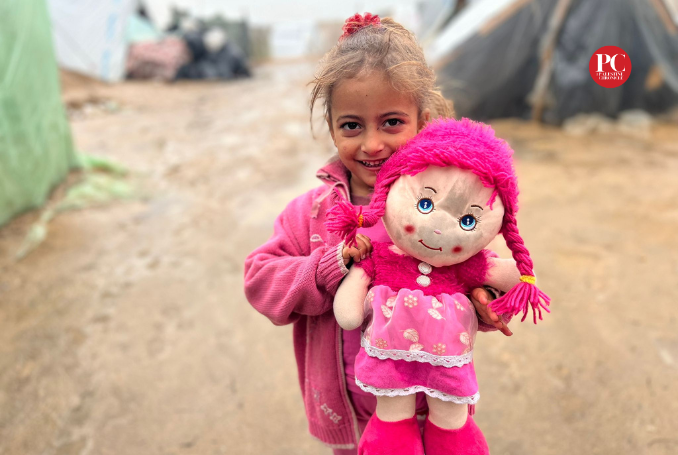
With one hand, she pulled the collar of her pink sweater tight. The very small girl’s shiver returned as she watched the procession, already in progress when she finally forced her way through an opening between the legs of some adults, one of whom was her mother. However this time, her flutters owed to a confident anticipation she didn’t fully understand, a healthy rejoicing change from the usual quakes born of cold, hunger, and dread. Even as she’d approached behind the older folks, the bawl was noisy, near-deafening. Again the ground was shaking, accompanied by a rumbling in the air that flowed with the sound of large engines revving, and the repeated great blasts of many air horns. She was astounded to see a large column of military vehicles passing them by, making for the wall and, Rindi and the others guessed, business with the occupiers beyond. In a long array, there came a convoy of assorted large grey GAMAZ and URAL trucks. Some of them looked like rolling boxes. Some were topped by strange antennas. Others towed trailers and more than a few artillery. A great many of them carried soldiers clad in grey. Betwixt and between the trucks, there were many columns of grey battle tanks—T-90s, T-14s, and the new-to-the-world C-1 Forrests. These latter mechanical beasts, along with some of the trucks, flew flags. She had never seen them before though she found them at once striking and beautiful. The vehicles all boasted a series of markings, words, and numbers Rindi could not make out or interpret. Commanders sat half within their hatches atop the tank turrets, stern men wearing grey camouflage uniforms and helmets. As the last tank passed, Rindi caught its commander looking to her side of the street. He had a short blonde beard and, despite the low light, he wore black sunglasses beneath his helmet. He took off his glasses, slowly raised his other arm, and saluted the crowd. At the risk of dropping her big pink doll, almost half as tall as she, Rindi returned the gesture. She knew he winked directly at her. Then he and the others were gone. She leaned out and watched as they vanished in the distance where the cage walls were or had been. From the remote clouds of dust that leaped into the air, it was obvious they were dispersing once they passed out of Gaza.

Voices called out all around her, though they were temporarily drowned from above. Rindi and all the others looked up to see a flock of ten or twelve attack helicopters fly forward, following the tanks with their noses down. They cleared the wall and, most likely overtaking the armor, they also dispersed in this direction or that. At the edge of sight, it looked like one released a torrent of rockets or flares as it pivoted. Soon they too had vanished. But while they had been overhead, Rindi thought they were very loud, whooping along under counter-rotating props. She noted they were all grey, bearing strange markings she had never seen before. Maybe it was the rising sun or her imagination, but to her, they almost looked like flying crocodiles. As scary as they might be, she loved crocodiles and remembered them from her older brother’s school books. He had explained that some people called them alligators, a distinction she didn’t understand. Sadly, he had never explained further and never would; he had been martyred by the occupiers in the opening weeks of the horrible assault on their town in the north of the Strip.

While she was excited like everyone else, she was also naturally curious. She asked again, “Who are they?” And, again, she was ignored. Her temptation to ask once more was quashed when she heard a new sound coming, a musical sound. Looking down the street, back towards the beach and the port, she plainly saw a marching band approaching at the head of what she took to be a parade. Now the vanguard, the band itself, was passing by. While a few children stopped their ears over the loud, brash music, she found solace and a thrill in the blarred notes. Who were these men, she wondered, this time only to herself. Had she known English (and Latin), the answer marched right by her on a banner: “Appalachian Scots Corps ~ Semper Prius In Periculo.” 

Regardless of her understanding, they marched forward. The big drums explained themselves. But she had never seen, or heard of, or certainly heard the other instruments. Bags of cloth, they appeared to her eyes, each topped with numerous pipes or funny reeds. The marching men, soldiers she took them, blew into a reed while squeezing the bags. This produced a constant loud but melodious music. And how these men marched! Each wore a grey uniform, topped by a combat helmet, but underneath their body armor, Rindi was astounded to see they also wore skirts. Not the kind Mama wore—these, also grey, were shorter, stopping around the men’s knees. Their black combat boots stomped along rhythmically. 

The whole end of the camp crowded thickly at the edges of the street to catch a glimpse of these newcomers. Rindi found herself clapping and marching in place, her doll dangling precariously under her arm. She saw more of the beautiful flags. Right behind the band came more infantry, more men in grey uniforms and helmets, though these wore pants, not skirts. Each carried a Kalashnikov battle rifle and wore a heavy pack. Even more of the beautiful flags were on moving display. She had never seen them before. A few, the ones maybe a little larger than the others, featured three red and white stripes with a blue field in one corner bedecked with a circle of white stars. But it was the other flags, the more numerous flags, that caught her attention. They were fields of brilliant red crossed with ribbons of blue like an artful elongated “X” with each ribbon holding more white stars. 

The marching column reached the end of the street by the clearing and quickly moved on towards the remains of the wall, which must have by then been fully broken down by the tanks. Thousands of these men exited Rafah and entered the fray. And at the very end, a single C-1 slowly rumbled past. Rindi again saw the words and numbers she didn’t understand. This time, however, a man in the crowd read them aloud: ‘THIRD ARMOR / 03-212 / Confederate States Army.’

‘It was them, Allah be praised!’ another man yelled nearby. ‘Their missiles—from the sea—halted the attacks! They drove the great satan’s ships away! They sent the scouts, the doctors, and the food. Allahu Akbar!!’

Rindi looked all around. The people were still generally shouting and cheering in jubilation. ‘Who are they, mother?’ she asked. ‘Who were those men in the tanks?’

‘The Americans,’ her mother said. ‘The Americans have come!’

‘I thought the Americans were our enemies, friends of the zionists,’ Rindi said in protest.

‘My darling little girl,’ her mother explained, ‘you speak of the other, hateful Americans, the step-children of the devil. They who arm and empower the occupiers, they who spread misery around the world whenever they still can. These are the remnants of the true Americans, mostly Christians from the great south of their distant land. At last, they defeated the devil’s forces in America; now they have come to face his children here.’

Even as a trio of SU-25s flew hurriedly over, making for the growing battle, Rindi smiled. Then she threw her hands up (and her doll) and openly laughed in joy. 

****

Just a little over a week earlier, Rafah’s triumphant merriment had been preceded by solemnity and slow, strong words in New Richmond, Virginia, capital of the Confederate States of America. From his office, the leader of the free Americans addressed his television audience concerning matters of extreme urgency. Following a short pause, President P.C. Graham took off his spectacles and placed them on his desk. Once more, he looked into the camera and continued speaking to his nation and much of the free world:

‘My fellow Americans, all peoples of goodwill joining us tonight, I have just recounted but a fraction of the litany of abuses, abominations, war crimes, and crimes of aggression committed by Israel against those who may well constitute the poorest, most helpless, and most defenseless population on our good earth. These are plain, painful, and horrible truths that the world can no longer afford to ignore. Less than one decade ago, we in Dixie liberated ourselves from a similar if far less acute tyranny after fifteen long decades of suffering. We barely had the ability to throw off Abraham Lincoln’s propositional chains, and we only did so with the help of our international friends and partners. Are we now prepared to watch as other friends and innocents are slaughtered on the altar of hate, ethno-religious supremacy, and genocidal expediency? 

‘What I am about to reveal to you, dear people, dear friends, is my answer to that terrible question. It follows hours and days of discussion among your government officials as we pondered history, morality, and that hideous litany of deadly provocations. I spoke of the murder of little Hind Rajab, her family, and the paramedics sent to rescue her. I spoke of yesterday’s massacre by machine gun of starving people, lured into a shooting gallery with the false promise of food. That horror has already been repeated—they now call the crimes flour massacres. We have discussed these matters and more. I have also discussed the foregoing with Presidents Putin and Jinping. I attempted, in vain, a discussion with that recalcitrant and craven leader to our north. 

‘I have spoken with the valiant President Ramaphosa of South Africa far away, praise be to him and his team, as well as the honorable Lady Abrams of New Africa, our southwesterly neighbor, and ally. Lady Abrams and I have the concurrence in judgment of President Jones of Texas and or President Obrador of Mexico. I have spoken with Middle Eastern leaders, including the Palestinian Authority and Hamas, and I have extensively spoken with my other BRICS colleagues, particularly in Iran and Saudi Arabia. I have spoken with other free leaders in our Hemisphere. Several of these leaders and nations have joined me in forming the Coalition of the Noble. My decisions this evening follow in the deliberations of the Security Council and the rulings of the International Court of Justice. Most importantly, they stem from the request and permission of the lawful government of Palestine.

‘Therefore, for all these reasons, by all these agreements, and for the sake of honor, charity, and human dignity, the time to act is upon us all. Because the poor, starving, and displaced people of Gaza and of greater Palestine face certain genocide and as time will not admit delay, I have authorized a Special Military Intervention to demilitarize and deZionize Palestine. This will be a forceful operation designed to liberate and protect the indigenous people and to provide a peacekeeping force while they, and only they decide what is best for their future. For one hundred and twenty-five years, they have been denied the basic right of self-determination. Justice is long overdue and I ask for your prayers that they might make the correct choices going forward, that we may all place these titanic issues in the sovereign hands of God Almighty. 

‘A word of warning—to anyone tempted to interfere with this necessary operation, know that if you do so interfere, with force, then you will face consequences of a kind rarely witnessed in history. You can thwart neither positive justice nor the will and wrath of Heaven. Saint Michael heads our Coalition and he will brook no obstruction.

‘Thank you, my fellow citizens. May God bless the Confederacy. And may He keep, hold, guard, and bless all gentle, righteous mankind. Good evening.’

****

A week later, as Rindi, her family, and people celebrated, columns of Confederate armor, infantry, and support rolled through Kerem Shalom, southeast of the 1950 Armistice Line. As the tanks roared ahead into battle and the howitzers and Heavy Flamethrowers began hurling their flying death, a large field command truck flanked by a tracked Pantsir defense platform and several mobile radar-comm assemblies slowed near the tumbled concrete ruins of an illegal settler Kibbutz barn. The men inside listened through the insulated walls as an occasional boom of cannon fire sounded outside, generally some ways ahead or to their right. 

Captain Williams lifted one side of his headset and turned to address his men: ‘Time to be cold, real frosty. We are now operational, free and clear, and with, unfortunately, somewhat dimmed netcentric ISR reporting. We’re gonna be outside of Fleet’s immediate AD concern. The Davis is devoting everything to shielding Gaza until the ground 400-450s are up. Everything else is concentrated towards our north and east and the show. We have our radar, a rolling rocket and rotary show, and Biggers out there with the Star Trek gun to save our butts from anything the Zios still have left UAV or artillery-wise. Shovels on the walls in case we need to dig in and camo this heap in a hurry the next hillside we come to. And, ladies, keep y’all’s laces tight in case we have to run for it. Got it?’

After a smattering of ‘Yessirs’ and ‘Rogers,’ Specialist Hobson asked, ‘Which way are we to run, sir?’

‘Well, towards the front!’ Williams returned with a smile. ‘Remember, we’re not alone. New Africans, Texans, and the others are triple-inserting up the coast. Hitting some pretty heavy resistance. That’s where most fleet and air heavy support fire is directed until they punch through. And by the way, we’re all radio English now, with the translators. Aerospace and Signal say they’ve essentially removed intercept and interference capabilities. AND! If y’all hear a rumble to the right, that’s one hundred thousand-plus Egyptians joining the party! There is some extended fleet cruise coverage over our heads. That and some IRG Fattahs are holding the Zios from running out to the desert. We are gonna roll up north—just like we did in the War!—crush this rabble, and meet Hezbollah at Bibi’s house!’

A smattering of rebel yells ended with an announcement from Sergeant Dawson: ‘The desert, sir. Rangers and Recon just took Negev-Dimona and the last associated sites! It appears Mr. Samson is, in fact, impotent, just like GRU said he would be.’

Before anyone could react to the news, Clarke chimed in: ‘Back off the East Coast,’ he said, ‘commander of the Hunley advised the Pentagram that any further interference and he would happily quote-unquote Shermanize Noo Yak and Baastin! Not that the Yankees still have it in ‘em.’

More yells and cheers were quieted by the able voice of Williams again: ‘By interference, they thought they still had it. I presume our good sailor boy meant what just happened in the Med five minutes ago. President Ice Cream reneged on his USN withdrawal and the Yankee floating airport wheeled around, alert launches ready on the deck. Then the Big Beau started slinging Zircons. A moment of silence, please. The very last Yankee carrier is going down by her bow!’

In response, he got anything but silence.

***Big question: Is this too “White Savior” or whatever they call it? Especially from a people with no military, no country, and not even fighting for their own existence at the moment. Not the first tank, ship, pipe, or drum. Lemme know what you think, Babe – Perry

PS: Do let me know if my head is right!  

Julia took her earbuds out and pocketed them along with her phone as she walked into the conference room of the Citadel Forum at the Patriarchal Center. Deciding not to be embarrassed by her tardiness, she found the semi-monthly Anglo-Francophile Friends of Moscow meeting coming near to its end. Taking a seat next to Irena by the wall, she did observe a dozen or so young women, visitors evidently from a sorority at the University of Alabama. Her eyes narrowed for a second as she scanned them, making sure they appeared more interested in the subject matter than the presenter. Satisfied, she turned her attention to him.

Pericles was mainly speaking English, with an occasional French or Russian reference. He’d just said something comical about Tucker Carlson. A quick side remark about something called “the Machine” made the young ladies giggle. He then evidently picked up something or somewhere he’d left off and issued his concluding remarks. 

‘The guy from We Are the Mighty—what a name—was a Mr. Logan, something or another, a special forces veteran and obviously not a serious organizational planner. Again, his article was about the mighty GAE attacking the entire world at the same time. His summation still sticks in my mind: In short, ‘Murica would stomp them! Of course, they would. That was only four years ago. Today, if he’s noticed, four years later, the mighty can’t even stomp the Houthis to say nothing of a mere ten percent of this country’s professional military.’

Perry looked around and then, seeing her for the first time, winked at Julia. ‘They can no longer stomp anyone anywhere. But they can still cause problems everywhere. On their own or via proxies. They deal it out, and we, the powerful and affluent, hard as we do have it some days, we think we’re really under the gun. Truth be told, we’re not. Which leads us back, again and again, to Gaza where they are. I’ll finish with the last lines of a poem by Canadian journalist Paul Salvatori, We are Not as Strong as Palestinian Children:

‘We don’t know the suffering,

And we don’t know how to suffer

Without making it about us.

‘We are not as strong

as Palestinian children.’

He then half-smiled, leaned away from the podium, and said, ‘We’re not. But we are and should be honored by each other’s good company and discussion. Of the good, the bad, and the very ugly. Many thanks to our hosts and the Center. Don’t forget to pick up those pamphlets on the way out. Thank you all for coming and for putting up with me. Merci et bon après-midi. Vsem dobryy vecher. And, last thing, please think about the strong little girl up on the screen, a real girl in a real camp in Rafah. Thanks.’ 

After a few brief words here and there and kind of positioning herself between Perry and the chatty girls from al-a-BAM-a, really against them, Julia allowed him to lead her towards the door and his new Niva Classic outside. 

‘Sorry I was late, baby,’ she said. ‘But from the ending, you seemed to have held it all together very well.’

‘Thanks,’ he said. ‘Did you by any chance have time to look at the Rafah story?’

‘Not to look at it, no. But I did listen to it on the way over,’ she answered.

‘And?’

‘I was rather impressed in a way. But first, tell me what you, the author, think.’

‘Okay,’ he said. ‘As much as I want to, I don’t like it. Feels hollow, like some sort of impotent rage launched out of nothing. I almost chickened out and had a story within a story told by a random protagonist. Ridiculous, really. The heroes are far-fetched, to put it mildly, soldiers who don’t exist. And even if they did, would or could it even work out as written? Tenuous. But the worst part is the feeling that it almost makes a mockery of real suffering. Sure, the idea of riding to the rescue is great. But that won’t happen—not by me—and still, the victimization is very real and terrible. I put that little girl up on the screen as a reminder, like a real Rindi looking down, happy and sweet, but haunting. The words of the poem. She’s real and strong, and all I have are cheap words. How’s that?’

‘Perceptive. Kind and self-deprecating, but maybe missing something. To do or—’

‘What we can do, I suppose. As-is, all they have are South Africa, the Houthis, and Hezbollah. A world of sympathy, but little action. Things keep heating up and moving forward, but there’s just no telling. Which leads me back to wanting to do something. Anything. And wondering if I’m just making the suffering about me.’

‘You’re not.’

‘Thanks. To do anything. Those final social media words of Aaron Bushnell, America’s least likely and maybe last military hero.’

‘My dear,’ she said soothingly, ‘it’s because of his sentiment that I like the story. Or the thoughts behind it. Whether it’s in a court, in the UN, with missiles, with fire, or just with a few words, a few little nothings of words. Nothings of hope. It’s the act of doing anything to raise awareness beyond, for them, not for you or us, that makes the difference. Rindi is Hind Rajab, isn’t she?’

‘Yes.’

‘And if you were General Pericles, CSA, cleared for action, you’d do it, wouldn’t you?’

‘Yesterday.’

‘Not for glory or for Anglo-Western tradition or any of it, but as a genteel marker of the right thing done necessarily to ease the suffering of others, correct? That no true cause be lost?’

‘Your thoughts are clearer than mine. Yes and yes.’

‘Then, my baby—’ She leaned up and kissed his nose. ‘Your head and your heart are in the right place.’

And so, in a ruggedly capable if outlandishly misplaced little four-by-four, they made their way towards the nearest bridge and dinner beyond. Absent-mindedly, he turned the radio on. She tuned to a new station without thought guiding her action. And on some news program, at a recorded protest away in the West, a lone voice called out the cry, ‘From the River to the Sea, Palestine will be free!’

DO SOMETHING.

Second Encore Fiction!

24 Wednesday Jan 2024

Posted by perrinlovett in fiction

≈ Comments Off on Second Encore Fiction!

Tags

Geopolitika, Italian, Tom Ironsides

I just figured out that Dr. Ironsides’s 2023-24 Christmas fiction was translated into Italian. Una fiction di Tom Ironsides!

So, here once again, is the story:

LA LOCANDA OCCUPATA, LA MANGIATOIA RIDOTTA IN MACERIE, MA UN FUOCO COMUNQUE ACCESO

Perrin Lovett

Una fiction di Tom Ironsides

Sala Vrubel, Hotel Metropol, Mosca, tardo pomeriggio di dicembre…

Tom guardò per un attimo intorno all’ampia sala mentre rifletteva. “Si tratta – ricominciò – in modo triste e ironico, di una rivisitazione invertita o peggiorata di una parte della Storia di Natale originale. Abbiamo alcuni protagonisti simili e circostanze stranamente simili. Il mio impero statunitense, malvagio e morente, sta al posto di Roma. Lui, maledetto, il peggior leader della loro storia malvagia, sta facendo un buon lavoro nel rappresentare Erode. Ma invece di uccidere solo i bambini, uccide tutti i bambini. E tutti gli altri. Duemila anni fa, si dice che Augusto abbia detto: Melior est porcus quam princeps. Ovvero, più o meno, è più sicuro essere un maiale erodiano che un figlio del tiranno. Naturalmente, il nostro imperatore sostituto è un patetico idiota mezzo morto che non riesce nemmeno a camminare e a leccare il gelato allo stesso tempo. Ma forse questo spiega perché l’inutile figlio del nuovo re cliente si nasconde a Miami. Chi lo sa? A rischio di provocare un litigio internazionale, dirò che mi piacerebbe molto staccare la testa del despota con un’ascia spuntata”.

I fan del multipolarismo riuniti si erano rapidamente abituati ai discorsi schietti e apparentemente arrabbiati di Tom quella sera, punteggiati da strane discussioni laterali con e per sé stesso. La maggior parte di loro ridacchiava di cuore all’idea di una giustizia a colpi di spranga, anche se considerava la dolorosa verità che si celava dietro il paragone storico.

…

Read the whole thing, in Italian, at Geopolitika.

I will probably have something new, in English to start, at Geopolitika, soon.

Ciao e grazie, lettori Italiani! Ciao speciale e grazie a Costantino Ceoldo.

Happy Birthday, Dr. I.

02 Tuesday Jan 2024

Posted by perrinlovett in fiction

≈ Comments Off on Happy Birthday, Dr. I.

Tags

Tom Ironsides

Early this morning, Tom Ironsides, rumored to be Gen X’s eldest member, turned 59. As so often happens with nearly too-perfect fictional characters, the cheat usually looks 10-15 years younger. He’s also prone to escaping the chills, aches, and general malaise that currently grips his author. Lucky bastard. And many more to come.

2023 Christmas Fiction Encore

25 Monday Dec 2023

Posted by perrinlovett in fiction

≈ Comments Off on 2023 Christmas Fiction Encore

Tags

Christmas, Geopolitika, Ironsides

Geopolitika, in a fiction-publishing first (and maybe last??? =O ), ran Dr. Ironsides’s Moscow adventures today!

25.12.2023
Russia

Perrin Lovett
Tom Ironsides Fiction

Vrubel Hall, the Hotel Metropol, Moscow, a late afternoon in December…

Tom glanced around the wide room for a moment as he thought. ‘It is,’ be began again, ‘in a sad and ironic way, an inverted or worsened retelling of part of the original Christmas Story. We have some similar players and oddly reminiscent circumstances. My evil, dying US empire stands in for Rome. He, damn him, the worst leader in their malicious history, is doing a fine job portraying Herod. But instead of just killing the baby boys, he’s murdering all the children. And everybody else. Two thousand years ago, Augustus was rumored to have said, Melior est porcus quam princeps. That is, kind of, it is safer to be a Herodian pig than a son of the tyrant. Of course, our stand-in emperor is a pathetic, half-dead moron who can’t even walk and lick ice cream at the same time. But maybe this explains why the new client king’s own worthless son is hiding out in Miami. Who knows? At the risk of causing an international row, I will say that I would simply love to hack the despot’s head off with a dull axe.’

The gathered fans of multipolarity had quickly grown accustomed to Tom’s blunt and seemingly angered speech that night, punctuated with odd side discussions with and to himself. Most of them chuckled heartily at the notion of bitted justice even as they considered the painful truth behind the historical comparison.

…

Read the Whole Thing (again?).

In a semi-related note, I’m pleased to see my tandem review of two books by Leonid Savin and Clyde Wilson was house translated into Italian:

Perrin Lovett

Recensioni di ORDO PLURIVERSALIS di Leonid Savin e LOOKING FOR MR. JEFFERSON del Dr. Clyde N. Wilson.

Oggi ho il raro onore di presentare due libri eccellenti in un’unica recensione! Si tratta di Ordo Pluriversalis di Leonid Savin e di Looking For Mr. Jefferson di Clyde Wilson. Come anteprima della recensione, “Ordo Pluriversalis” è, ovviamente, il termine latino per “ordine versatile” o “ordine dei molti”, un nome naturale per un tomo sul multipolarismo delle Nazioni Sovrane; e, non cercate oltre, abbiamo trovato Jefferson, in un certo senso salvandolo da quasi due secoli di confusioni. Nella mia mente, queste opere sono in qualche modo collegate tra loro, sebbene i loro argomenti siano separati sia dagli oceani che dal considerevole passare del tempo. Inoltre, entrambe sono giunte alla mia attenzione e in mio possesso nel giro di pochi giorni. Pertanto, nel tentativo di accontentare tutti, li discuto qui di seguito in successione e con un piccolo grado di sovrapposizione. Li raccomando entrambi con il massimo entusiasmo e sincerità.

Savin, Leonid, Ordo Pluriversalis: The End of Pax Americana and the Rise of Multipolarity, Londra: Black House, 2020.

Indipendentemente da latitudine, longitudine e velocità di rotazione…

Merry literary Christmas!

← Older posts
Newer posts →

Perrin Lovett

From Green Altar Books, an imprint of Shotwell Publishing

From Green Altar Books, an imprint of Shotwell Publishing

Perrin Lovett at:

Perrin on Geopolitical Affairs:

Archives

  • February 2026
  • January 2026
  • December 2025
  • November 2025
  • October 2025
  • September 2025
  • August 2025
  • July 2025
  • June 2025
  • May 2025
  • April 2025
  • March 2025
  • February 2025
  • January 2025
  • December 2024
  • November 2024
  • October 2024
  • September 2024
  • August 2024
  • July 2024
  • June 2024
  • May 2024
  • April 2024
  • March 2024
  • February 2024
  • January 2024
  • December 2023
  • November 2023
  • October 2023
  • September 2023
  • August 2023
  • July 2023
  • June 2023
  • May 2023
  • April 2023
  • March 2023
  • February 2023
  • January 2023
  • December 2022
  • November 2022
  • October 2022
  • September 2022
  • August 2022
  • July 2022
  • June 2022
  • May 2022
  • April 2022
  • March 2022
  • February 2022
  • January 2022
  • December 2021
  • November 2021
  • October 2021
  • September 2021
  • August 2021
  • July 2021
  • June 2021
  • May 2021
  • April 2021
  • March 2021
  • February 2021
  • January 2021
  • December 2020
  • November 2020
  • October 2020
  • September 2020
  • August 2020
  • July 2020
  • June 2020
  • May 2020
  • April 2020
  • March 2020
  • February 2020
  • January 2020
  • December 2019
  • November 2019
  • October 2019
  • September 2019
  • August 2019
  • July 2019
  • June 2019
  • May 2019
  • April 2019
  • March 2019
  • February 2019
  • January 2019
  • December 2018
  • November 2018
  • October 2018
  • September 2018
  • August 2018
  • July 2018
  • June 2018
  • May 2018
  • April 2018
  • March 2018
  • February 2018
  • January 2018
  • December 2017
  • November 2017
  • October 2017
  • September 2017
  • August 2017
  • July 2017
  • June 2017
  • May 2017
  • April 2017
  • March 2017
  • February 2017
  • January 2017
  • December 2016
  • November 2016
  • October 2016
  • September 2016
  • August 2016
  • July 2016
  • June 2016
  • May 2016
  • April 2016
  • March 2016
  • February 2016
  • January 2016
  • December 2015
  • November 2015
  • October 2015
  • September 2015
  • August 2015
  • July 2015
  • June 2015
  • May 2015
  • April 2015
  • March 2015
  • February 2015
  • January 2015
  • July 2014
  • June 2014
  • September 2013
  • August 2013
  • July 2013
  • June 2013
  • May 2013
  • April 2013
  • March 2013
  • February 2013
  • June 2012

Prepper Post News Podcast by Freedom Prepper (sadly concluded, but still archived!)

Blog at WordPress.com.

  • Subscribe Subscribed
    • PERRIN LOVETT
    • Join 42 other subscribers
    • Already have a WordPress.com account? Log in now.
    • PERRIN LOVETT
    • Subscribe Subscribed
    • Sign up
    • Log in
    • Report this content
    • View site in Reader
    • Manage subscriptions
    • Collapse this bar