
Tags
book review, Christian, Russian, sci-fi, Tim Kirby, ULTRA HEAVY
ULTRA HEAVY by Tim Kirby
Review by Perrin Lovett
Today, dear readers, we examine something a little different: a Sci-fi novel. Having grown up in the 70s and 80s, your reviewer supposes that he should have been more attuned to the genre, yet that has not exactly been the case. However, the right book can do wonders for anyone, and Ultra Heavy by Tim Kirby is one of the few that caught and held my attention. Here follows a brief overview of this new and very interesting tale of future imperial reach, rebellion, and, yes, even coherent philosophy.
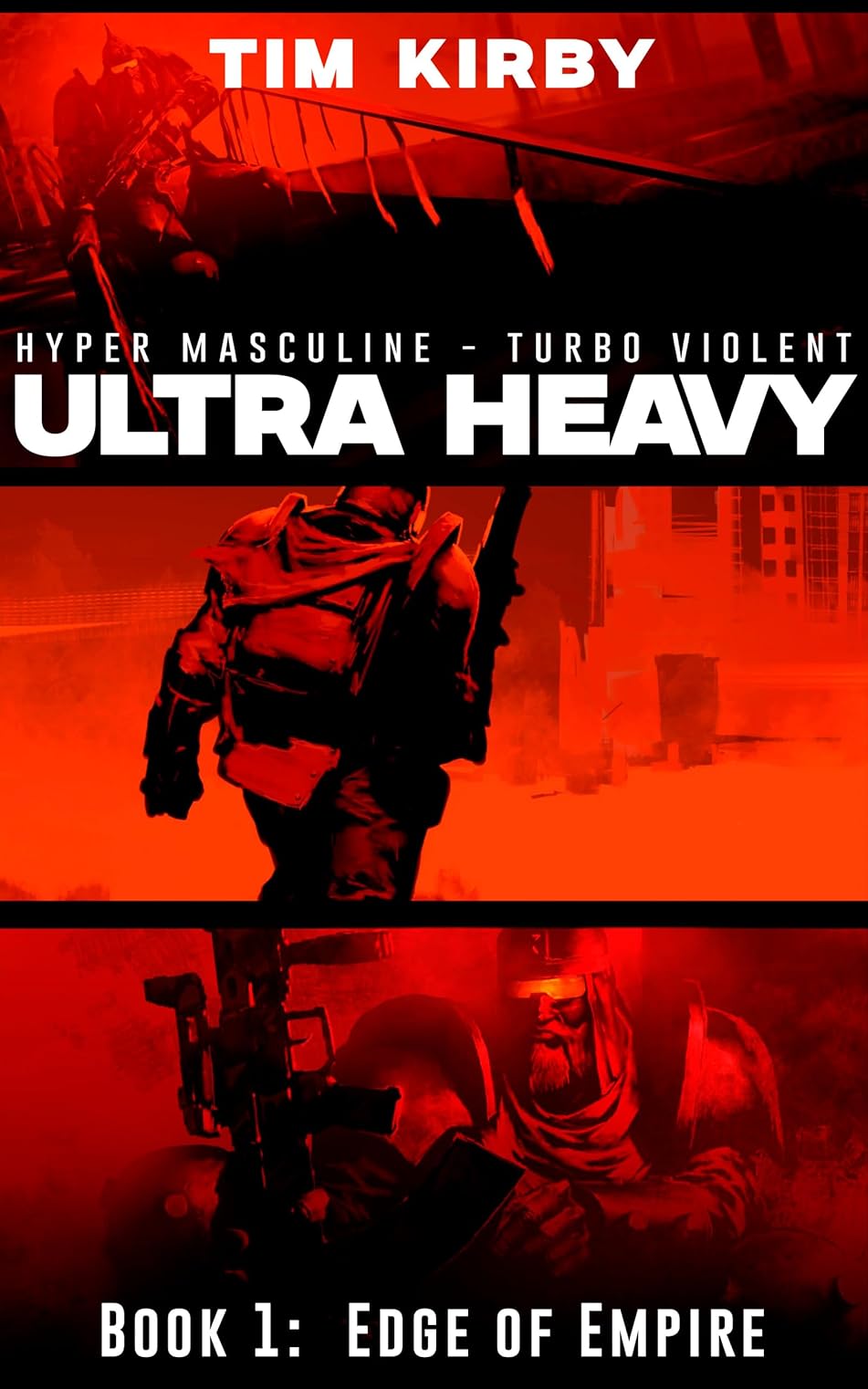
(© Multipolar Press)
Kirby, Tim, Ultra Heavy: Book 1: Edge of Empire, Multipolar Press, 2026 (Kindle Ed.).
Born in the United States, Tim Kirby lives and works in Russia. Popularly known as the “most Russian American,” he has worked for RT, is a champion of the “American Village” outside of Moscow, regularly makes sense of the collision between postmodern Westernisms and sovereign traditions, and educates interested Westerners about the Russian civilizational state. Find him on Telegram. Ultra Heavy, edited by the esteemed Constantin von Hoffmeister, is available from Amazon.
Set roughly 2,000 years in the future, Ultra Heavy finds a reinvigorated Russian Empire building and maintaining artificially terraformed colonies around the Solar System. An unusual soldier requests a mission from an unusual Tsar, and both have specific goals for the undertaking. Accordingly, an investigatory expedition is launched to Titan, Saturn’s moon, discoveries are made, ideologies are probed, and a battle takes place. For a book styling itself as “Hyper Masculine” and “Turbo Violent,” which is true, it also comes with a fair dose of erudition and contemplation. And, all that aside, it’s a fine story to boot.
Ultra Heavy moves ultra fast. One will note that it is styled as the first in a series; that is excellent because when one is finished with it, and it is a quick read, one will invariably want to see more. It has a distinctive style containing various subparts. Ala Dracula by Bram Stoker, Ultra Heavy proceeds from a partial epistolary format: there is a series of techno updates and notes that move the sequences along while also providing some backdrop and commentary. Immediately, the reader is presented with a certain depth via assorted terms and phenomena placed without explanation. For example, one may wonder what “the Curse” is. But these elements only served to deepen Kirby’s world, eventually being defined or, otherwise, becoming self-explanatory.
The book is essentially the story of a very old knight, permanently shrouded in custom and honor, who must contend with societal changes and rank, no-gray-about-it evil. He is a bit heavy-handed, though he comes off as stoic, respectable, and even endearing. Not many protagonists are merely known by a number. Kirby’s hero earns a name at the end, and his new moniker is deeply Russo-Slavic, whether considered in literary, cultural, or historical terms. He also gets a girl, as Kirby integrates a rather manly romance within his action thriller. Few books come with their own built-in, appropriate summaries, but Ultra Heavy is one of them: from page 94, it is something “like The Master and Margarita but with a horrific and gory ending.” The ending, should one wonder, is action-packed, unusual, but also happy. Kirby has a style somewhat reminiscent of Bulgakov and Lovecraft, and he honors many of the older, grittier authors of science fiction past. Your reviewer found elements of the classic Western throughout the story, which was a pleasant finding.
There’s a spirit at work in Ultra Heavy, one deeply Russian and laced with the tenets of Orthodox Christianity. This Christianity is muscular; one will enjoy the good priest’s battle cry on page 124. It also dispenses with the inversion that, when confronted with evil, hate is not a Christian value. It is, and on page 113, Kirby reminds readers of Proverbs 8:13: “The fear of the Lord is hatred of evil. Pride and arrogance and the way of evil and perverted speech I hate.” There is another form of correction afoot, one that takes aim at the meaningless and surrender too common in modern science fiction. One may recall that in his interview with Tucker Carlson, Professor Alexander Dugin mentioned that so much of futuristic fiction is dystopian by design. Kirby’s work leans in that direction, though it is exceptional in that chaos and nihilism present as things to be resisted and defeated.
Kirby also includes a few political truisms, which the reader should find, like the observations of H.L. Mencken, suitable, perhaps alarming, but also amusing. For instance, on page 20, Kirby addresses the perpetual naivety of those who think authority, under any political system, is always the answer: “The populace … are absolutely sure that every wrong can be righted by complaining incoherently to power, but this has never been and never will be the case.” If that were the case, the bereft residents of Titan could amenably appeal to their self-instated tyrant, the villain of the book. He is of the old forked-tongue school, promising nebulous liberty and delivering slavery. Kirby’s hero is no saint, but compared to his wicked adversary, he comes off like a Christian warrior-philosopher dealing with a demon-possessed toddler. Kirby uses his antagonist to paint a novel yet powerful example of blasphemy (see page 129), and he demonstrates the proper response to such distasteful affronting. Behind Icon by Georgia Briggs, Ultra Heavy is the second Orthodox-grounded novel I have read in the past few years that subtly confronts an American champion of transcendental do-as-thou-wiltism. Astute readers will catch that on page 130. There’s a lot to catch in this novel, so perhaps one might want to give it a go, say, this weekend.
If one is looking for a hardcore action novel, tempered by unabashed masculinity, yet presented with thoughtful vigor and even humor, then Ultra Heavy fits the bill. I highly recommend readers, both of science fiction specifically and fiction in general, consider it a most worthy candidate for their immersive enjoyment. And I thank Tim Kirby for writing it.
 PERRIN LOVETT
You must be logged in to post a comment.