Eulogy for Thomas George Moore (1948 – 2021)
Perrin Lovett
He had the education bug. That’s how I met him in the fall of 2018. More accurately, he had a desire to defend and further Western Civilization, via teaching as with all his other professional endeavors. Freshly returned from his Creative Writing studies at University College Cork, Ireland, and while fine-tuning A Fatal Mercy, he hurled himself, in partibus furibundus, into and against the machinery of the public school system.
He was never one to say he’d been there and done that, though he seemingly had been everywhere and done everything. Rather, what he gleaned and remembered would be offered in answer to some question or as confirmation of what was suspected. His input was always valuable and welcomed. His was a life fully lived and richly rewarded. Herein, I hope to share just a few of my memories to complement what the reader may already know about Tom Moore. Small parts of the following might be new material for almost everyone. Writing is and is not the easiest job. We of the craft are never satisfied with any result. To my eyes, what follows is too brief, too hollow, and too unworthy. And it pained me to write it. Yet, at the same time, a sense of joy came over me as I plodded through. I hope that joy is what is imparted to the reader.
Providence dictated or arranged that I should follow a similar course in pursuit of teaching in the same place and at the same time. He started exactly as I did, as a lowly, roaming substitute teacher, overqualified though woefully bereft of the sacred, magical credentials. Circumstances and a vacancy soon had him helming a high school French program, a position for which he was perfectly qualified. On Tuesday, November 27, 2018, it was my privilege to cover a day’s classes in his absence.
I was extraordinarily selective in assignments, or so I tried to be. I knew the school and the subject. On a “Meet the Teacher” webpage, I caught a glimpse of an intriguing character. Above his long list of academic and professional experiences and accolades was a picture – some of you have seen it – of Tom seated by the water looking… Wait a moment. Here it is.
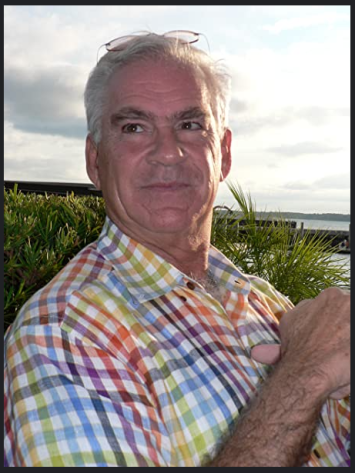
Pleasant, but what? Sly? There was obviously something going on in that head. There always was. I liked him even before I met him. There was also his name juxtaposed against the lessons he taught; I said to myself, “an English Saint … teaching French.”
I liked him more, that particular school day, despite his not being present. Many or most teachers, of any subject, are for lack of a better word, average. Some are very good. Few are great. And an observant outsider can sense the greatness, even indirectly. His classes were well organized. The students appeared at ease. There was a feeling that things just clicked, and well, inside those four concrete walls. Further evidence presented itself during a morning free period when a trio of young ladies stopped by and stayed the hour. While unannounced to me, their visit was a daily occurrence. They came to Tom’s room because it was the one place or the best place in the school that made sense to spend their free time. They were at liberty to study trigonometry or whatever it was in peace and under the carefree watch of an intellectual and a gentleman rather than under the scorn of a monitor or an enforcer. It was a bare preview of lunchtime.
Around noon, a class departed and I pondered where to eat and enjoy yet another cup of coffee. Then, they came. And they just kept coming. More and more until Tom’s little lecture hall filled to standing-room-only capacity with teenagers. Most were eating. Most were talking. A few read or wrote or calculated. All were happy to be there. Some were his French students, others were not. I classify them into two rough categories: the cool kids, and the good kids (any teacher knows the types and appreciates the intersection). It was a great mix of both scholarly athletes and socially-adjusted academics. I was amazed.
At length I inquired and was informed by several voices at once something to the effect, “Mr. Moore is just cool. He likes us and we like him.” So it was. He was cool. He was popular for that and, just as importantly, for not being a jerk. In a mad asylum of rules, conformity, and dread, his room was the one place where these young adults could come and be treated as such, treated like human beings. It was like a clubhouse scene from another era, perhaps as might have been portrayed by Normal Rockwell.
Not long thereafter, he called me. Being of a similar disposition, I was approved of by the students and they requested I return when needed. His classes joined my “go-to” list as my selectivity further narrowed.
Within a few weeks, we met in person. I was sporting one of my trademarked Christmas ties and he was wearing a black sweater, semi-casual but officious enough looking. At first sight, he looked like the man who would run such a scene as I just described. Then we talked.
This was not the process of making a new friend. It was like meeting a brother one hasn’t seen in years, like looking into a mirror of thought and viewpoint. We had much more in common than a shared interest in education. There was a distinct overlap of experience, interests, and intelligence. To put it plainly, few of my friends think or act as I do. Tom was the archetype of the few. He inspired me. More than once he even confounded – the rascal had the audacity to hit me with my own most lamented favorite question!
The older I grow, the less I care for certain aspects of post-modernity, especially the trend towards what is pitifully termed “post-literacy.” I have, for the most part, given up, but I used to, under appropriate circumstances ask various bystanders, “have you ever read … ?” Frequently, regardless of whether I ended the question with “Tacitus,” “Flaubert,” or “Dr. Seuss,” I was met with a silent stare. Not so with Tom. On the contrary, he was known to turn my weaponized words against me.
By way of example, on Thursday, April 1, 2021, he sent me an email titled “Checking In.” It commenced as follows:
Have you ever read or heard of the world-famous novel of 1933, THE FORTY DAYS OF MUSA DAGH, by Franz Werfel? …
While I am (and was) somewhat familiar with the underlying martial subject matter, world-famous or otherwise, sadly my answer was “no.” Fortune provided me the chance of a reply over the telephone so as to erase any permanent record of my ignorance. (Oops). He did that more than once. In my defense, I too occasionally posed the challenging literary inquiry.
That was the nature of a good part of our relationship – a continuous back and forth of ideas, questions, and answers – a quest for the truth.
Our quixotic quests against academic Leviathan ended at about the same time and with similar displacements. I declare we both accomplished our goals! We are both writers. He was a great master while I toiled in the shadows. I considered him, and maybe he never liked or accepted the title, my mentor, at least in all things fiction. He was a fan of my weekly national affairs ramblings. “Your stuff’s as good as anything out there,” he’d say. And by “out there,” he meant the top tier of the hard right. He was confident even if I still remain unsure. There was, however, no questioning his ability.
A Fatal Mercy is, as I have written previously, a classic. With that work, which I suppose now stands as his opus, he did many things. It is brilliant historical fiction, but more. It is a civilized and sophisticated romance, but more. At its end, structurally and philosophically, it is the masterful interweaving of classical Greco-Roman wisdom, the great tale of the end of America’s Republican Age, and the perils of our present world as glimpsed even in 1913. It says as much (and more) in his fantastic text:
One reason we study the Classics, apart from the value of the knowledge itself, is for what they may teach us about our times.
Now it had all been shattered, not just the system of Negro slavery, but the Old Republic itself.
Power transmutes into empire. Empire begets hubris. Hubris brings ruin.
The book and its esteemed author describe, vividly and from detailed character interactions, one civil war passed by, while foreshadowing and warning of another threatening to come. It is not a book I could have, or would have written, but it does well suit my own hopes and trepidations. For those reasons, perhaps more, it is my favorite of his works.
A closely related aside: On the day after Tom passed, his beloved Rhonda declared The Hunt For Confederate Gold her favorite. It is certainly more relatable, in a way, to the modern reader, with its current themes and faster pace. I classify it as a good-to-great book, yet outside, below the highest standing of A Fatal Mercy. Tom once almost dismissed it as “amateurish.” I was tempted to take offense, but the shadow does not correct the master.
Another brief aside: Tom was uniformly even-keeled. Until he wasn’t. I’ve read through all the consolation replies to his obituary. Every one of them nails his personality. He was a gentleman, a scholar, the personification of the grand Old South, and the Citadel, a benefactor, and just about every other popular positive laurel combined into a man. There was also a rarely seen heat beneath his collar. It peaked out seldom and only at warranted times – a glare, a changed tone, a clenched fist, quick fits of expressed righteous anger about something or things. It was one of my favorite among his many personality traits. It is also a high mark of an actionable gentleman. A Scot. A Saxon. Or a Viking. If you ever saw it, you probably liked it, unless, of course, you were the target. One might have been tempted to call it cute, but for a certain strength or seriousness behind it. It was a little fire that our current crop of gentlemen might do well to rekindle.
Back to our discussions, as it happened, there was usually a general agreement between us. Where or when we differed, it was still a profitable exchange of knowledge or opinion. With him gone, I feel like half of my brain is missing. Time and again, I catch myself thinking or saying, upon reading something in the news, “I have to tell Tom about this…” The fact that I no longer can now stabs me like cold steel.
Tom’s professors at UCC taught him well, though they obviously had in him great clay to mold. He was, in turn, a wonderful teacher. Far from merely humoring my novelizations and story-tellings, he could and did correct my foibles as necessary. I learned much from him. He claimed to like my various dialogues, said by him in general, probably correctly, to be the hardest aspect of convincing fiction. “You not only have the voice,” he said, “but you also have a great ear.” While I uttered a semi-confident, quiet “yes,” he soon explained the terms of art. Little things like that.
He had so many irons still in the fire. He was ghost-writing a book. He dabbled in screenplays. He was, at one point, approached about turning A Fatal Mercy into a movie or mini-series. I cheered those points even if I never delved too deeply into them. I was, on the other hand, acutely aware of some of his other latter-day work. He wrote, not quite in secret, a large portion of English historical fiction, English with a touch of the Irish. I had the privilege of reading much of it. “Tom,” I told him on the phone, “I can literally see this as a movie in my head, an older Errol Flynn kind of movie!” He enthusiastically agreed. It was, all of it, utterly fantastic.
And, there was more still. He stated that he wanted to collaborate with me on a few things. I’m not at liberty to say exactly what, but we did commence a few projects. He referred to them as “our,” though they were generally “his.” My part was as, what? Editor? Sounding board? Agent? Wingman? For the most part, I simply marveled as another story unfolded, one beyond cutting edge, with a feel and humor perhaps more at home in the mind of a Zoomer than a Boomer.
One more aside (I love these): Tom, a 1948-issue Baby Boomer, delighted in the battle waged by some, such as Vox Day, against Boomerdom. One evening, over dinner out, he surprised us all with his declared admiration for “The Day of the Pillow.” Only Tom. The Gen-Z high school kids were right. He was cool. Too cool. By the power vested in me, I hereby posthumously elevate him to honorary Generation X status, with all the unconcerned angst and nonchalance that entails.
What, if anything, may ever become of our shared projects? I do not know. But I am grateful just to have been along for the ride.
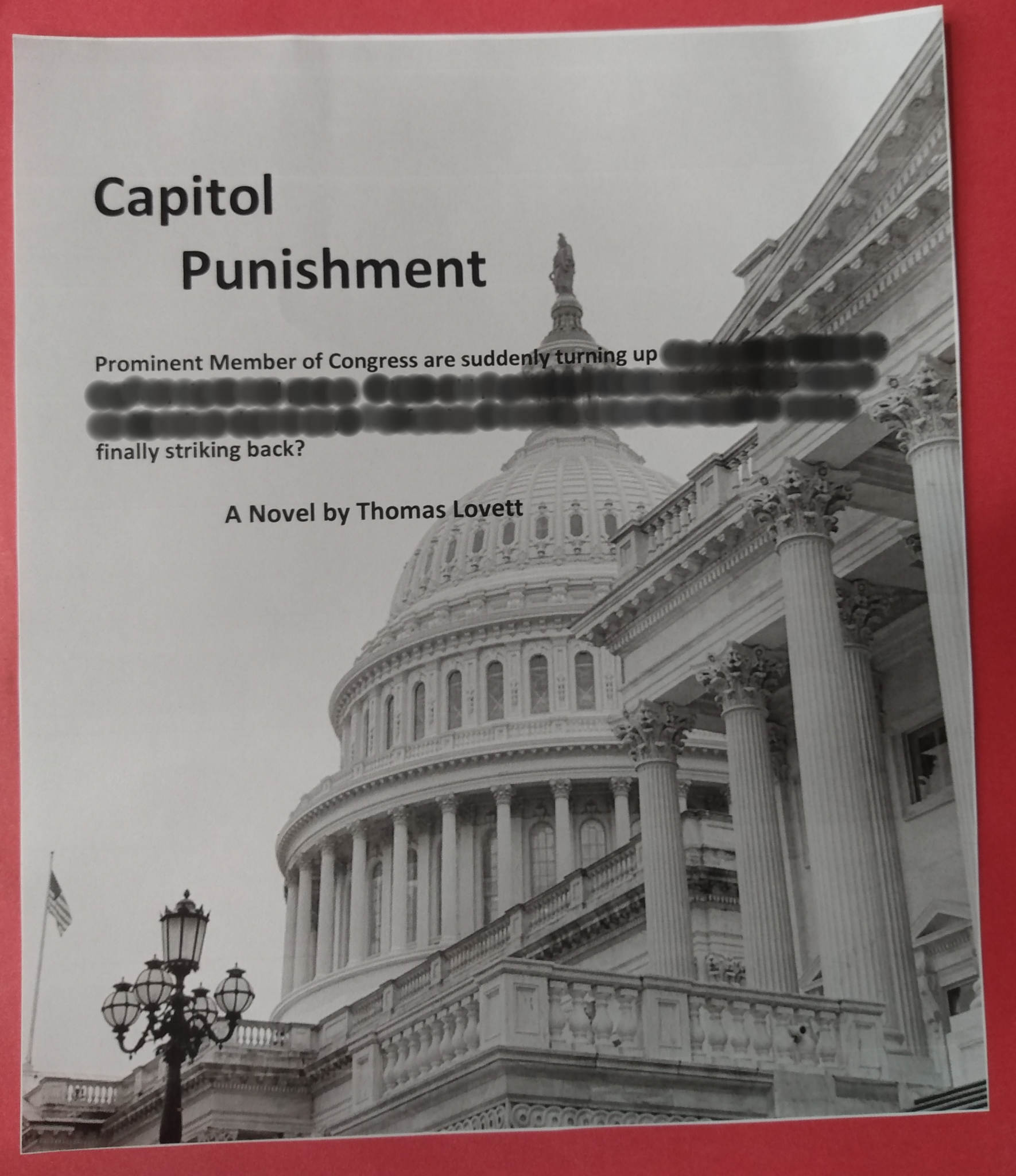
I will tell the intrepid reader about this one! We talked on the phone or through the computer frequently. And approximately once a month, we gathered in person for what we (he) deemed rendezbrews. Perhaps these were our periodic homages to Tolkien and Lewis. They involved ideas – higher and lower – and beers. At one such meeting, early this summer, he gave me this:
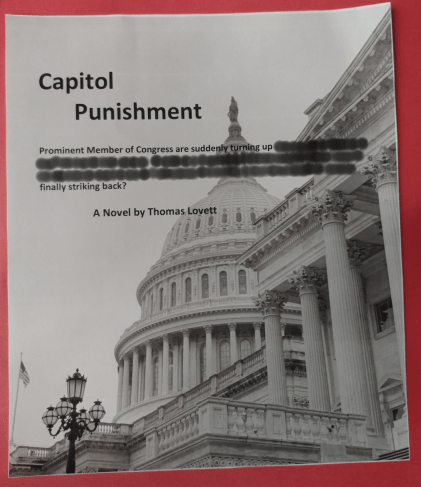
Pictured on the original red folder he handed me like a spy. © by “Thomas Lovett???”
No! It’s partially redacted for a reason; you don’t need to know everything. Of course, what’s pictured is almost everything that came out of that concept. It was a novel proposal, one of those potentially sloppy tomes like Varney the Vampire (more long than sloppy, no?) cobbled together by two authors, perhaps one chapter on, one chapter off. The cover is as far as we ever got and I do not think readers should look forward to a finished book anytime before the turn of the next century, if then. In short, he had a vague plot in mind, based on our mutual perceptions of Washington, and he wanted to deploy a certain existing ex-CIA character of mine to, uh, “accomplish things.” How that would have worked, I’m just not sure. I am sure it would have been fun.
There was, again, so much more. The man was a boundless spring of creativity. He was also a source who never tired of giving opinions, praise, or fair, constructive criticism. He was ever supportive, bearing the keen ability to contribute just the right idea or counterpoint at just the right time. As friends and brothers used to correspond with written letters, we emailed. I have a vast trove of those missives to sort through. One day, they might be worth assembling into something greater.
Enough, for now, of books, ideas, ideologies, and the like.
A final aside: On the sometimes silly, sometimes serious front, we held a joint affinity for a certain foreign-born, alliteratively-named film actress of considerable talent and temperament. She never met Tom and never will. She, like everyone else good and true, would have loved him. If I ever meet her, I’m going to tell her about the coolest teacher-soldier-statesman-author-intellectual she will never know. She, more than most in Hollywood, stands right and tall against the anti-culture. Or, at least, she stands apart from it. I might advise her that “courage and fortitude are never in vain.” That quote, too, is from a classic novel you might know and I was desperate for some reason to fit it in here.
To conclude matters, Tom has triumphed. His is a legacy in this world that will remain untarnished. A rare accomplishment. Most importantly, he has won the great victory and now has assumed his rightful place in Heaven. He was and is a winner, a matter assured just as (one more quote!) Shadpole told Drayton that day at the track, “you goan win, for sho.”
We have lost. My continued prayers and thoughts are with Rhona, Thomas, Jr., John, Stuart, et al. My thoughts are with you if you knew Tom. For, I know. I have lost. I lost my friend, my mentor, and my partner in crime. I have lost a brother. But I, like all whose good fortune led Tom into their lives, have gained a memory, a clarity, and a powerful force and purpose.
Farewell, and God bless, Tom. Until we meet again.

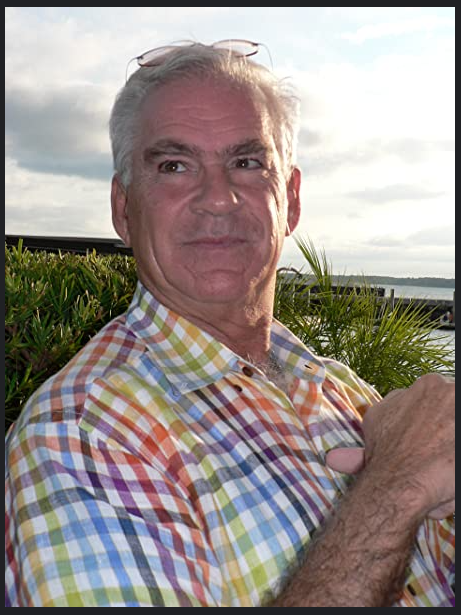
 PERRIN LOVETT
You must be logged in to post a comment.